 Go Back

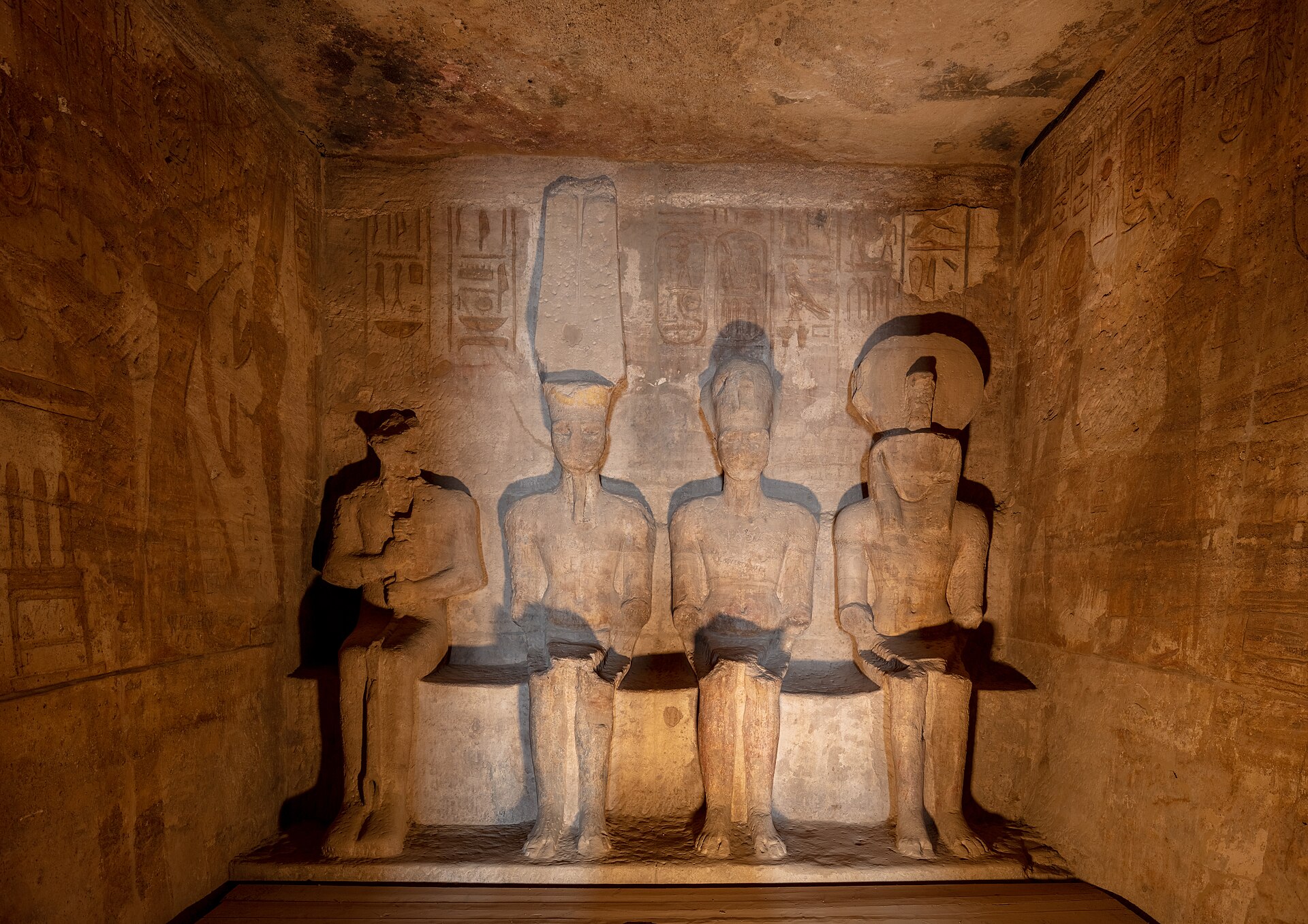
Architecture Across Civilizations. Buildings are the most durable documents a civilization leaves, and the curriculum sorts them by purpose: religious, civil, military, public works, tombs, and houses. The religious buildings carry the oldest ambitions. At Abu Simbel, Ramesses II had an entire temple cut into the sandstone cliff, its facade guarded by four seated colossi of himself, and its axis aligned so that twice a year, in February and October, the rising sun still travels the length of the temple to light the statues in the sanctuary. Greek architects perfected a different ideal: the Parthenon, built on the Acropolis between 447 and 432 BC, looks effortlessly simple, yet almost no line in it is straight; the columns swell delicately and the corner columns thicken, while the platform curves upward, optical corrections in service of a harmony the eye feels without measuring.
Rome thought in arches, vaults, and a new material, concrete, and so it could roof spaces no post-and-lintel temple could span. The Colosseum, opened in 80 CE, seated some fifty thousand spectators under a retractable awning, and staged the games of a hundred days at its dedication. At Saqqara, the Serapeum shows another purpose entirely: underground galleries cut through rock to hold the massive stone sarcophagi of the sacred Apis bulls, an industrial-scale tomb architecture serving Egyptian belief.
Islamic architecture inherited these traditions and made them its own. The Dome of the Rock in Jerusalem, completed in 691, raised a gilded dome over the sacred rock on an octagonal plan, the oldest surviving monument of Islamic architecture. Cairo's monuments fill the curriculum's list: the mosque and madrasa of Sultan Hassan, begun in 1356, a mountain of stone whose monumental portal and four-school courtyard made it one of the most impressive monuments of the Mamluk age; Bab Zuweila, the great southern gate of Fatimid Cairo, later crowned with the twin minarets of al-Mu'ayyad's mosque; and Saladin's Citadel, begun in 1176 on the Muqattam hill, a fortress that guarded and governed Egypt for seven centuries. Medieval and modern Europe and Asia added their own marvels, from Pisa's famous leaning bell tower, an engineering lesson in soil, to the Taj Mahal, symmetry and stonework in perfect balance.
Egyptian builders worked with what the land gave them, and the choice of material tells a story. Mud brick, cheap and cool, built houses, palaces, and city walls, and it dissolves back into the earth, which is why Egypt's temples survive and its cities mostly do not. Stone was reserved for eternity: limestone for casing, granite for the hardest work, transported hundreds of kilometers down the Nile from Aswan. The curriculum notes how natural factors shaped each civilization's style: Egypt's cliffs and quarries gave it stone monuments; Iraq, poor in stone, built its cities of brick, brilliantly colored with glazed tiles, in great mud-brick cities like Babylon; Greece dressed its marble hills in marble temples; Rome's volcanic sands made its concrete possible.
Architecture also served belief and power together. The temple was the god's house and the state's treasury; the mosque was the community's hall; the fortress was authority made visible. Medieval Cairo's rulers built mosques with attached schools, fountains, and hospitals, charitable architecture funded by endowments that served the public for centuries, a whole welfare system written in stone. The vocabulary the curriculum teaches, iwans, domes, sabil fountains, kuttab schools, khanqah lodges, caravanserais, is the vocabulary of a city that worked.
The through-line from Abu Simbel to the Citadel is that architecture is applied science: geometry in the plan, physics in the dome, astronomy in the alignment, hydraulics in the aqueduct. The student who learns to read these buildings is reading engineering, religion, economics, and politics at once, which is exactly why the syllabus puts architecture beside science in the same module.
 World History Encyclopedia: Abu Simbel
 Britannica: Parthenon
Britannica: Colosseum
Britannica: Dome of the Rock