 Go Back

Civilizational Contact Through History. No civilization in this course grew up alone. The oldest routes ran along the Mediterranean coast and down the Red Sea, linking Egypt to the Levant, Cyprus, and the lands beyond; Arabian trails carried frankincense and myrrh from the south; and the Silk Road eventually stitched China to the Mediterranean through the cities of Central Asia. Along these roads moved more than goods: ideas, technologies, stories, and gods traveled with the merchants.
Political contact created whole new cultures. When Alexander conquered Egypt and Asia, the Greek world and the ancient East merged into the civilization historians call Hellenistic: Greek became the common language of government and learning from Alexandria to Afghanistan, cities were founded on Greek plans with Eastern populations, and art, science, and religion mixed. Alexandria was its capital in every sense, a Greek city on Egyptian soil where the Pharos lighthouse, one of the seven wonders, guided the world's shipping into Alexandria, the largest port of the Mediterranean world.
Economic exchange could be as transformative as conquest. Egypt's papyrus went out to every port of the Mediterranean, and with it spread Egyptian words, motifs, and prestige; Egyptian grain fed Rome; Indian spices and Chinese silk drew gold and silver eastward along routes that made middlemen rich from Palmyra to Petra. Later, Muslim merchants carried more than cargo: Islam spread to West Africa and Indonesia primarily through merchants and example rather than conquest.
Technologies traveled the same roads. Egyptian water-lifting devices spread across the ancient world; the saqia and the Archimedes screw irrigated fields from Spain to India. Paper traveled from China through Samarkand to Baghdad and on to Europe. Indian numerals, adopted and spread by Islamic mathematicians, became the digits the world now calls Arabic. Each transfer changed the receiver: the curriculum's example of Iraq's ziggurats echoing the stepped pyramid, and Greece learning writing from Phoenicia and mathematics from Egypt and Babylon, shows contact as the real engine of progress.
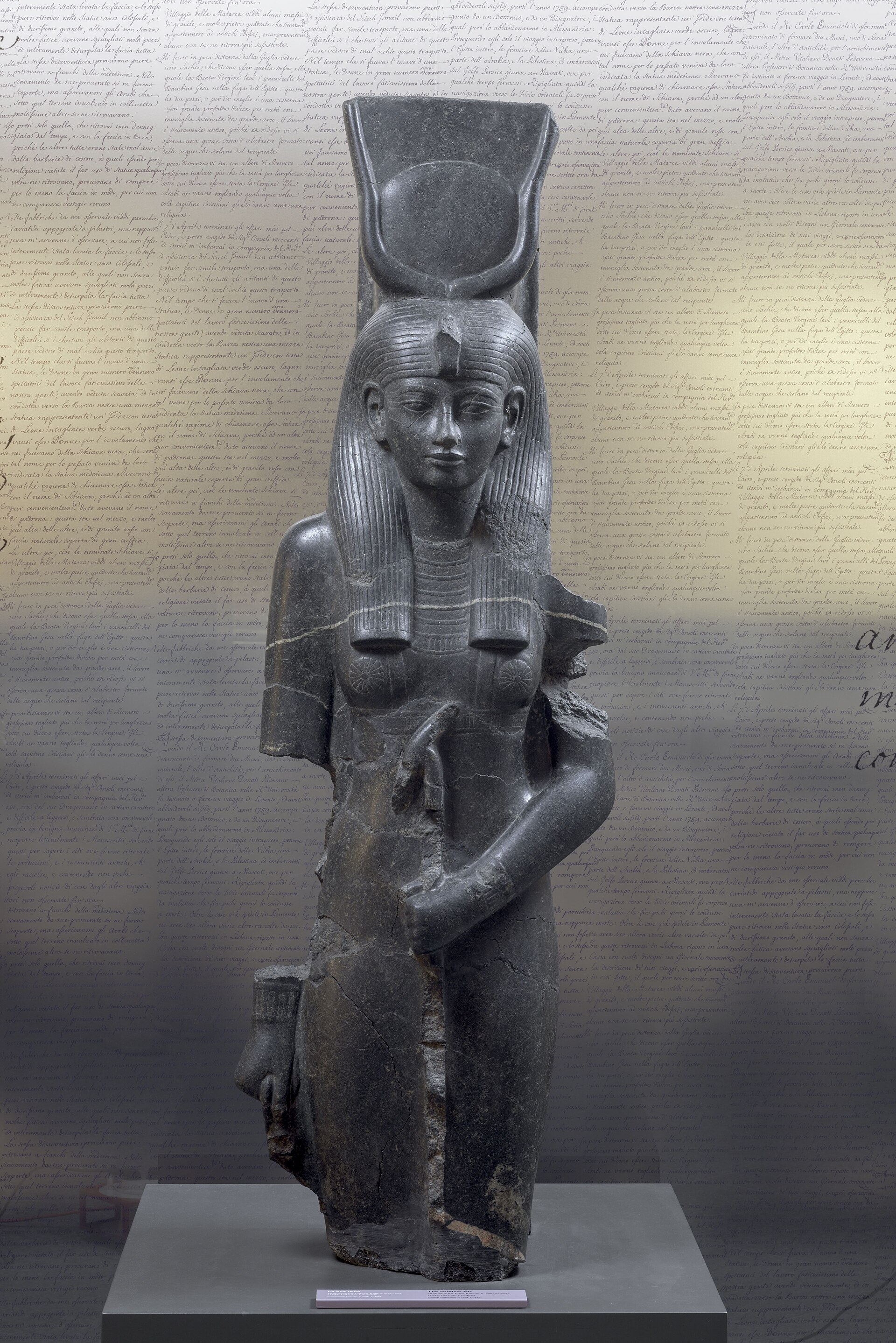
Cultural borrowing went deepest where stories and art met. The Phoenicians told of the god Baal's struggle, a combat between order and chaos strikingly parallel to Egypt's myth of Osiris, Isis, and Set; such parallels are how scholars trace ideas moving between peoples. The Egyptian goddess Isis herself became an international figure: her worship spread from Egypt through the Greek and Roman world, with temples as far as the Thames and the Danube, and her image, mother with child, became one of antiquity's most beloved. Egyptian art taught Greek sculptors too: the first Greek stone statues, the kouroi, stand in the Egyptian pose, left foot forward, arms at the sides, before Greece found its own naturalism; and the capitals of Egyptian columns, palm and papyrus, echo in later Mediterranean architecture.
Sport and spectacle crossed borders as well. Wrestling scenes cover the walls of Egyptian tombs more than a thousand years before the first Olympic games, and the Greeks, who competed in the same throws and holds, turned such contests into the Olympic games that the modern world revived. Music and theater traveled with festivals and armies, instruments and styles passing between Egypt, the Levant, and Greece until the borders blur.
The last kind of contact is the study of one civilization by another, and here Egypt holds a unique place: Egyptology. Since Champollion read the Rosetta Stone in 1822, universities across the world have taught the language and history of ancient Egypt, and expeditions from a dozen countries work in its soil. The Library of Alexandria, reborn in 2002 beside the ancient site, gathers that global conversation back home. The curriculum's closing value is tolerance: contact works when peoples meet as partners. Tolerance, cooperation, and learning from others built every golden age in this course; isolation built none.
 Britannica: Hellenistic age
Britannica: Isis Egyptian goddess
Britannica: Silk Road trade route
Britannica: Jean Francois Champollion