 Go Back

Industry Across Civilizations. Long before factories, every civilization had industries: organized crafts that turned raw materials into goods people wanted, traded, and taxed. The oldest was pottery. From the painted vessels of predynastic Egypt and the incised wares of Sumer to the fine red-and-black figure vases of Athens, ceramics served every household and, because potsherds survive forever, they are now the archaeologist's clock and calendar for dating whole cultures. Textiles came next in importance: Egypt's linen, woven from flax, was famous across the ancient world, while wool clothed Iraq and silk, its secret kept for centuries in China, became so prized that history named a road after it.
Egypt's signature industry was papyrus. From the pith of the marsh plant, workers cut strips, laid them in crossed layers, pressed and dried them into smooth sheets, then glued the sheets into rolls. Papyrus was Egypt's paper, its bureaucratic backbone, and one of its most valuable exports for three thousand years; the ancient world wrote on an Egyptian product, which is how Egyptian technology quietly carried Egyptian influence into every library from Athens to Rome. The Phoenicians, short on farmland but long on enterprise, built their wealth on a shellfish: the murex, from which they extracted a few drops of brilliant purple dye so costly that purple cloth became the dress code of kings and emperors. Tyrian purple, cedar wood from Lebanon, and skillful metalwork made tiny Phoenicia a commercial superpower.
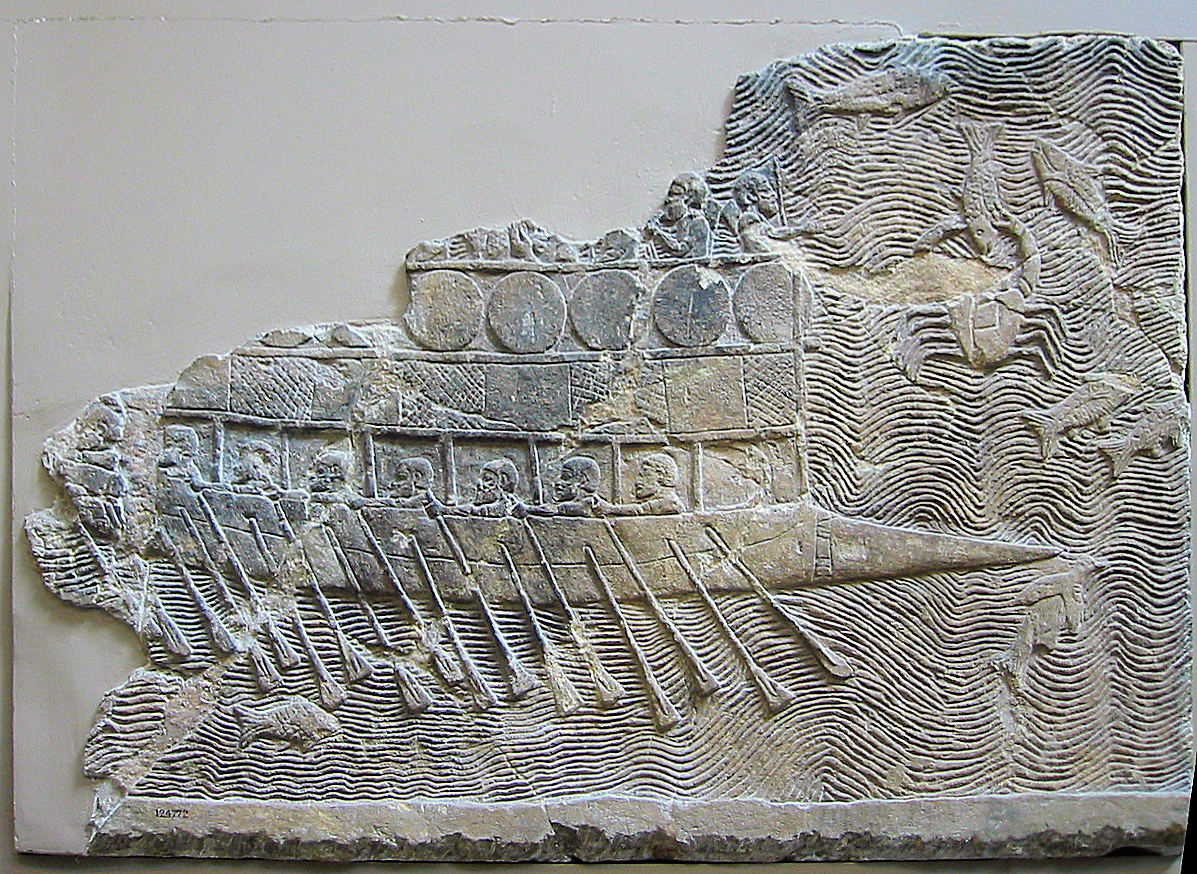
Metallurgy transformed tools and war. Bronze, copper hardened with tin, filled the state workshops of Sumer and Egypt with weapons, vessels, and statues; then, after 1200 BC, iron spread, cheaper and harder, putting better tools into ordinary hands. Glass began in Egypt and Mesopotamia as colorful faience and small core-formed vessels, until Phoenician or Syrian craftsmen discovered glassblowing in the first century BC, and suddenly glass tableware was affordable across the Roman world. Woodworkers, leatherworkers, jewelers, and perfume makers rounded out the industrial scene, and Egyptian shipwrights and Phoenician galley builders turned carpentry into seapower: the fleets that carried grain, cedar, purple cloth, and armies across the Mediterranean.
Industry was organized differently in each civilization, and the organization is half the story. In Egypt, much production belonged to the palace and the temples, whose workshops employed hundreds of craftsmen; the royal tomb-builders of Deir el-Medina lived in a state village with state wages, and their records include what may be history's first recorded sit-down strike. In Greece and Rome, independent workshops and family businesses dominated, stamping their amphorae and pottery with makers' marks like modern brands. In the Islamic world, crafts organized into guild-like communities, and manufactured goods, from Damascene steel to Cordoban leather to Egyptian textiles, were the exports that paid for the spices of the East.
Behind many industries stood applied chemistry, though no one called it that. Dyers fixed colors with mordants; tanners turned hides into leather with bark and lime; perfumers distilled and infused; embalmers preserved the dead with natron and resins, an Egyptian chemical industry in the service of belief; and apothecaries compounded the herbs and minerals that became the ancestor of pharmacy. Alchemists in Hellenistic Alexandria and later in the Islamic world, above all Jabir ibn Hayyan, turned these craft recipes into systematic experiment, distilling, filtering, and crystallizing, which is why so many chemical words, alkali, alcohol, camphor, are Arabic.
The curriculum's lesson is direct. Industry is how a civilization turns its environment into prosperity: papyrus from the marshes, purple from the sea, bronze from desert mines. Civilizations that encouraged skilled work, protected their craftsmen, and traded their goods grew rich and influential; those that let their industries decay fell behind, whatever their armies did. Egypt's own history shows both sides, and its modern industrial ambitions, from textiles to the Suez industrial zone, continue a story that began with a potter's wheel on the Nile.
 Britannica: Papyrus writing material
Britannica: Tyrian purple
 World History Encyclopedia: Phoenicia
Britannica: Abu Musa Jabir ibn Hayyan