 Go Back

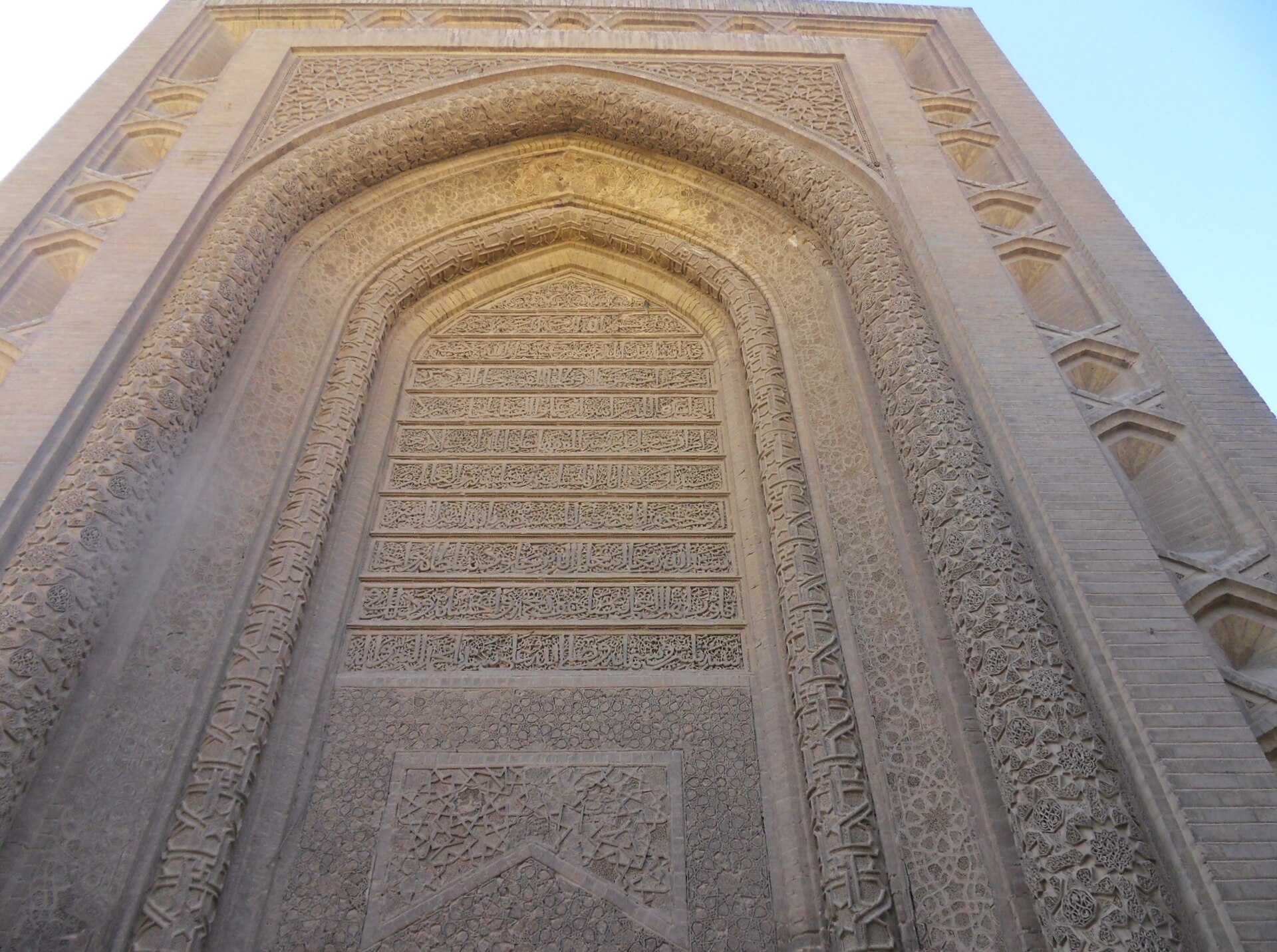
Medieval Iraq. With the Abbasid revolution of 750, Iraq became the center of the Islamic world, and Baghdad its capital and wonder. Founded by al-Mansur in 762 as the Round City on the Tigris, it grew within a generation into the largest city on earth, and its first Abbasid century under Harun al-Rashid and al-Ma'mun was the golden age of Islamic civilization. But the very scale of the empire undid it. The civil war between Harun's sons al-Amin and al-Ma'mun from 809 to 813 wrecked Baghdad in a long siege; later caliphs surrounded themselves with Turkish slave-soldiers who became kingmakers, and the assassination of al-Mutawakkil in 861 opened the anarchy at Samarra, when commanders raised and murdered four caliphs in nine years. The treasury drained, provinces slipped away, and Iraq's ancient southern irrigation system decayed, worsened by the fourteen-year Zanj revolt of enslaved laborers that devastated the marshes.
In 945 the Buyids, Daylamite soldiers from northern Iran, entered Baghdad and ruled through puppet caliphs for a century, the first time the caliphate became a figurehead while real power lay with military emirs. The Sunni Seljuk Turks took Baghdad in 1055 as protectors of the caliph, and under sultans like Alp Arslan and Malik Shah, with their great vizier Nizam al-Mulk, order and Sunni learning revived; the Seljuks defeated the Byzantines at Manzikert in 1071 and opened Anatolia to the Turks. Yet the empire fragmented among Seljuk princes and their atabegs, and in the thirteenth century a storm gathered in the east. The Mongols under Hulagu, grandson of Genghis Khan, demanded Baghdad's surrender; the caliph al-Musta'sim refused, trusting in his title, and in February 1258 the city fell after a short siege.
The sack of Baghdad was a catastrophe remembered for centuries: the population massacred, the caliph executed, libraries destroyed, and the Tigris said to run black with the ink of dumped books. The classical Abbasid caliphate ended, and Iraq became a frontier province of the Mongol Ilkhanate, ruled from Iran. Mongol, Turkmen, and tribal dynasties succeeded one another while the canals silted and cities shrank, until in the sixteenth century Iraq became the battleground of two empires, Ottoman and Safavid, and Baghdad changed hands between them. The medieval centuries raised Iraq to the summit of world civilization and then cast it down; both the rise and the fall taught the region how much depended on irrigation, order, and the peaceful succession of power. The machinery of the Abbasid state in Iraq was the most sophisticated of its age.
The diwans, the bureaus of taxation, expenditure, the army, and the post, kept registers of every province; the barid, the postal and intelligence service, reported prices, harvests, and sedition to the capital; and the vizier, a Persian office adopted whole, managed the machine in the caliph's name. The geographers of the age describe the Sawad, Iraq's black alluvial plain, as a garden when the canals were kept, its wheat and barley feeding the cities, its dates exported to India, and its taxes the richest in the empire. The water was always the state's first duty and its first casualty: canals silted in years of civil war, the great Nahrawan canal's collapse shifted settlement east, and every breakdown drove peasants from the land into the cities or the armies.
The Zanj revolt was the terrible proof: East African slaves draining the salt marshes of the south rose in 869 under a leader claiming Alid descent, built their own fortified city, defeated army after army, and were crushed only after fourteen years of war that devastated lower Iraq. The eleventh-century revival under the Seljuks restored order for a time: Nizam al-Mulk, the model vizier, founded the network of madrasas called the Nizamiyya, whose Baghdad college taught the greatest scholars of Sunni Islam and fixed the curriculum of Islamic higher education. But the Mongols' arrival was a catastrophe beyond any earlier invasion: Hulagu's army included siege engineers from China, the caliph's refusal to submit was answered with the storming of the walls, and contemporary accounts describe the massacre of hundreds of thousands and the burning of the House of Wisdom.
Iraq never recovered its old place: the Ilkhans ruled from Iran, the canals decayed beyond repair, and the land that had fed empires shrank into a frontier, awaiting its Ottoman centuries.
Medieval Iraqi society centered on its cities, above all Baghdad, a cosmopolitan capital where Arabs, Persians, Turks, Kurds, Christians, Jews, and others mixed in its markets and schools. The learned culture was dazzling: the House of Wisdom under al-Ma'mun rewarded translators lavishly - one was famously paid the weight of his books in gold, and in Baghdad Greek philosophy and science met Persian literature and Indian mathematics. Here al-Khwarizmi wrote his algebra, al-Kindi harmonized Greek philosophy with Islamic thought, the physicians of the great hospitals systematized medicine, and the astronomers of the observatories refined the measurement of the heavens. Arabic became the universal language of scholarship from Spain to Central Asia, so that a student from Cordoba and one from Samarkand could debate in the same tongue.
Religious life developed its classical forms in Iraq: the four Sunni law schools were systematized by the students of Abu Hanifa and Ibn Hanbal; Shia Islam built its shrines at Karbala, Najaf, and Kadhimayn around the tombs of the martyred imams, making Iraq sacred ground for the Shia ever since; and Sufi mystics gathered disciples into orders that carried Islam to the common people. The economy rested on the Tigris and Euphrates: when the canals were kept, the Sawad of Iraq was one of the richest agricultural lands on earth, and Baghdad's merchants linked the Mediterranean to the Indian Ocean, dealing in silk, spices, paper, and glass, with a banking system whose checks and letters of credit spanned the empire. Paper, learned from Chinese prisoners in the eighth century, made books cheap and multiplied learning.
The Abbasid court developed the ceremonial of Islamic kingship: the caliph shadow of God on earth, the vizier managing his bureaus, poets competing for favor, and the ideal of the just ruler praised in mirrors for princes. After 1258 much of this survived in reduced form: scholars still taught in Baghdad's madrasas, the shrines still drew pilgrims, and Mongol and Turkmen rulers patronized poets and painters, including the artists of the celebrated Baghdad school of manuscript illustration. But the irrigation works never fully recovered, and medieval Iraq's later centuries are a lesson in how fragile civilized abundance is when the water and the peace fail.
 Britannica: Baghdad
Britannica: Abbasid caliphate
Britannica: Al Khwarizmi
Britannica: Hulegu