 Go Back

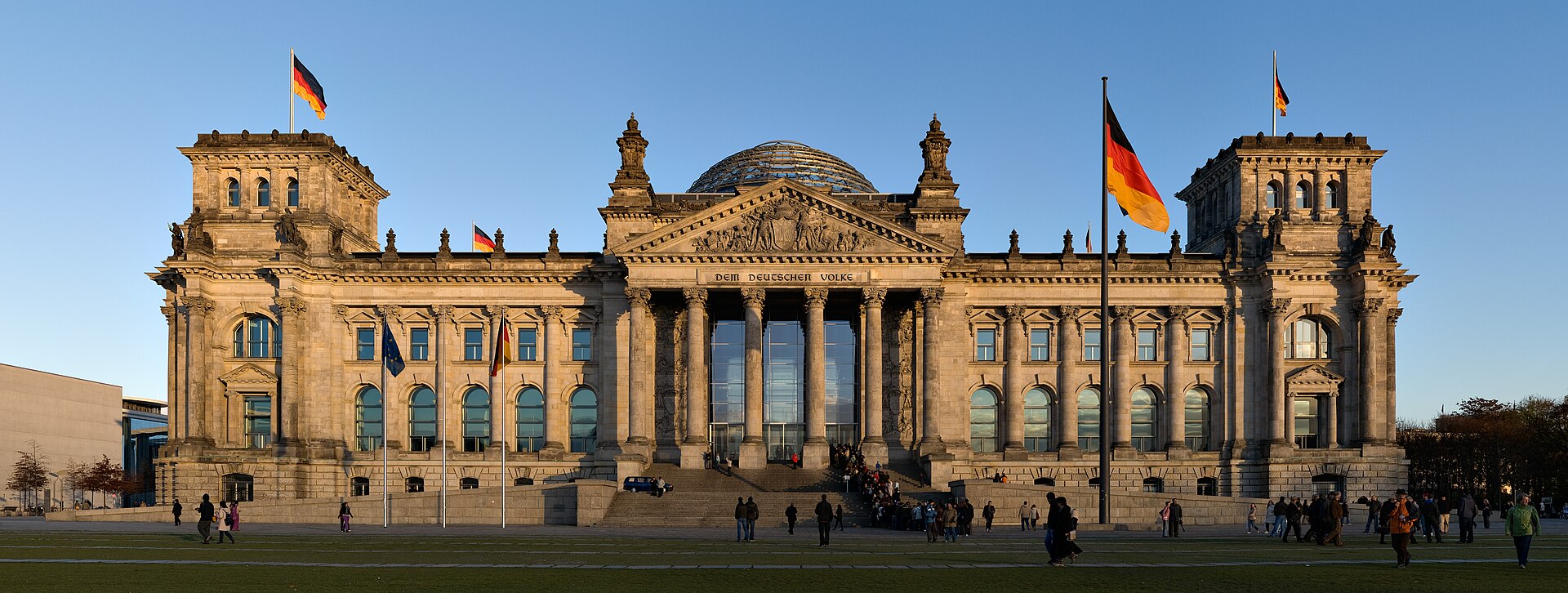
For much of its history, Germany was a collection of kingdoms, principalities, and free cities rather than a single state. Prussia became the leading force in unification under its minister Otto von Bismarck. Wars against Denmark in 1864 and Austria in 1866 changed the balance of power, and a North German Confederation followed in 1867. War with France brought the southern German states into the union. In January 1871, the Prussian king William I was proclaimed German emperor at Versailles. This was unity negotiated by rulers and secured through war, not the parliamentary national state imagined by many liberals in 1848.
The empire combined national institutions with powerful regional governments. Its constitution preserved the German states, but Prussia was much larger and stronger than the others. The emperor appointed the chancellor; the elected Reichstag did not choose the government in the manner of a parliamentary cabinet. The Bundesrat represented the state governments. Men could vote for the Reichstag, yet political participation did not mean equal control over the army and executive. The new state therefore joined economic integration and mass elections to a political order in which monarchy, landed elites, and military command retained considerable power.
Industrial growth changed daily life. Coal and iron, railways, engineering, and chemical production helped Germany become a major industrial power. Towns expanded as workers moved toward factories and mines. Banking and large companies supplied capital, while technical education and scientific research supported production. National institutions helped coordinate the economy: common currency and legal arrangements reduced barriers between the states. These changes did not benefit everyone equally. Industrial workers faced insecurity and difficult conditions, and organized labour and the Social Democratic movement challenged the existing distribution of power.
Bismarck tried to contain opposition through both repression and reform. His conflict with Catholic institutions, the Kulturkampf, demonstrated the limits of a state that claimed to speak for all Germans while treating a large religious community with suspicion. Laws against socialists likewise failed to remove working-class political organization. At the same time, social insurance measures in the 1880s provided protection against sickness, industrial accidents, and old-age insecurity. Such measures linked industrial change to new obligations of government. They were also political instruments intended to weaken socialist support, rather than a simple expression of generosity.
After Bismarck left office in 1890, imperial ambitions and international rivalry became more prominent. Naval expansion and colonial competition accompanied the industrial economy. Germany's overseas empire involved domination and violence, not merely trade or technological exchange. In Europe, alliances and military planning made disputes increasingly dangerous. The First World War brought mass mobilization, shortages, and enormous losses. Military strength could not secure victory. In November 1918, William II abdicated and a republic was proclaimed. The empire created in 1871 had ended, leaving the new government to deal with defeat, social division, and the demands of peace.
The constitution adopted at Weimar in 1919 introduced a democratic republic with an elected parliament and president. Its early years were difficult: political violence, attempted uprisings, and disputes over the Versailles settlement undermined confidence. The occupation of the Ruhr and the collapse of the currency in 1923 intensified the crisis. Stabilization began with a new currency and a change of policy. The Dawes Plan of 1924 reorganized reparations arrangements and opened a path toward financial recovery. At this cutoff, recovery was beginning, but neither economic stability nor agreement about the republic could be taken for granted.
Germany's experience through 1924 allows students to distinguish different kinds of change. National unity, industrial capacity, scientific education, social insurance, and democratic accountability were connected, but they did not advance at the same pace. A factory could become more productive while its workers remained politically excluded; a state could hold elections while keeping important decisions beyond parliamentary control. Comparisons with nineteenth-century Egyptian reform are most useful when they ask precise questions about taxation, education, institutions, and foreign pressure. They should not turn a complicated history of achievement, coercion, war, and reform into a recipe that every society could simply copy.
 Britannica: German Empire
Britannica: Otto von Bismarck
Britannica: Weimar Republic