 Go Back

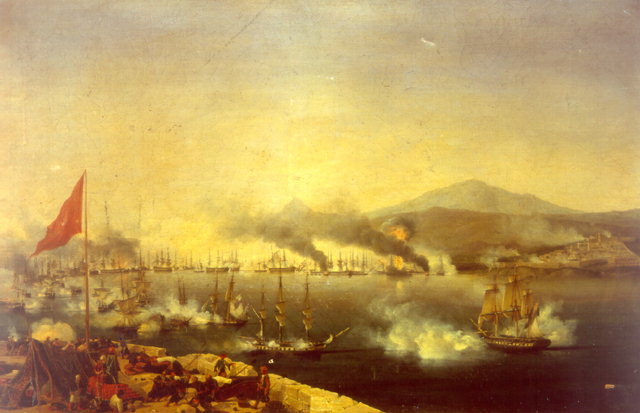
Ottoman Greece. Greece passed under Ottoman rule in the fifteenth century: Thessaloniki fell in 1430, Athens in 1456, and the Peloponnese and the islands followed by 1460, beginning nearly four centuries of Ottoman dominion that Greeks remember as the Tourkokratia. The Ottomans ruled a vast multi-religious empire through the millet system: the Orthodox Christians, the largest subject nation of the Balkans, answered to the Patriarch of Constantinople, who became in effect their civil as well as religious head, collecting their taxes and judging their family law; the Church thus preserved Greek language, education, and identity through the centuries of subjection, and the monasteries, above all Mount Athos, kept the Byzantine inheritance alive.
Life was hardest on the land: Christian peasants paid heavy tithes and tribute to Muslim landlords or tax farmers, and lived under the memory of the devshirme, the levy of Christian boys taken to serve the sultan as janissaries. Yet Greeks were never merely victims: Phanariot Greeks of Constantinople rose to govern the Danubian principalities and dominate the empire's diplomacy, Greek merchants came to command the commerce of the eastern Mediterranean and the Black Sea, and the armed klephts, bandit-heroes of the mountains, kept a tradition of resistance alive in song and fact. The eighteenth century brought the Greek Enlightenment: scholars in the diaspora taught modern science and the ideas of liberty, and the French Revolution gave them a program.
In 1821, revolt broke out in the Danubian principalities and then, decisively, in the Peloponnese, proclaimed under the banner of the cross at Kalavryta; after savage fighting and the terrible massacre of Chios, the Greek cause won the sympathy of Europe, whose philhellenes, Lord Byron the most famous, came to fight for the cradle of liberty. When the sultan's Egyptian vassal Ibrahim Pasha nearly reconquered the land, Britain, France, and Russia destroyed his fleet at Navarino in 1827, and Greek independence was secured. The new kingdom, established under a Bavarian king in 1833, was small, poor, and faction-ridden, but it embodied the Megali Idea, the Great Idea of liberating all Greeks; the nineteenth century added Thessaly and the Ionian islands, and the Balkan Wars of 1912-13 brought Epirus, Macedonia, and Crete. Greece entered the twentieth century doubled in size, dreaming still of Constantinople.
The long Ottoman peace had textures the national story sometimes flattens. The millet system gave the Orthodox Church powers no Byzantine emperor had allowed it: the Patriarch of Constantinople judged marriage, inheritance, and schooling for all Orthodox of the empire, appointed bishops from Bulgaria to Arabia, and collected church taxes, so that the Greek nation survived the empire as a church before it re-emerged as a state. The Phanariots, the Greek families of Constantinople's lighthouse quarter, supplied the empire's dragomans and, after 1711, the princes of Moldavia and Wallachia, governing the Danubian lands as a Greek aristocracy of service, financing schools and printing while farming taxes with notorious severity.
The klephts of the mountains and the armatoloi hired to suppress them were two faces of the same armed society, and their ballads, sung to this day, kept a repertoire of resistance: the klepht who dies free on the ridge rather than serve below. The revolution of 1821 was the work of all these Greeces at once: the Eteria's conspirators, the primates who blessed or feared it, the klephtic captains like Kolokotronis who won its battles, the island fleets that fought its sea war, and the philhellenes of Europe whose pressure brought the powers in. Its cost was terrible: the massacres of Tripolitsa and Constantinople's Greeks, the enslavement of Chios, the civil wars among Greeks even as Ibrahim Pasha's disciplined Egyptians reconquered the Peloponnese village by village.
Navarino saved the revolution, and the settlement that followed gave Greece a king, a capital in ruins, and a fraction of its nation, for most Greeks still lived outside the borders, in Thessaly, Macedonia, Epirus, the islands, and the great Greek cities of the Ottoman Empire itself. The kingdom's whole nineteenth century, its constitutions, its coups, its territorial gains, was lived under the tension between the small free state and the unliberated nation, the Great Idea that would lead Greece to triumph in 1912 and catastrophe in 1922.
Ottoman Greek society lived between subjection and self-rule. The village was the world of most Greeks: self-governing in its elders' councils, tithing its wheat and oil and goats, keeping its saints' days, its wedding songs, and its memories of Byzantium and of older gods in folklore. Over it stood the twin authorities of the Church and the Ottoman state: the bishop who blessed and judged, the kadi who taxed and punished. In the mountains and the seas, Greeks found freedom: the klephts and armatoloi, outlaws and their officially tolerated counterparts, fought their half-legal wars in the highlands and became the heroes of the heroic ballads; and the island sailors of Hydra, Spetses, and Psara built merchant fleets that made Greek fortunes from Odessa to Marseille and, in 1821, supplied the ships of the revolution.
The Greek diaspora carried the nation beyond its lands: merchant colonies in Venice, Vienna, Trieste, and the Danubian cities founded schools and printing presses, published the first Greek newspapers, and financed the teachers of the Enlightenment, Adamantios Korais, who purged the language and preached that education would liberate Greece, and Rhigas Velestinlis, who dreamed of a Balkan republic of all peoples and died for it in an Ottoman prison. The Filiki Eteria, the secret Friendly Society founded in Odessa in 1814, spun the conspiracy that launched the revolution, whose war was fought with ferocious courage and deep disunity, Greeks fighting Greeks in civil wars while the Ottomans burned and enslaved, until the powers intervened at Navarino.
The independent kingdom after 1830 faced the disappointment of all liberations: a Bavarian court ruling a ruined land, Great Power patrons quarreling over its politics, and a people divided between the native-born and the refugees, between the westernizing capital and the traditional countryside. Yet the new Greece achieved the essential thing: it made Greekness modern. Athens, a village of ruins, became a capital; the university, the archaeological service, and the constitution built the institutions of a nation; and the Greek language, debate and all, proved it could run a modern state. The War of Independence and the society that made and survived it taught the lesson the course returns to: a people that keeps its language, its faith, and its memory can outlast empire and remake its freedom.
 Britannica: War of Greek Independence
Britannica: Battle of Navarino
Britannica: Alexander Ypsilantis
 World History Encyclopedia: Ottoman Empire