 Go Back

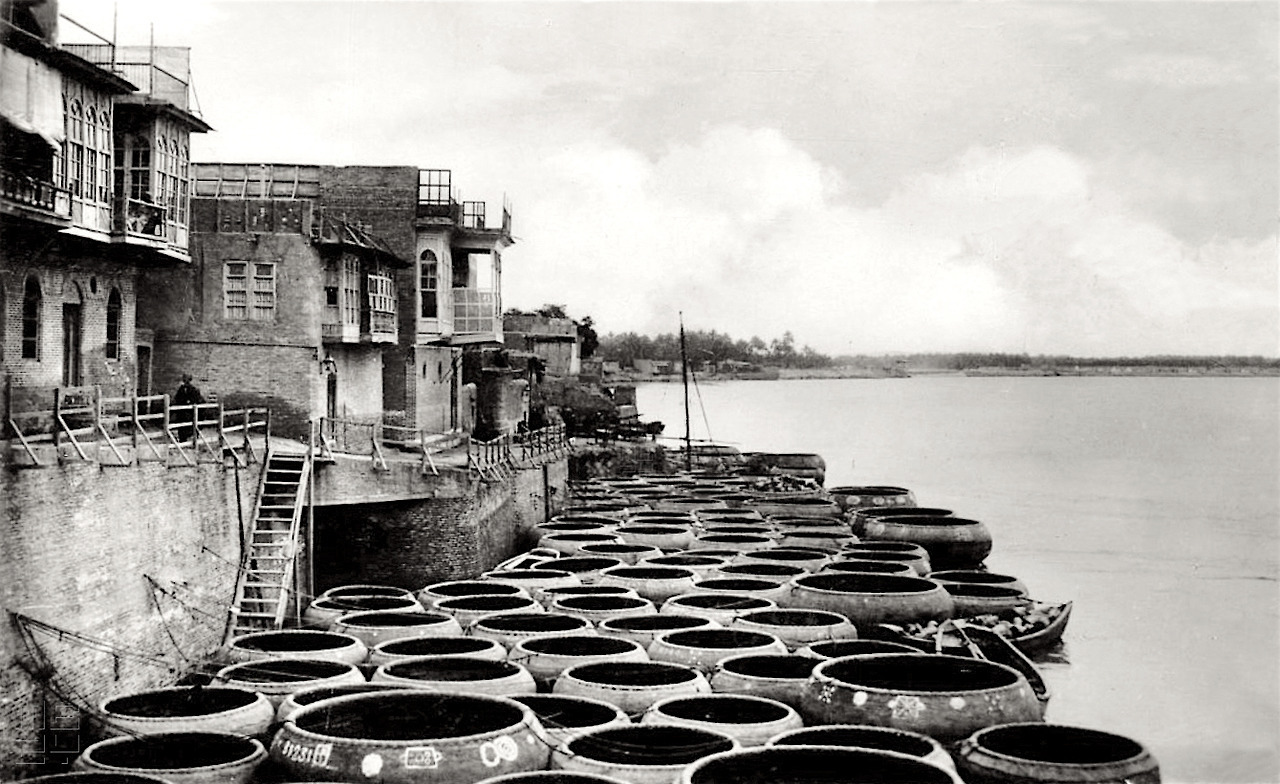
Ottoman power reached Baghdad in 1534 under Sultan Suleiman I. The lands later joined in Iraq did not form a single modern nation-state: Baghdad, Basra, and Mosul had different connections to neighbouring regions, and Ottoman authority varied across towns, countryside, and tribal territories. Rivalry with Safavid Iran made the eastern frontier particularly important. Governors, military households, merchants, and local leaders negotiated the realities of rule. Baghdad was again secured by the Ottomans in 1638. Understanding these centuries requires attention to local society rather than imagining that every imperial decree was carried out uniformly along the Tigris and Euphrates.
In the eighteenth and early nineteenth centuries, the Mamluk governors of Baghdad exercised considerable autonomy while acknowledging Ottoman sovereignty. Their power depended on military households and relations with local interests. Direct Ottoman control was restored in 1831. During the reforming age of the Tanzimat, the government sought stronger administration, taxation, military recruitment, and communications. These efforts aimed to integrate the provinces more closely into the empire, but they also changed the balance between officials, landholders, townspeople, and rural communities. Centralization could create new institutions while provoking resistance from people whose authority or livelihoods it threatened.
Mosul traded with Anatolia and Syria and stood near a region of Kurdish communities and competing local powers. Baghdad was an administrative and commercial centre linking the river valleys to surrounding lands. Basra connected southern Iraq with the Persian Gulf and the Indian Ocean. River transport, markets, and caravan routes joined these places without making their interests identical. Agriculture, date cultivation, livestock, crafts, and commerce supported different ways of life. Seasonal water and the condition of irrigation works shaped production. The economic importance of these activities should not be displaced by reading later petroleum wealth back into the Ottoman period.
Society was diverse in language, religion, and livelihood. Arab and Kurdish communities, Turkmen, Muslims of different traditions, Christians, and Jews lived within overlapping local and imperial settings. The shrine cities of Najaf and Karbala connected southern Iraq with wider Shia religious networks. Baghdad's merchants and scholars had their own regional connections. Such diversity did not mean that every community acted as a united political bloc. Relations depended on class, neighbourhood, patronage, and changing circumstances as well as religious identity. These distinctions matter when examining both Ottoman reforms and the political mobilization that followed the First World War.
Britain invaded southern Mesopotamia in 1914 and captured Baghdad in 1917. Military occupation transformed the political setting, and the collapse of Ottoman authority left the future government disputed. British officials disagreed over direct administration and an Arab government under British supervision. Iraqi nationalists expected independence, not simply a different imperial ruler. In 1920, revolt spread through tribal districts and the middle Euphrates. It brought together groups with different interests and was suppressed by British force. The uprising nevertheless raised the cost of occupation and strengthened the argument for an indirect system of rule.
At the Cairo Conference of 1921, Britain supported Faisal, who had been expelled from Syria after conflict with France, for the Iraqi throne. A provisional government declared him king on the condition that his government be constitutional, representative, and democratic; he was crowned in August. This created an Arab monarchy but did not end British influence. The Anglo-Iraqi treaty signed in October 1922 preserved extensive British advisory powers in military, judicial, financial, and other affairs. Many nationalists opposed it because the language of alliance did not remove the substance of external supervision.
A protocol in 1923 shortened the treaty's intended duration, but the dispute over sovereignty continued. The Constituent Assembly ratified the treaty in June 1924 under strong British pressure and adopted a draft constitution in July. At this point the institutions of the new state were still taking shape. The monarchy needed to connect provinces and communities while dealing with a foreign power whose interests limited its freedom. In 1924, the creation of a national government had not brought full independence. Constitutional promises still stood alongside British supervision and disputes over the practical distribution of authority.
 Britannica: Iraq
Britannica: British occupation and the mandatory regime
Britannica: Faisal I