 Go Back

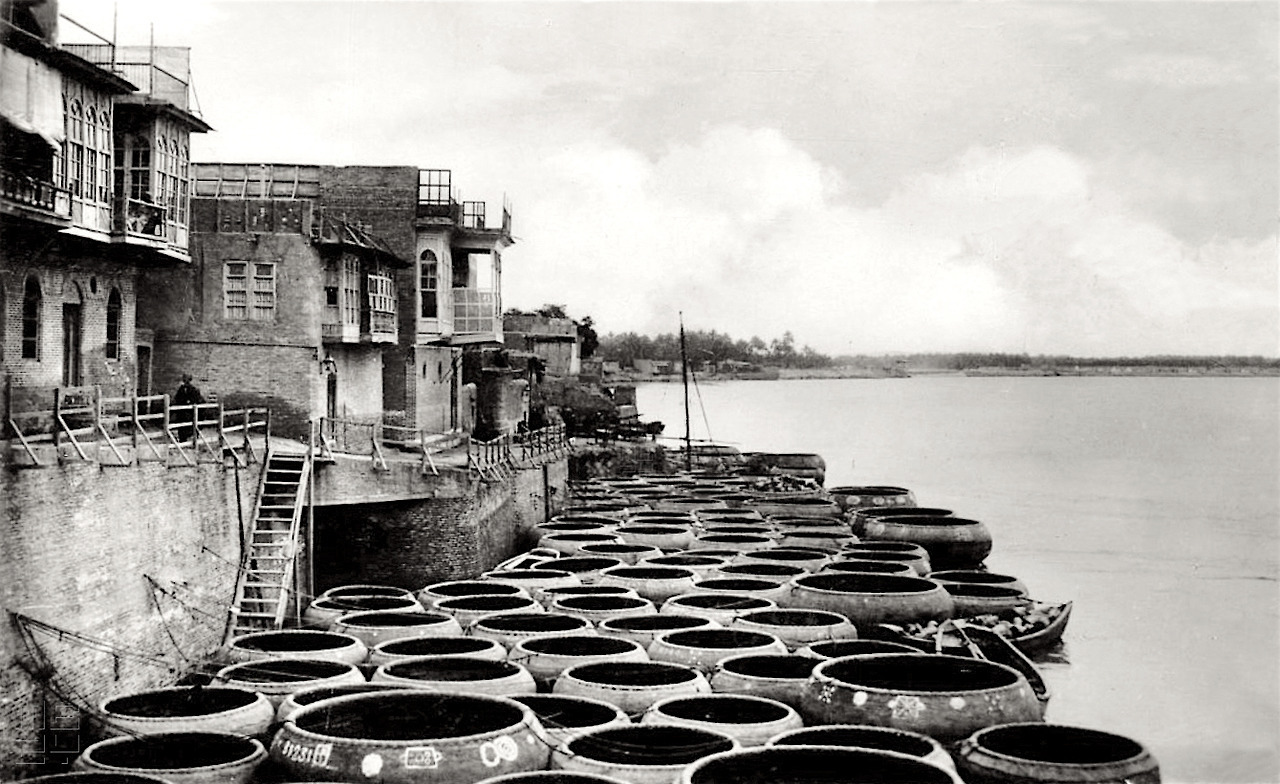
Ottoman and Mandate Iraq. Iraq passed under Ottoman rule in the sixteenth century, when Sultan Suleiman the Magnificent took Baghdad from the Safavids of Iran in 1534, beginning an Ottoman era that, with interruptions, lasted until the First World War. Iraq on the frontier of two empires, Sunni Ottoman and Shia Safavid, suffered their wars for two centuries: Baghdad was lost to the Safavids in 1623 and retaken by Sultan Murad IV in 1638, and the border drawn then still roughly marks the line between Arabic Iraq and Persian Iran. For long periods Ottoman control was loose. In the eighteenth and early nineteenth centuries, Mamluk pashas, Georgian slave-soldiers raised to office like their Egyptian namesakes, ruled Iraq as a nearly autonomous state, while the countryside divided among powerful tribal confederations and the Shia shrine cities of Najaf and Karbala lived under Persian religious influence.
The Ottomans restored direct rule in 1831, and the reforming age of the Tanzimat brought modern administration, land registration, telegraph lines, and the steamships that linked Iraq's rivers to world trade. Baghdad, Basra, and Mosul, three provinces of very different character, Arab Shia, Arab Sunni, Kurdish, Christian, and Jewish, were joined more to their neighbors than to each other. The First World War decided Iraq's fate: British forces invaded from the Gulf in 1914, suffered the disaster of Kut in 1916, and took Baghdad in 1917, and after the Ottoman collapse Britain received Iraq as a League of Nations mandate, an empire in everything but name.
The Iraqis answered with the great revolt of 1920, a rising of tribes, towns, and Shia scholars that cost thousands of lives and forced Britain to install a facade of national government: in 1921 Faisal, son of the Sharif of Mecca, was made king, and Iraq gained formal independence in 1932 as the first mandated state to join the League of Nations. But the Hashemite monarchy rested on British bases and treaties, Sunni dominance of a Shia-majority country, and unresolved Kurdish and tribal questions, a fragile order that coups and revolutions would eventually destroy. The long Ottoman centuries left Iraq's three provinces barely joined.
Mosul in the north traded with Anatolia and Syria and was a world of Kurdish emirs, Arab tribes, and the old Christian churches; Baghdad, repeatedly flooded, besieged, and depopulated, lived on its shrines and its memory; and Basra in the south, grown rich on the Gulf trade of dates, horses, and pearls, looked to India more than to Istanbul. The Mamluk pashas of the eighteenth century, Georgian slaves raised to rule, gave Baghdad a century of semi-independence and its own miniature court, until plague and flood, the terrible year of 1831 that devastated the city, opened the way for direct Ottoman rule.
The Tanzimat reforms that followed began Iraq's modern transformation: the land law of 1858 registered tribal lands in the names of sheikhs and city merchants, turning tribesmen into tenants and creating the landlord class that would dominate Iraq into the twentieth century; telegraph lines reached Baghdad in the 1860s; and Midhat Pasha, the great reforming governor, founded schools, a newspaper, and the tramway of Baghdad in an energetic governorship. The First World War shattered this world: the British advance from Basra stalled in the marshes, the army of Kut surrendered in 1916 after a siege whose survivors were marched to death, and when Baghdad finally fell in 1917, Britain occupied a devastated land it had promised, in ambiguous declarations, to help toward independence.
The revolt of 1920 united, for a moment, Shia shrines and Sunni tribes, city nationalists and rural sheikhs, and its suppression, with aerial bombing of villages, taught Britain that direct rule was unaffordable: hence the monarchy of Faisal, the treaty system that preserved British bases and advisers, and the formal independence of 1932 that satisfied no one, least of all the new generation of nationalist officers who would end the monarchy in the revolution of 1958.
Iraqi society under the Ottomans was a mosaic layered by faith, language, and livelihood. The cities held the urban fabric of the old Abbasid world in reduced form: Baghdad's bazaars, mosques, and shrines; the Jewish community of Baghdad, among the oldest in the world, which dominated the city's commerce and banking into the twentieth century; the Shia shrine cities of Najaf and Karbala, where pilgrims and theology students came from across Iran and India, and where the great mujtahids, scholars whose rulings the faithful followed, formed a religious authority independent of the state; and the Christian communities of Mosul and the north, heirs of the ancient churches of the East. The countryside belonged to the tribes: vast confederations of Arab shepherds and cultivators whose sheikhs the Ottomans and later the British alternately fought and subsidized, and in the mountains the Kurdish clans governed themselves in all but name.
The economy rested on the Tigris and Euphrates, whose irrigation, decayed since the Mongol age, sustained date palms - Basra's dates were exported across the world - and grain; the nineteenth century tied Iraq to the world market, and British steamers on the rivers and the planned Berlin-Baghdad railway made the land a prize of imperial rivalry. The Mandate after 1920 imposed the forms of a modern state: borders fixed among three Ottoman provinces, a parliament and constitution, schools and an army, and the discovery and concession of oil, which began flowing from Kirkuk in 1927 and would dominate Iraqi history ever after. But the state served empire: Britain kept its air bases and its treaty rights, land concentrated in the hands of tribal sheikhs made landlords by registration, and the Shia majority and the Kurds found little place in a Sunni Arab nationalist order built in the cities.
The monarchy educated a generation in modern nationalism, and the very ideas it taught, independence, Arab unity, social justice, turned against it; the twentieth century would bring coups, revolution, and republics, but the precolonial centuries had already fixed the essential questions: how to hold together a land of many peoples, and who would control its water and its oil.
 Britannica: Iraq
 World History Encyclopedia: Ottoman Empire
Britannica: Faysal I
Britannica: Sykes Picot Agreement