 Go Back

Roman Egypt. In 30 BC, Octavian, the future emperor Augustus, defeated Antony and Cleopatra and entered Alexandria, and Egypt's three-thousand-year line of native and foreign pharaohs ended. Egypt became a province of Rome, but a province like no other. It was treated almost as the emperor's personal estate, governed not by a senator but by a prefect chosen from the equestrian order, and senators were famously forbidden to enter Egypt without the emperor's permission. The reason was simple: Egypt fed Rome. Its grain ships, sailing from Alexandria, supplied much of Rome's grain, and whoever held Egypt could squeeze the empire's food supply, as Vespasian proved on his way to the throne.
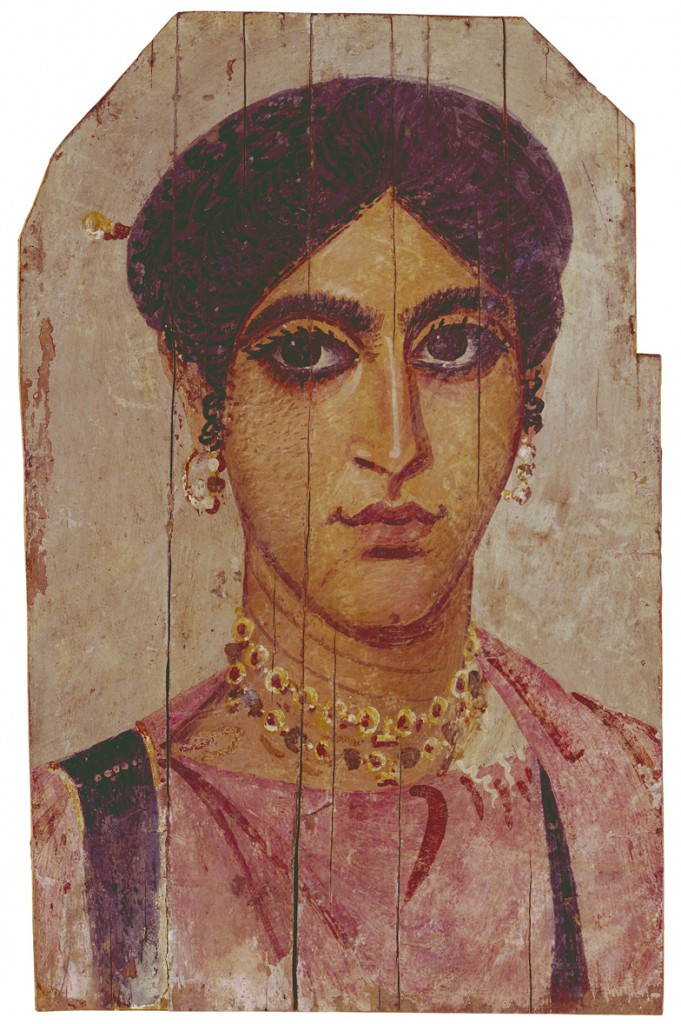
Roman rule brought efficiency and heavy taxation. Officials registered land, counted the population in a census every fourteen years, and collected grain, money, and labor with a thoroughness the papyri record village by village. Yet Egypt's institutions endured. The temples kept their priests and their gods; new temples at Dendera and Philae were built under the emperors in full pharaonic style, their hieroglyphic inscriptions carved for Roman rulers depicted as pharaohs. Egyptian and Greek cultures blended rather than vanished: the cult of Serapis, promoted by the first Ptolemies, flourished, and the Fayum's prosperous families were buried with the hauntingly lifelike mummy portraits that are our largest surviving body of classical panel painting, Egyptian ritual wearing Greco-Roman technique.
Alexandria remained the empire's second city and its intellectual capital. Claudius Ptolemy wrote his astronomy and geography there in the second century; the city's scholars, engineers, and physicians kept the Library's tradition alive for centuries after its founding; and its streets also showed the era's tensions, in riots involving its large Jewish community that Roman troops bloodily suppressed. Christianity spread early into Egypt, and by the third and fourth centuries the country had given the church some of its greatest figures: the theologians of Alexandria, and the desert fathers, Anthony and Pachomius, who invented monasticism in the Egyptian wilderness, an Egyptian gift to the Christian world.
The third century shook the province. Palmyrene forces under Zenobia seized Egypt in 269, a measure of how prized it was; Aurelian's Rome took it back, and after later revolts Diocletian recovered the province in 297-298, then reorganized the empire with Egypt still its richest grain source. The great papyrus archives from towns like Oxyrhynchus, preserved in the dry sand, let historians read Roman Egypt's daily life directly: tax assessments and receipts, petitions, court records, private letters, even horoscopes.
Roman Egypt became Byzantine Egypt when the empire divided, and the age closed in 641-642, when Arab forces under Amr ibn al-As conquered Egypt and Alexandria surrendered, ending six and a half centuries of rule from Rome and Constantinople. The conquerors found a country whose institutions were older than Rome itself.
The legacy outlasted the legions. Roman Egypt is where pharaonic tradition, Greek learning, Roman law, and early Christianity met and mixed; its papyri are our richest window onto ordinary ancient lives; its art, from mummy portraits to Coptic textiles, documents the blend; and its grain gave whoever held it leverage far beyond Egypt's borders.
 Britannica: Ancient Egypt
Britannica: Augustus Roman emperor
Britannica: Alexandria Egypt
 World History Encyclopedia: Roman Egypt