 Go Back

Scientific Life Across Civilizations. Science began where practical need met patient observation. Egyptian engineers oriented pyramids to the cardinal points and calculated slopes and volumes, and the Rhind mathematical papyrus shows the arithmetic, including fractions and the area of a circle, that made the monuments possible. To predict the flood they watched the stars, invented the nilometer to measure the river's rise, and built a 365-day calendar that Rome later borrowed and the world still uses. Babylonian scribes recorded the heavens on clay for centuries, producing the astronomy of tables and predictions that Greeks would later admire and adopt.
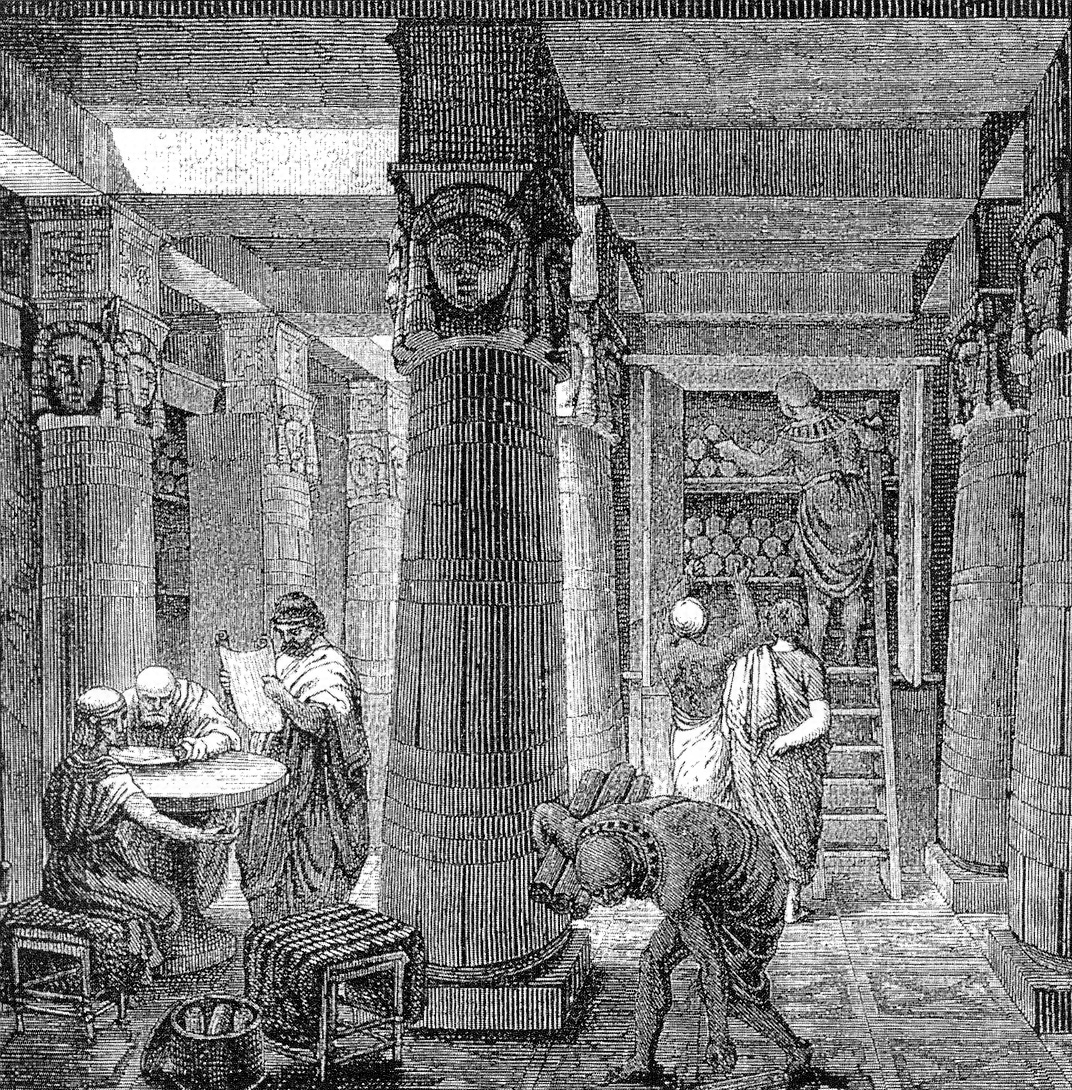
The ancient world's greatest engine of science was the Library of Alexandria. There, supported by the Ptolemies, Euclid wrote the geometry textbook that taught mathematicians for two thousand years; Eratosthenes measured the Earth's circumference with a stick, a well, and the shadow of the sun at noon, and got it nearly right; Herophilus mapped the human body; and engineers like Hero described steam power and automatic machines. When the ancient institutions faded, the baton passed to Baghdad's Bayt al-Hikma, the House of Wisdom, where al-Khwarizmi gave mathematics algebra and the algorithm, and observatories from Baghdad to Maragha and Samarkand measured the stars with instruments of new precision.
Medicine shows the same relay. Imhotep, remembered from the age of the pyramids, became Egypt's patron of healing, and the Edwin Smith papyrus, cool and clinical, describes wounds and treatments case by case with barely a word of magic. Hippocrates of Kos taught that diseases have natural causes, and the oath that bears his name still frames medical ethics. In the Islamic golden age, al-Razi wrote the first accurate account distinguishing smallpox from measles and directed Baghdad's hospital; Ibn Sina's Canon of Medicine organized the whole medical knowledge of his age so completely that it remained a standard textbook in European universities for six hundred years; and Ibn al-Nafis of Cairo first described the pulmonary transit of the blood, a key step toward the circulation that Harvey would prove centuries later. The curriculum adds a modern name to this line: Mostafa El-Sayed, the Egyptian-American chemist whose spectroscopy rule carries his name and whose nanoscience research points toward new cancer treatments, proof that Egyptian scientists still stand in the front rank.
Geography grew from the same roots. Eratosthenes drew maps of the known world; Ptolemy of Alexandria codified both astronomy and cartography in books that guided scholars for a millennium and a half; and al-Idrisi, working for the Norman king of Sicily, produced a famous world map and geography. Astronomy matured from watching the flood-star into precise observatories, where al-Battani refined the length of the year and Ulugh Beg's Samarkand tables fixed the positions of a thousand stars.
What made all this possible was institutions, and the curriculum asks students to compare them: Alexandria's Library, Baghdad's House of Wisdom, and the modern Massachusetts Institute of Technology are the same idea in three ages, a place where a society pays its best minds to think, equipped with the tools of their time, and free to argue with the past. Civilizations that funded such places led; those that closed them declined.
And the curriculum's deeper lesson is about environment: science flourishes where scholars are honored, translation is welcomed, and inquiry is safe. Egypt built both the ancient and the modern ends of that story, from Imhotep and the Library to al-Azhar's scholars and today's research centers. A student reading this page in Cairo is not studying a foreign tradition; they are studying the family business.
 Britannica: Library of Alexandria
Britannica: Avicenna
Britannica: Hippocrates
Britannica: Imhotep