 Go Back

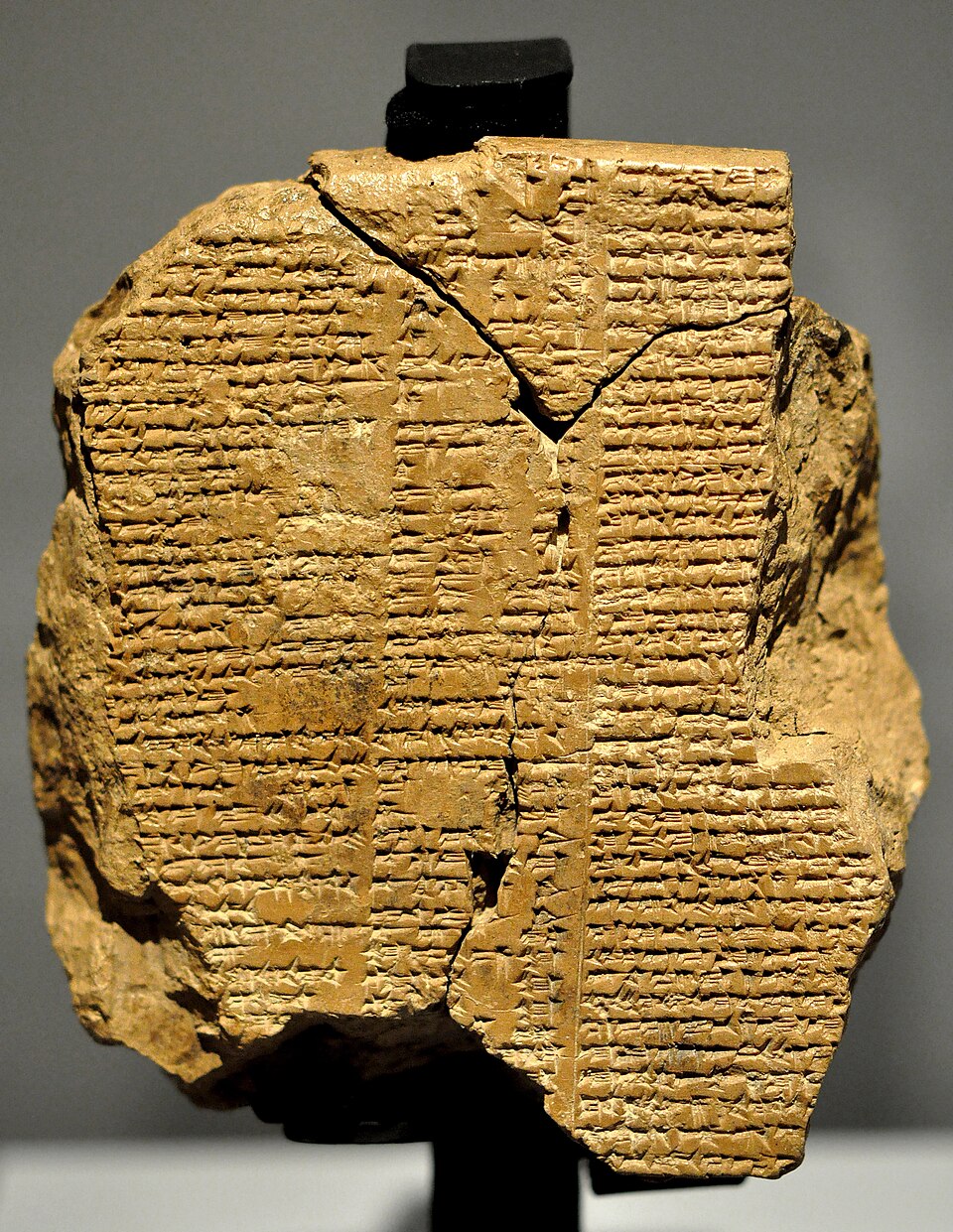
Sumer. In the southern plain of Iraq, between and below the Tigris and Euphrates rivers, the world's earliest known civilization took shape. The land was flat and dry, but the rivers flooded unpredictably, so survival depended on cooperation: communities that dug and maintained canals could turn the plain into rich farmland. By around 4000 BC villages were growing into towns, and by 3300 BC Uruk had become something entirely new, a true city of perhaps 40,000 people, centered on great temples such as the White Temple raised on its platform. Sumer was never a single kingdom but a patchwork of independent city-states: Uruk, Ur, Lagash, Kish, Umma, Nippur, Eridu, and others, each with its own patron god, its own temple estates, and its own ruler, who styled himself en or lugal and led both war and worship.
During the Early Dynastic period, roughly 2900 to 2350 BC, these cities competed fiercely for land, water, and prestige. The conflict between Lagash and Umma over a border field is recorded across generations of inscriptions, including the Stele of the Vultures, which shows King Eannatum's soldiers marching over their enemies. The Standard of Ur, a mosaic box found in the royal graves there, shows the two sides of city-state life on its two panels: war, with chariots and prisoners, and peace, with banquets, herds, and musicians. Around 2334 BC Sargon of Akkad, a Semitic-speaking ruler from the north, conquered the Sumerian cities one by one and forged the world's first territorial empire, which his grandson Naram-Sin pushed to its height. Akkadian rule lasted about a century and a half before collapsing under pressure from Gutian tribes.
Sumer rose once more in the Third Dynasty of Ur, when Ur-Nammu and his son Shulgi ran a tightly organized bureaucratic state, built the great ziggurat of Ur, and issued law codes. Around 2004 BC Elamites from Iran sacked Ur and carried off its king, and Sumerian political independence ended forever, though its culture outlived it. The archaeology of the plain tells the same story the tablets do. At Eridu, seventeen temples were built one on top of another across three thousand years, one of the oldest sacred sites in the region, showing how the shrine grew into the city. At Uruk, excavators found mass-produced pottery, beveled-rim bowls used to ration grain to workers, proof that the city fed a labor force on an industrial scale.
The royal cemetery of Ur, dug in the 1920s, revealed the wealth and the terror of the city-state: Queen Puabi was buried in gold and lapis with a lyre, a sledge, and the bodies of dozens of attendants who followed their ruler in death. Sumerian kingship was understood as a gift from the gods, lowered from heaven, and it passed from city to city as the gods willed, an idea that let many small states share one civilization while fighting for its leadership. The economy of the temples and palaces organized irrigation on a scale no family could manage, and the word of the ruler who controlled the canals was law because water was life. Sumer also knew political experiment: the assembly of elders, and in Uruk a second assembly of fighting men, appear in the epic debating peace and war, among the earliest recorded popular assemblies.
When Akkadian and later Babylonian kings ruled the land, they came to Sumerian Nippur for the blessing of Enlil, because legitimacy in Iraq remained Sumerian long after Sumer itself was gone.
Sumer's greatest invention was writing. It began around 3300 BC as accounting: temple officials pressed tokens and then wedge-shaped marks into clay tablets to record deliveries of barley, beer, oil, and sheep. The cuneiform script, written with a cut reed, gradually gained signs for sounds and ideas, until scribes could record anything: contracts, hymns, proverbs, letters, mathematics, and literature. Learning the script took years in the tablet house, the edubba, and the scribe who mastered it entered a privileged profession. Religion structured every city. Each city belonged to a patron god whose temple was the largest landowner and employer, and the temple's stepped tower, the ziggurat, rose as an artificial mountain dominating the city.
From Sumerian clay comes one of the earliest great works of literature, the Epic of Gilgamesh, in which the king of Uruk seeks eternal life, survives adventures, loses his friend Enkidu, and learns that immortality is not for mortals; its flood story predates and parallels the biblical account retold across later cultures. Sumerians also wrote the earliest known law collections: Urukagina of Lagash boasts of reforms against corrupt officials, and Ur-Nammu's code sets fixed penalties in money for injuries, centuries before Hammurabi. The economy ran on barley and wool; temples organized spinning and weaving on an industrial scale, and traders traveled far because the plain had no metal, stone, or good timber, importing copper from Oman, tin from far to the east, timber from Lebanon. Sumerian mathematics used a base-sixty system, which is why we still divide hours into sixty minutes and circles into 360 degrees.
The wheel and the sailboat are counted Sumerian inventions, and the plow, the potter's wheel, and the school all make some of their earliest known appearances here. Babylon and Assyria inherited Sumerian gods, literature, law, and learning, so that when later Iraqis studied the past, they studied Sumer.
 Britannica: Sumer
 World History Encyclopedia: Sumer
World History Encyclopedia: Gilgamesh
Britannica: Cuneiform