 Go Back

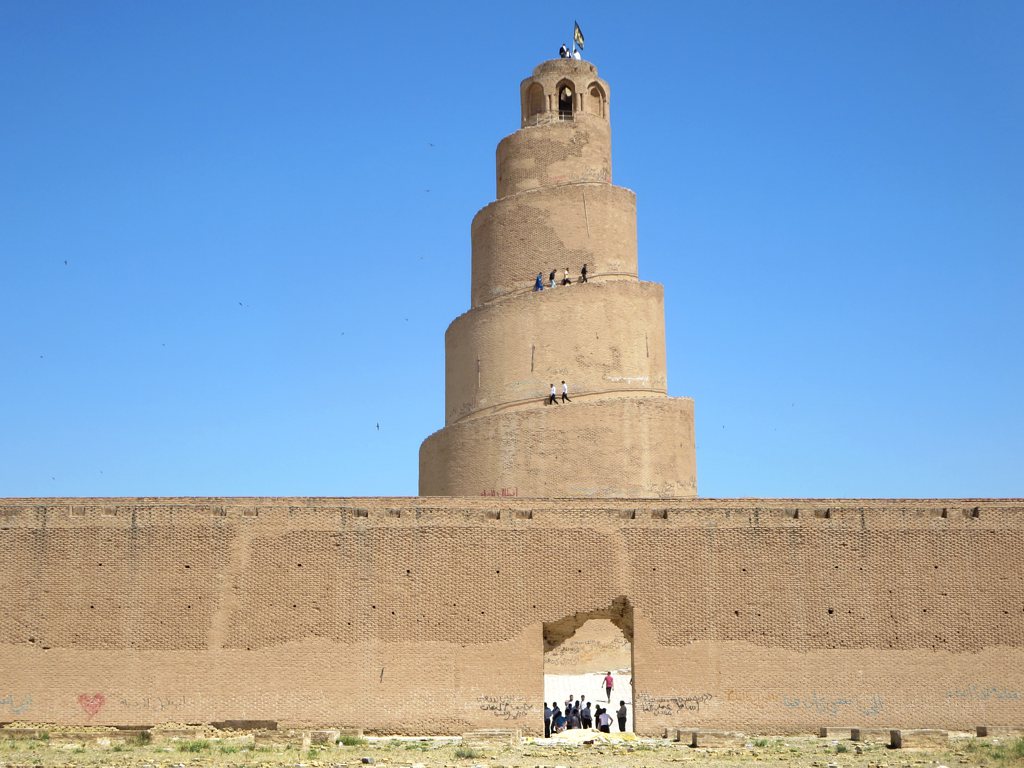
The Abbasid Caliphate. The revolution that swept the Umayyads away in 750 was raised in the name of the Prophet's family, promising a caliph from the house of Abbas, the Prophet's uncle. Its leader Abu al-Abbas was proclaimed in Kufa, the Umayyad armies were crushed on the Zab river, and the new dynasty moved the center of the Islamic world decisively eastward, from Mediterranean Syria to Iraq. In 762 the second caliph, al-Mansur, founded a new capital on the Tigris: Baghdad, the Round City, a perfect circle of walls and palaces at the meeting point of the trade routes of Iraq, Iran, Syria, and Egypt. It became within decades the largest and richest city on earth, perhaps half a million people, and the beating heart of a cosmopolitan empire. The early Abbasid century was the golden age of Islamic civilization.
Harun al-Rashid, caliph from 786 to 809, ruled at the height of its splendor, a figure whose court lives on in the tales of the Thousand and One Nights; his gifts to Charlemagne, including an elephant and a water clock that struck the hours, dazzled a Europe then far poorer. His son al-Ma'mun sponsored the great translation movement: at the House of Wisdom in Baghdad, scholars turned the Greek, Persian, and Indian classics into Arabic, then went beyond them. Al-Khwarizmi wrote the founding works of algebra, named for his book al-jabr, and of the decimal numerals the world now calls Arabic; al-Kindi, al-Farabi, and Ibn Sina, known in Latin as Avicenna, produced works of philosophy and medicine studied in Europe for six centuries; astronomers measured the earth and refined the tables of the heavens; chemists, opticians, geographers, and historians worked in a common Arabic language of learning.
But the empire was already fracturing. Harun divided the succession between his sons, and the resulting civil war wrecked Baghdad from 809 to 813. Later caliphs came to rely on Turkish slave-soldiers, who soon made and murdered caliphs themselves; al-Mutawakkil's assassination in 861 opened a decade of anarchy. Spain was lost to the Umayyads, Egypt broke away under its own dynasties, and Iran fell to local Persian powers. In 945 the Buyids, Shia soldiers from Iran, took control of Baghdad and reduced the caliphs to figureheads, a condition that continued under the Sunni Seljuk Turks after 1055. The caliphate survived as a religious symbol until 1258, when the Mongol Hulagu sacked Baghdad, killed the caliph, and ended the classical Abbasid age. The revolution's organizers had learned from Umayyad failure, and the early Abbasids deliberately built a broader state.
They claimed legitimacy as the Prophet's kin, executed or pensioned off the revolutionary generals, and staffed the government with Persian secretaries whose families, like the Barmakids, ran the empire as viziers until their sudden fall. Al-Mansur, the dynasty's true founder, was an organizer of genius and suspicion: he built Baghdad, established the intelligence and postal service that reported the price of bread in every province, and crushed every rival, including the revolt of the Alids, the Prophet's descendants through Ali, whose failure pushed Shia hopes into patient waiting. The empire's wealth was stupendous: the geographers describe taxes from Egypt's grain, Iraq's Sawad, and the trade of the Gulf and the Indian Ocean flowing into Baghdad, whose palace ceremonial, the green dome, the curtain before the caliph, set the style of Islamic majesty. Harun's pilgrimage, made on foot from Baghdad to Mecca, displayed that piety and power to the world.
Yet the same century saw the system's limits: al-Ma'mun's attempt to impose rationalist theology by the inquisition of scholars alienated the religious public, and his reliance on Iranian troops, and his successors' on Turks, moved the army ever further from society. The Turks who murdered al-Mutawakkil had been bought to protect the caliphs from everyone else, and they ended by ruling the caliphs themselves. The fragmentation that followed was not simple decline: Egypt under the Tulunids and Ikhshidids, and Iran under the Tahirids, Samanids, and Buyids, each patronized learning and letters, so that the Abbasid age is a network of brilliant courts rather than a single capital. But Baghdad's supremacy, built on the loyalty of an empire, never returned.
Abbasid civilization was the great melting pot of the medieval world. Baghdad drew Persians, Arabs, Turks, Greeks, Christians, Jews, and converts of every origin, and its high culture was increasingly Persian in administration, Turkish in arms, and universal in learning. Persian scribes wrote the manuals of statecraft, including advice literature on kingship; the vizier became the manager of empire; and the court ceremonial grew splendid and remote, a world away from the first caliphs in Medina. The economy was a commercial network spanning half the world. Muslim, Jewish, and Christian merchants carried Iraqi glass and paper, Egyptian linen, Indian spices, Chinese silk and porcelain, East African gold and ivory along the sea roads of the Indian Ocean and the caravan routes of Asia, and Abbasid silver coins have been dug up in Viking graves in Scandinavia.
Iraq's agriculture, when its ancient canals were maintained, remained rich, though the era also saw the vast Zanj revolt of enslaved East African laborers in the salt marshes, which took fifteen years to crush and revealed the social cost of plantation labor. Islamic law matured into its classical schools: the followers of Abu Hanifa, Malik, al-Shafii, and Ibn Hanbal developed rival methods of deriving law from the Quran and the Prophet's example, and the science of hadith, the authentication of traditions, reached its canonical collections. Theology debated whether reason or revelation held final authority, with the rationalist Mutazilites briefly backed by the caliphs before a traditionalist reaction prevailed, while Sufi mystics like al-Hallaj, executed for ecstatic utterances, sought God within the soul. Arabic became the world's language of science: the very words algebra, algorithm, alkali, alcohol, zenith, and nadir carry the age in their letters.
Literature flourished in the prose of al-Jahiz and the poetry of al-Mutanabbi, and the storytelling of the Thousand and One Nights wove Persian, Indian, and Arab tales into a mirror of the cosmopolitan capital. When Baghdad fell in 1258, its learning had already seeded Cairo, Cordoba, and, through translation, the universities of Europe.
 Britannica: Abbasid caliphate
 World History Encyclopedia: Abbasid Caliphate
Britannica: Baghdad
World History Encyclopedia: Harun al Rashid