 Go Back

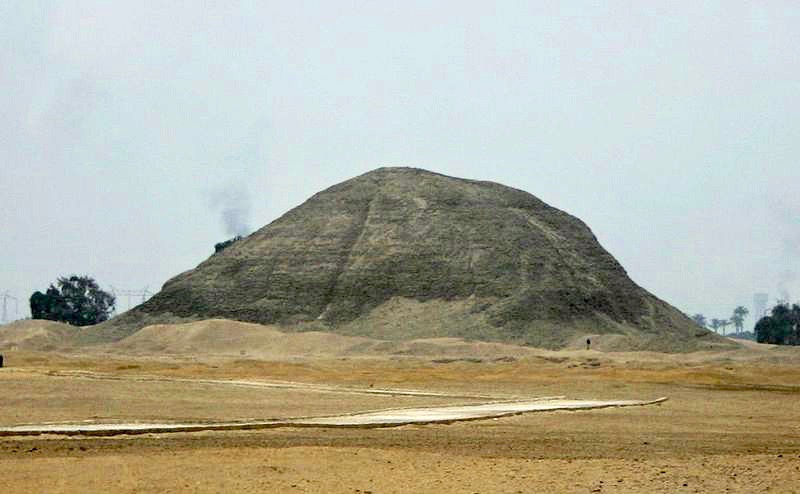
The Middle Kingdom of Egypt. After a century of division, Egypt was reunified around 2055 BC by Mentuhotep II of Thebes, who defeated his northern rivals and reopened the roads, mines, and trade routes that civil war had closed. His dynasty gave way to the Twelfth Dynasty, founded by Amenemhat I around 1985 BC, who moved the capital to the new planned city of Itjtawy near the Faiyum and, in a strikingly honest text called the Instruction of Amenemhat, warns his son to trust no one, speaking as a king after an attempt on his life. The Twelfth Dynasty ruled Egypt for nearly two centuries, one of the most stable and productive periods in its history.
Sesostris III broke the power of the old provincial nomarch families, reorganized the kingdom's administration, and pushed the southern frontier past the Second Cataract of the Nile into Nubia, where he built a chain of massive mud-brick fortresses such as Buhen and Semna to control the gold trade. His successors turned to the Faiyum depression west of the Nile, where Amenemhat III oversaw a huge land-reclamation project: dikes and canals regulated the lake, and new farmland expanded the kingdom's food supply. Middle Kingdom kings still built pyramids, but now of mud brick with stone casings, smaller and less enduring than those at Giza. After Amenemhat III, a series of short reigns weakened the dynasty, and the Thirteenth Dynasty rotated kings rapidly while central authority slipped away.
Around 1650 BC the Hyksos, a people of western Asian origin who had settled in the Delta and adopted Egyptian customs, seized power in the north, ruling from Avaris with superior military technology: the horse-drawn chariot, the composite bow, and bronze weapons. Egypt split again in the Second Intermediate Period, but the Hyksos occupation would teach Egyptians the new arts of war they needed to build an empire. The reunification was remembered as the work of a second founder, and the Theban kings governed consciously in the shadow of the pyramid age, reviving its styles while correcting its mistakes. Amenemhat I created a professional standing army and, to guard the approaches from Asia, built the Walls of the Ruler in the eastern Delta.
The Nubian fortresses of Sesostris III were a military system complete with signal stations and supply depots, and his boundary stele at Semna forbade Nubians to pass except for trade, an early document of border control. The Faiyum project, with its great lake and canal network, added great tracts of farmland and was remembered in the Greco-Roman age as the work of a king called Moeris. Egypt now projected power abroad as never before: expeditions reopened the Red Sea route to Punt, mining camps worked the copper and turquoise of Sinai, and Egyptian influence reached deep into Syria and Palestine, where rulers paid court to Thebes. The dynasty also managed succession carefully through co-regency, the old king crowning his heir in his lifetime so that power passed without civil war, a hard-won lesson from the chaos that had destroyed the Old Kingdom.
The Middle Kingdom is remembered as Egypt's classical age of literature. In Middle Egyptian, the dialect that schoolchildren would copy for a thousand years, writers produced works of real literary ambition. The Tale of Sinuhe follows a courtier who flees Egypt after a royal assassination, makes his fortune in Syria, and longs in old age to return and be buried at home, a meditation on exile and identity. The Eloquent Peasant dramatizes a wronged farmer whose beautiful speeches force officials to grant him justice, reflecting the period's emphasis on ma'at as a duty the powerful owe the weak. The Instruction of King Merikare advises a ruler to govern well because even kings are judged after death. This literature survives because scribal schools copied it for centuries, and it tells us that Middle Kingdom Egyptians were wrestling with questions of justice, loyalty, and mortality. Religion changed profoundly in this era.
Belief in the afterlife, once reserved for the king, was extended to ordinary officials and commoners. Osiris, god of the afterlife, became the hope of everyone, and guidance texts painted inside wooden coffins gave non-royal Egyptians what had once been reserved for kings. Society became somewhat more mobile; a capable scribe or soldier could rise, and Egyptians began to speak of self-made men. Craftsmanship reached extraordinary refinement: the gold jewelry of princesses like Sithathoryunet, with cloisonne inlay of colored stones. Block statues, squatting figures wrapped in cloaks, offered a new sculptural form for tombs and temples. Trade expeditions sailed to Punt for myrrh and incense and to Lebanon for cedar, while forts in Nubia secured gold, ivory, and ebony. The Middle Kingdom proved that Egypt could be reborn after collapse, a pattern of fragmentation and reunification that would repeat through its long history.
 Britannica: Ancient Egypt
 World History Encyclopedia: Middle Kingdom of Egypt
World History Encyclopedia: Senusret III
World History Encyclopedia: Mentuhotep II