 Go Back

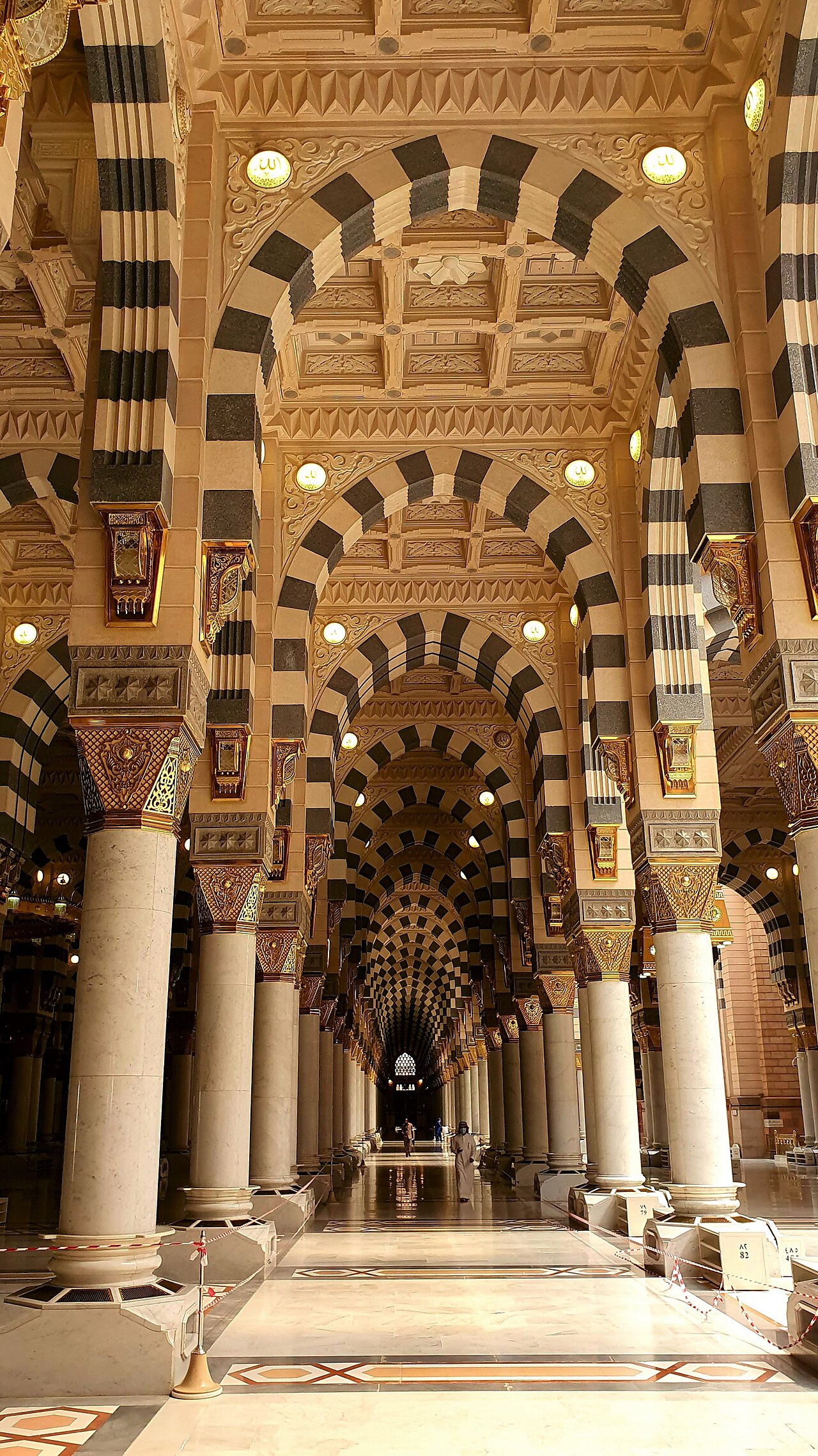
The Rashidun Caliphate. When the Prophet Muhammad died in 632, he left a young Muslim community in Arabia with no agreed rule of succession and no precedent for leading a state. The community's elders chose Abu Bakr, the Prophet's close companion and father-in-law, as the first caliph, meaning successor. His two-year reign faced immediate crisis: tribes across Arabia renounced allegiance or followed rival prophets, and Abu Bakr fought the Ridda wars, the wars of apostasy, to reunite the peninsula under Islam. With Arabia united, Abu Bakr deliberately directed the tribes' energies outward, against the two exhausted superpowers of the age: under generals like Khalid ibn al-Walid, Muslim armies advanced into Iraq and Syria and found the Byzantine and Sasanian empires unable to stop them. Umar ibn al-Khattab, caliph from 634 to 644, presided over the astonishing decade of conquest.
In 636 his armies destroyed the Byzantine field army at Yarmouk and took Syria, and Jerusalem surrendered the next year; in the same years the Sasanian army was shattered at Qadisiyyah, and by 651 the whole Persian Empire had fallen. Egypt was conquered by Amr ibn al-As between 639 and 642, and within a single generation Muslim rule stretched from Libya to the borders of Central Asia. Umar organized the new empire: garrison cities such as Fustat in Egypt, Kufa and Basra in Iraq were founded, a register divided stipends from conquest revenue among the Muslim soldiers and their families, and the calendar was fixed from the Hijra of 622. Conquered peoples kept their lands and religions as protected subjects paying tribute, an arrangement that made conquest cheaper and, at first, made few demands for conversion.
Umar was assassinated by a Persian slave in 644, and Uthman ibn Affan, of the powerful Umayyad clan, continued the expansion while standardizing the text of the Quran into the single official recension still used today. But charges of favoritism toward his clan grew, rebellious soldiers from Egypt and Iraq besieged his house in Medina, and in 656 he was murdered. Ali, the Prophet's cousin and son-in-law, became the fourth caliph amid civil war: he fought the Battle of the Camel against Aisha and other opponents, then faced the revolt of Muawiya, governor of Syria, whose standoff at Siffin ended in arbitration. A breakaway faction, the Kharijites, assassinated Ali in 661. Muawiya took the caliphate, and the age of the elected Rightly Guided caliphs gave way to hereditary empire. The speed of the conquests still astonishes historians, and several causes worked together.
The Byzantine and Sasanian empires had just fought each other to exhaustion in a generation-long war, and the peoples of Syria, Egypt, and Iraq, many of them Christians at odds with Constantinople's orthodoxy, or Jews and peasants crushed by taxation, often found Muslim rule lighter than the old. The Arab armies were superbly led and highly motivated, fighting with the confidence of a new faith and the experience of desert war; Khalid ibn al-Walid's march across the desert from Iraq to Syria in 634 remains a legend of military daring. Equally important, the conquerors did not at first seek to convert or to settle among the conquered: they built garrison cities apart, kept the existing tax systems running in Greek and Persian, and protected churches, synagogues, and fire temples in return for tribute, so that local elites found cooperation rational.
Umar's settlement was the foundation: the conquest revenue was shared among the Muslim soldiers by a fixed register of stipends, the caliph keeping only a fifth for the community's needs, and land was left in the hands of its cultivators rather than divided among the conquerors. This made the empire a tax state ruling subject peoples rather than a colony of settlers, and it held for a century. The civil wars at the end of the period fixed the great questions: whether the community should be led by the most meritorious, as the first caliphs claimed, or by the Prophet's kin, as Ali's party insisted; and whether a ruler who governs unjustly forfeits obedience. Those arguments, born in the murders of Uthman and Ali and the martyrdom of Husayn at Karbala under the dynasty that followed, shaped Sunni and Shia Islam and are still alive today.
The Rashidun era asks the deepest question in Islamic history: how should the community be led after the Prophet? The first caliphs ruled not as kings but as successors to the Prophet's political role, guarding the community, commanding the armies, and judging disputes, while making no claim to prophecy. They consulted senior companions, governed from modest houses, and in Umar's legendary image walked the streets of Medina checking on the poor. Their authority rested on personal piety, election by the community's leading men, and success in war. The conquests created a new social order. Arab Muslim soldiers settled in new garrison towns, kept apart from the conquered populations, living off stipends from the tribute of subject peoples, who remained Christian, Jewish, Zoroastrian, or otherwise and paid taxes for protection and exemption from military service.
Administration at first stayed in local hands: Greek and Persian scribes kept their posts, coins and tax systems continued, and life for most farmers changed little beyond the name of the ruler. Yet the empire's very success strained the old Arabian equality. Conquest enriched some families far beyond others; Uthman's relatives filled the governorships; and the first civil war split the community along lines that have endured: those who upheld the legitimacy of the first three caliphs and Muawiya's succession, who became the Sunni majority, and those who held that leadership belonged to Ali and the Prophet's family, who became the Shia. The murder of Uthman and the killing of Ali planted the question of whether rebellion against an unjust ruler can ever be right, while the Kharijites answered with a violence that horrified everyone else.
In this crucible the institutions of Islamic civilization were forged: the caliphate itself, the Quran's fixed text, the early schools of law and tradition in Medina, Kufa, and Basra, and the memory of a rightly guided age against which every later Muslim reformer, down to the present, has measured his own time.
 Britannica: Rashidun
 World History Encyclopedia: Rashidun Caliphate
Britannica: Abu Bakr
Britannica: Umar I