 Go Back

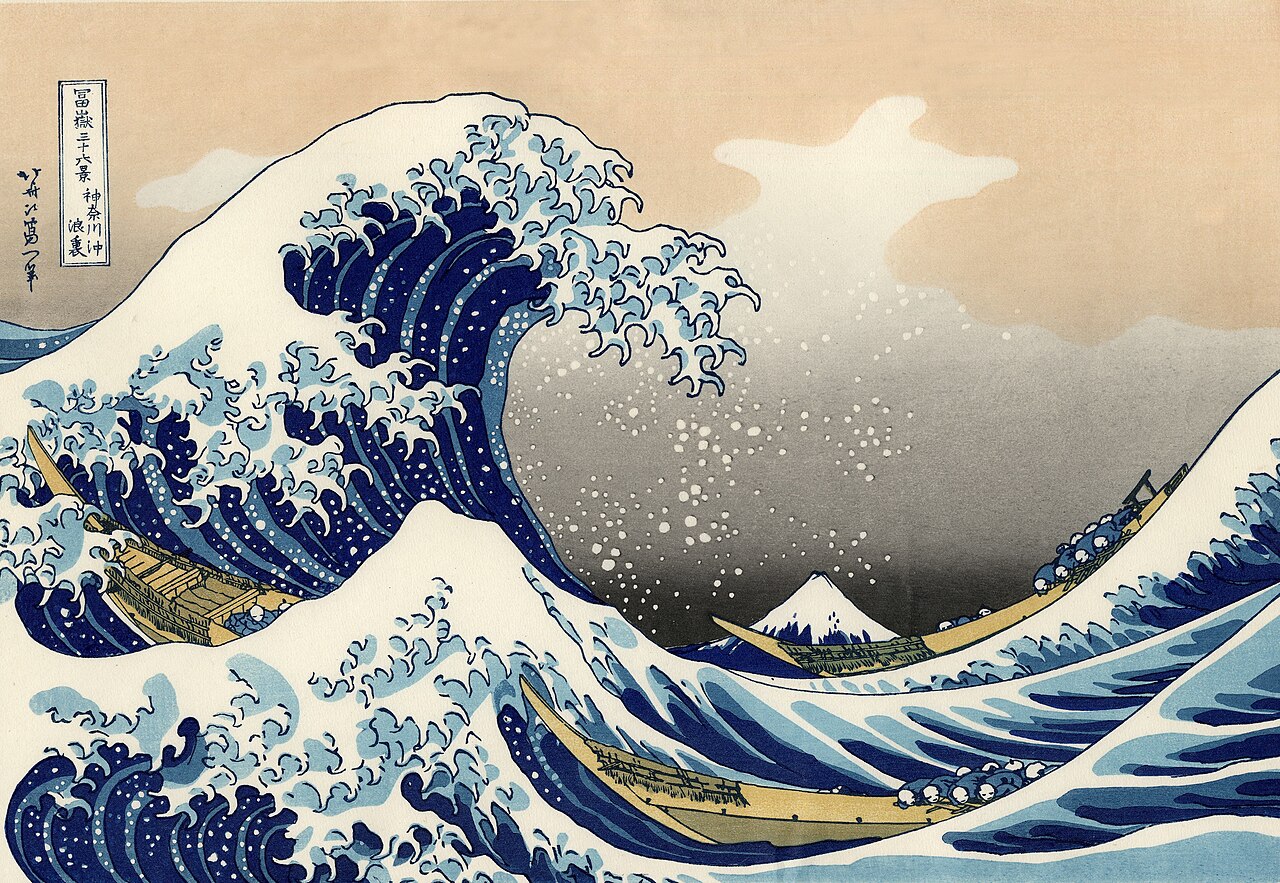
Tokugawa Japan. In 1600 Tokugawa Ieyasu won the battle of Sekigahara, and in 1603 took the title of shogun, founding the last of Japan's warrior governments, the Tokugawa bakufu, which ruled from Edo, modern Tokyo, for over two and a half centuries of peace. The Tokugawa solved the problem that had wrecked their predecessors: how to control the daimyo, the great lords. They classified the lords by loyalty, placing allies on the strategic lands and former enemies on the fringes; they confiscated and transferred domains at will; and above all they built the system of sankin-kotai, alternate attendance, which required every daimyo to maintain lavish households in Edo and to march there in procession every other year, leaving his family as hostages when he returned home.
The roads of Japan filled with the splendid processions of the lords, and Edo grew into the largest city on earth, with a million inhabitants. The Tokugawa froze society into a fixed order: samurai, peasant, artisan, merchant, in theory hereditary and immovable, with the samurai alone entitled to wear two swords. Christianity, which had spread to hundreds of thousands since the Portuguese arrived, was driven underground after the Shimabara rebellion of 1637-38, and Japan closed itself: the sakoku edicts forbade Japanese to leave and foreigners to enter, on pain of death, save for the Dutch and Chinese confined to the tiny port of Nagasaki, a single window on the world through which books and instruments of Western learning still trickled. The peace worked: for two centuries Japan knew no civil war, agriculture and population grew, and an urban culture of dazzling richness flowered in Edo, Osaka, and Kyoto.
But the system's contradictions grew with it: the samurai, a hereditary warrior class with no wars to fight, sank into debt to the very merchants the official order despised; peasant uprisings multiplied against tax and famine; and the shogunate's finances decayed. In 1853 the American Commodore Perry arrived with steam warships and demanded Japan open; the bakufu, unable to resist, signed the treaties, and the humiliation destroyed its legitimacy. In 1868 samurai from the great outer domains of Satsuma and Choshu overthrew the shogun in the name of the emperor, and the Meiji Restoration ended the age of the Tokugawa. The Tokugawa settlement was the most successful peacekeeping system in Japanese history, and its machinery repays study.
The shogunate kept roughly a quarter of the country's rice land as its own domain, ruled the greatest cities and mines directly, and placed its allied daimyo, the fudai, in the strategic corridors while pushing the outer lords of Satsuma, Choshu, and Tosa, who had fought on the losing side at Sekigahara, to the far coasts where they could be watched. Alternate attendance did the rest: the daimyo's processions to Edo, hundreds of retainers in ordered splendor, consumed up to two-fifths of their income, and their families lived permanently in the capital as hostages, so that rebellion meant abandoning wife and heir. The emperor was kept in Kyoto in sacred idleness, forbidden by the shogunate's own laws from politics; the great court became a museum of ceremony while power sat in Edo.
The closing of the country was equally deliberate: Christianity was extirpated because it had converted lords and peasants into a loyalty the state could not control, the Shimabara rebels were slaughtered to the last, and the expulsion edicts bound Japan for two centuries, except for the Dutch, tolerated on their artificial island of Dejima because they traded without preaching. Peace brought prosperity: rice output roughly doubled with new paddies and better tools, the population grew to some thirty million, and Edo, Osaka, and Kyoto each became cities of hundreds of thousands, among the largest in the world.
The system's failure was fiscal and social, not cultural: samurai stipends, fixed in rice, shrank as prices rose, until the warrior class pawned its armor and married into merchant wealth; the bakufu's repeated reforms foundered on the impossibility of taxing the lords; and when Perry's ships arrived, the regime that could not defend the country could not survive the proof of its own weakness.
Tokugawa peace created one of history's most remarkable urban cultures. Edo, Osaka, and Kyoto, cities of commoners where merchants, artisans, actors, and pleasure-quarters flourished despite the official scorn for commerce, generated a floating world of popular art: the kabuki theater with its star actors and spectacular staging; the woodblock prints of Hokusai and Hiroshige, whose views of Fuji and the great roads taught the world to see Japan; the pleasure districts with their courtesans and fashions; and a popular literature of comedy, romance, and ghost stories read by a strikingly literate public, schooled in the terakoya temple schools that gave Japan one of the highest literacy rates in the premodern world.
Samurai, pensioned on rice stipends and barred from trade, became salaried administrators and scholars: they ran the domains, studied the Confucian classics that the shogunate made its official philosophy of hierarchy and duty, and in the Mito school and the studies of the national learning revived the study of Japan's own ancient texts and the divinity of the emperor, ideas that would arm the coming restoration. The economy outgrew the system that contained it: rice remained the measure of wealth and the basis of taxation, but a money economy of rice brokers, sake brewers, and great merchant houses like Mitsui, whose shops sold for fixed cash prices, a retail innovation, knit the country into a national market along the five highways and the coastal sea routes.
Intellectual life, officially Confucian, absorbed Dutch learning through the translators of Nagasaki, whose studies of Western medicine, astronomy, and geography taught Japanese scholars that a vast world of knowledge existed beyond China. Peasant life, four-fifths of the nation, revolved around the village, the rice paddy, and the seasons, regulated by officials and headmen, enlivened by festivals of the kami and the Buddha, and punctuated, in the hungry years, by the uprisings that multiplied as taxes rose and harvests failed. When Perry's black ships appeared, Tokugawa Japan was thus no stagnant backwater but a rich, literate, urbanized society chafing inside a frozen political shell; the speed of the Meiji transformation that followed is explained by how much the Tokugawa peace had already built.
 Britannica: Tokugawa period
Britannica: Matthew C Perry
Britannica: Japan
 World History Encyclopedia: Edo Period