 Go Back

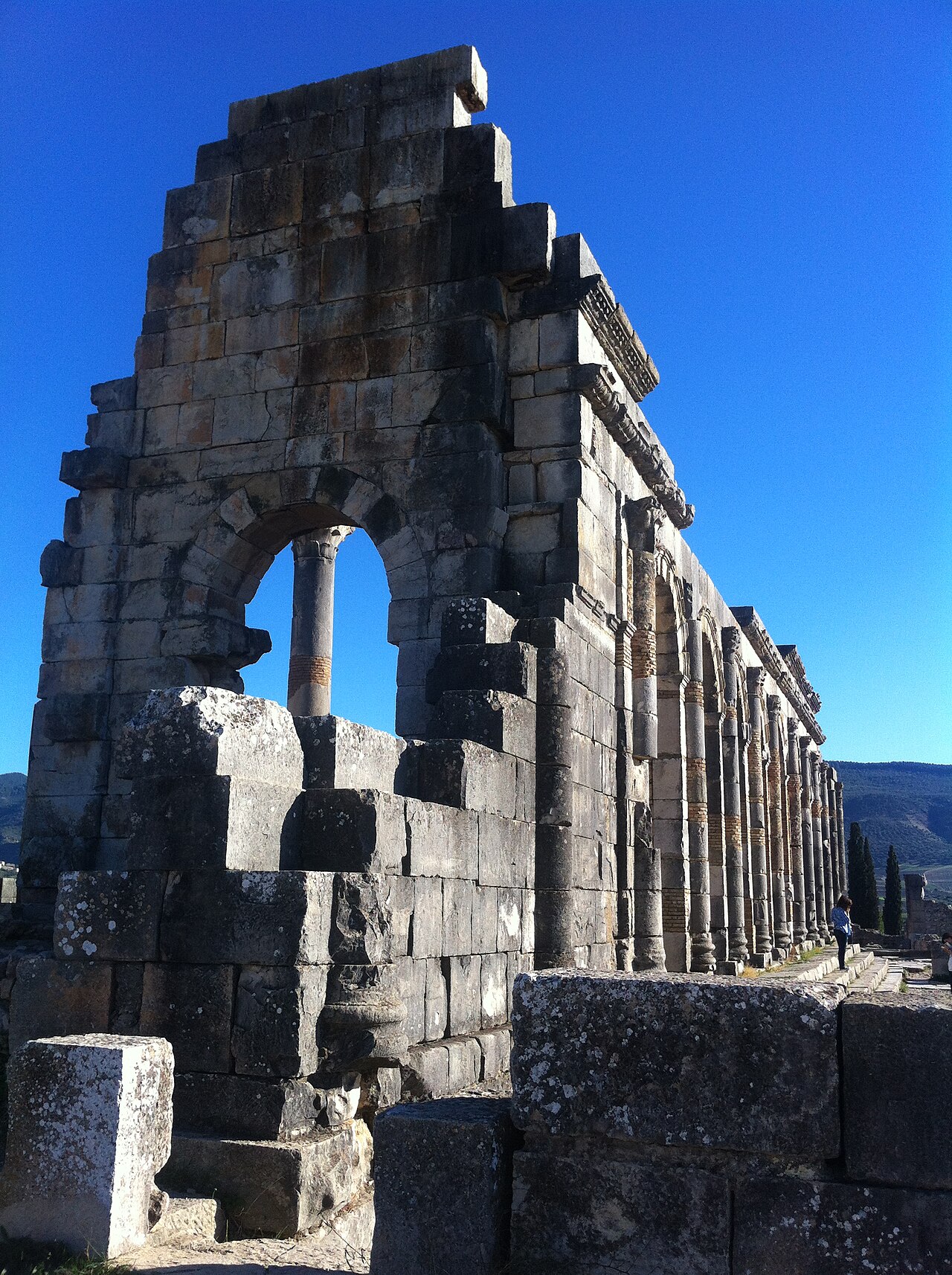
Mauretania was an ancient Berber kingdom situated on the Atlantic coast of North Africa, encompassing modern day Morocco and western Algeria from the 3rd century BCE to 40 CE. Inhabited by the Mauri people, this tribal kingdom matters because it controlled crucial Atlantic and Mediterranean trade networks, supplying the ancient world with fine horses, timber, and valuable purple dyes. For much of its early history, Mauretania maintained a strong, independent identity while skillfully navigating the intense geopolitical rivalries between Carthage and Rome.
The kingdom's wealth rested on its land and coasts: Mauretania produced grain, olives, marble, timber, and livestock, and its shores were famous for Tyrian purple, the snail-based dye prized across the ancient world. As Carthage's power faded after its defeats by Rome, Mauretanian kings took over old Phoenician ports like Tingis, and later rulers even minted their own coins, some lettered in Phoenician and some in Latin, a sign of a kingdom balanced between worlds. Its kings played the great powers with care: Bocchus I first allied with, and then betrayed, his son-in-law Jugurtha of Numidia to the Romans, and his successors backed Julius Caesar in the civil wars, earning Roman favor and territory.
The kingdom eventually entered the Roman political orbit as a loyal client state, reaching its cultural and economic peak under King Juba II, appointed by Augustus, and his wife Cleopatra Selene II, a daughter of Cleopatra of Egypt. Raised in Rome, Juba pushed his still mostly pastoral people toward city life, expanding the cities of Volubilis and Caesarea with Greco-Roman temples, palaces, and theaters, though the great royal mausoleum built in his reign followed older Berber forms. As Roman clients, his dynasty faced repeated revolts in the mountain interior and raids from the desert tribes, and Rome repeatedly had to send help.
This prosperous era came to an abrupt end in 40 CE, when the Roman Emperor Caligula had Mauretania's final king, Ptolemy, executed over a perceived slight. A major anti-Roman rebellion erupted shortly after, and after crushing it Rome formally divided the kingdom in 44 CE into two imperial provinces, ending the old Berber monarchy for good.
 Britannica: Mauretania
 World History Encyclopedia: Mauretania
 BBC: World War One role of luxury liner RMS Mauretania