 Go Back

The Blemmyes and the Nobades. The Blemmyes and the Nobades (c. AD 250-650) were the two peoples who dominated Lower Nubia between the fall of the Kushite kingdom of Meroe and the rise of the Christian Nubian kingdoms. When Meroe collapsed in the fourth century, its former northern lands fragmented, and into the vacuum moved the Nobades, a people settled along the Nile from the First to the Second Cataract, and the Blemmyes, desert nomads of the Eastern Desert between the Nile and the Red Sea.
The Blemmyes were already old enemies of Rome. From the third century they raided the southern Egyptian frontier so persistently that the emperor Diocletian pulled the Roman border back to the First Cataract around AD 298 and paid both peoples subsidies to keep the peace. Blemmye war bands at times occupied the Dodekaschoinos, the stretch of river below the cataract, and the great temple complex of Philae passed back and forth between Roman and Blemmye control. Their chiefs ruled from the desert and from towns such as Talmis, and their power rested on camel-borne mobility across the eastern wastes.
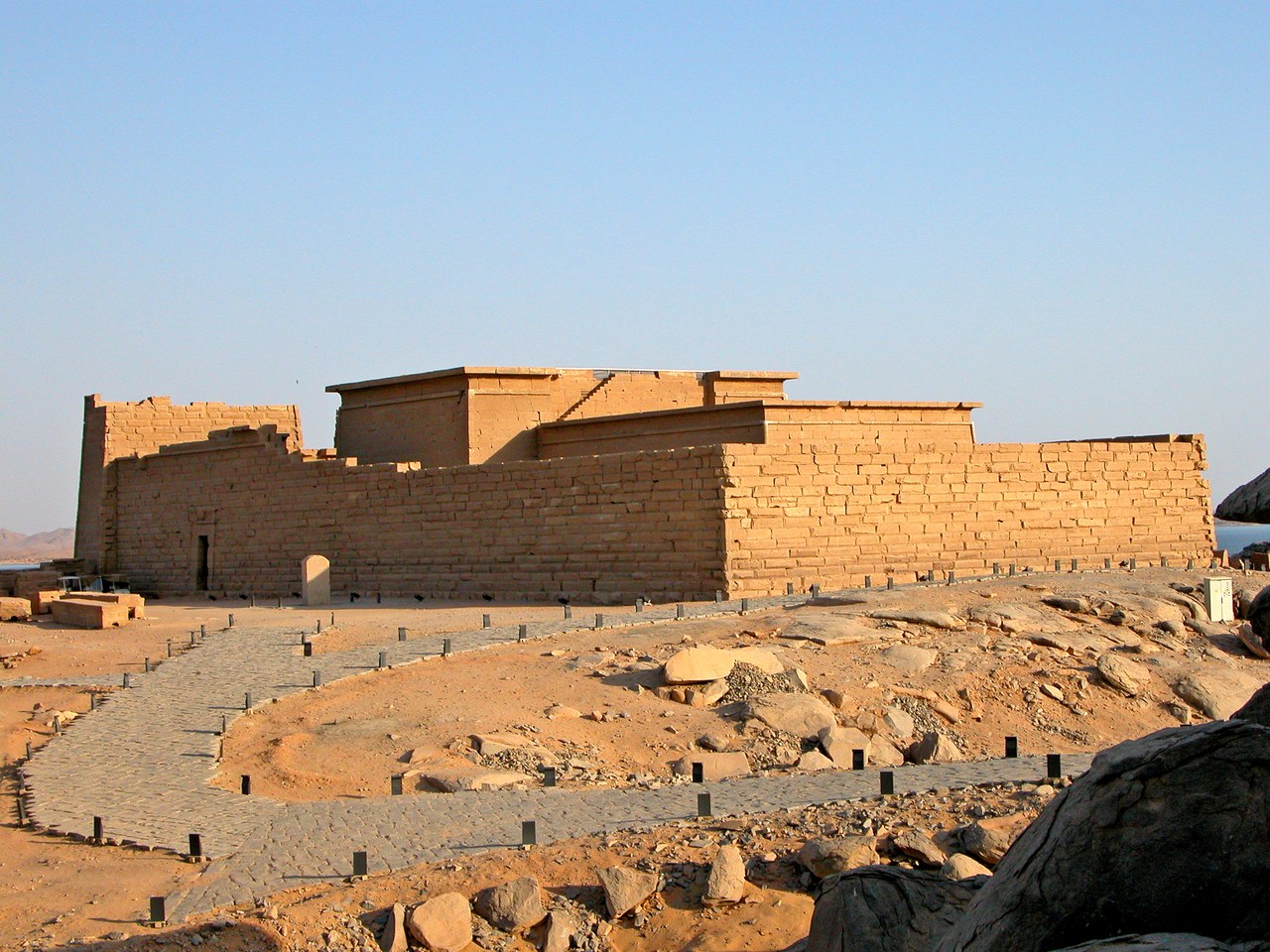
The Nobades, meanwhile, built a settled riverine kingdom with its centers at Faras and later Dongola. Their rulers buried their dead in great tumulus tombs at Ballana and Qustul, filled with weapons, horse gear, jewelry, and silver crowns that show both the wealth of the Nile trade and continuing contact with Egypt. Ancient writers describe repeated wars between the Nobades and the Blemmyes, until in the mid-fifth century the Nobadian king Silko recorded in an inscription at Kalabsha that he had defeated the Blemmyes and driven them from the Nile valley.
These two peoples formed the bridge between the ancient and medieval worlds in Nubia. From the realm of the Nobades emerged the Christian kingdom of Nobatia, converted in the sixth century, while the Blemmyes lingered in the Eastern Desert for centuries more. Their era saw Nubia move from the orbit of pharaonic and Roman Egypt toward the Christian kingdoms of Makuria and Alodia, which would dominate the middle Nile for nearly a thousand years.
 Nubian Monasteries (University of Warsaw): Nubian Kingdoms
 Journal of Korean Society for Cultural Heritage: The Emergence of the Nobadia Kingdom
 EBSCO: Nobatae