 Go Back

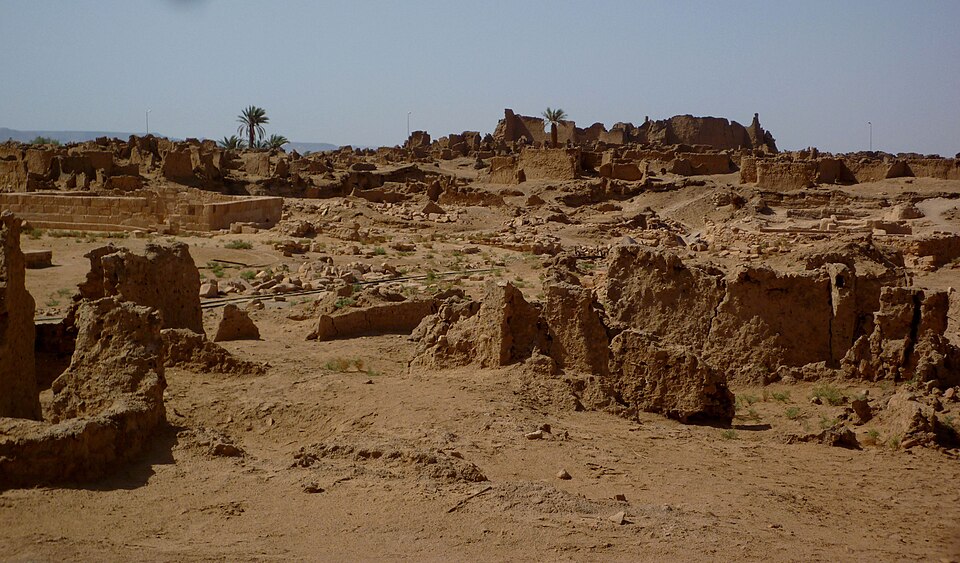
The Garamantes. The Garamantes (c. 500 BC - AD 700) were the people of a remarkable kingdom in the Fezzan, the desert heart of modern Libya, who proved that a complex state could flourish in the middle of the Sahara. Greek writers knew them from the fifth century BC: Herodotus described them as a powerful people who hunted the cave-dwelling Ethiopians in chariots and spread soil over salt-encrusted ground to grow their crops. Their capital, Garama, stood near modern Germa in the Wadi al-Ajal.
The secret of Garamantian power lay underground. From early in their history they dug foggaras, gently sloping tunnels that tapped fossil water in the rock and carried it, sometimes for kilometers, to fields of wheat, barley, grapes, and dates. Hundreds of these channels, with lines of vertical maintenance shafts still visible from the air, supported farming towns and a growing population in one of the driest regions on Earth. Archaeological work in the Fezzan has revealed mud-brick cities, fortified settlements, and vast cemeteries with tens of thousands of tombs.
The Garamantes stood at the southern end of trans-Saharan routes, and their relations with Rome were sometimes peaceful and sometimes hostile. Roman forces campaigned against them, notably under Cornelius Balbus in 19 BC, yet trade mattered more than war: gold, ivory, enslaved people, salt, and the gemstones Romans called carbuncles moved north through Garamantian hands, while wine, oil, and Roman goods flowed south. Diplomatic missions traveled between the Garamantian kings and Roman North Africa, and Roman writers counted Garama among the notable cities subdued or visited by their armies.
The kingdom endured for roughly a thousand years, a record few ancient states can match. Its decline came with the drying of the climate, the falling water table that made the foggaras ever harder to maintain, and shifts in trade routes, and by the early Islamic period Garama was a shadow of itself. Today the Garamantes are recognized as one of the earliest urban societies of the Sahara, a reminder that the desert was never an empty barrier but a region crossed, farmed, and ruled by Africans long before the age of the great camel caravans.
 Livius: Garamantes
 World History Encyclopedia: The Camel Caravans of the Ancient Sahara
 Live Science: Aquifer that fed an ancient African kingdom
 Libyan Studies (Cambridge): The Garamantes: A Fresh Approach