 Go Back

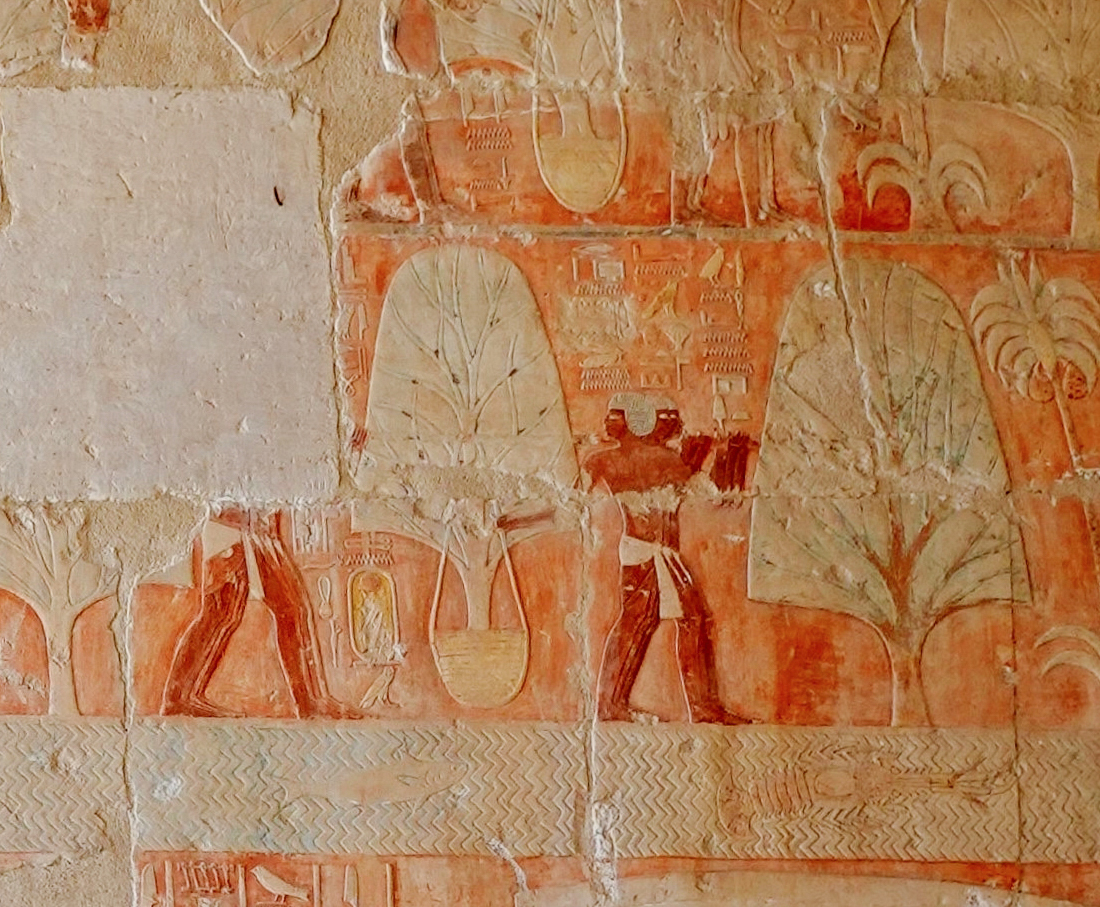
The Land of Punt was an ancient, highly prosperous trading kingdom located somewhere along the Horn of Africa, flourishing from roughly 2500 BCE to 1000 BCE. Revered by ancient Egyptians as God's Land, Punt matters greatly to history because it served as a major regional commercial hub connecting interior Africa to the Red Sea. Trade was ancient long before it was famous: Egyptian records hint at voyages to Punt as early as the reign of Khufu in the 26th century BCE. They produced highly sought after luxury goods, most notably frankincense, myrrh, gold, ebony, ivory, and wild exotic animals that were eagerly imported by Egyptian pharaohs for religious rituals.
The most famous record of this kingdom comes from the temple walls of Queen Hatshepsut at Deir el-Bahari, which vividly depict a massive Egyptian naval expedition trading peacefully with Punt's king and queen. The fleet returned loaded with treasures, including living incense trees transplanted to Egyptian soil, the first known successful transplanting of foreign flora in recorded history. These detailed reliefs showcase stilt houses, lush palm trees, and dense marine life, offering invaluable glimpses into ancient East African society.
The kingdom slowly faded from Egyptian records during the Late Bronze Age collapse as trade routes deteriorated, with the last great recorded expeditions under the New Kingdom's final warrior pharaohs. While Punt's exact geographical boundaries remain debated by modern historians, with scholars proposing Somalia, Eritrea, Sudan, or even Arabia, the Red Sea lanes it anchored would one day carry the rise of Aksum.
The search for Punt is a detective story of its own. The Egyptians called it Pwenet, a name later Greek geographers echoed as Opone, and the debate over its location began soon after Champollion first deciphered hieroglyphs in 1822. Eritrea and northwest Somalia remain the leading candidates today, and observers note striking resemblances between the region's traditional dress, arts, and the figures carved on Hatshepsut's walls, hints of a very ancient exchange between Egypt and the Horn.
 Britannica: Punt
 World History Encyclopedia: Supposed Location of the Land of Punt
 Humanities LibreTexts: 4.4: Ancient Egyptian Trade
 PBS: NOVA