 Go Back

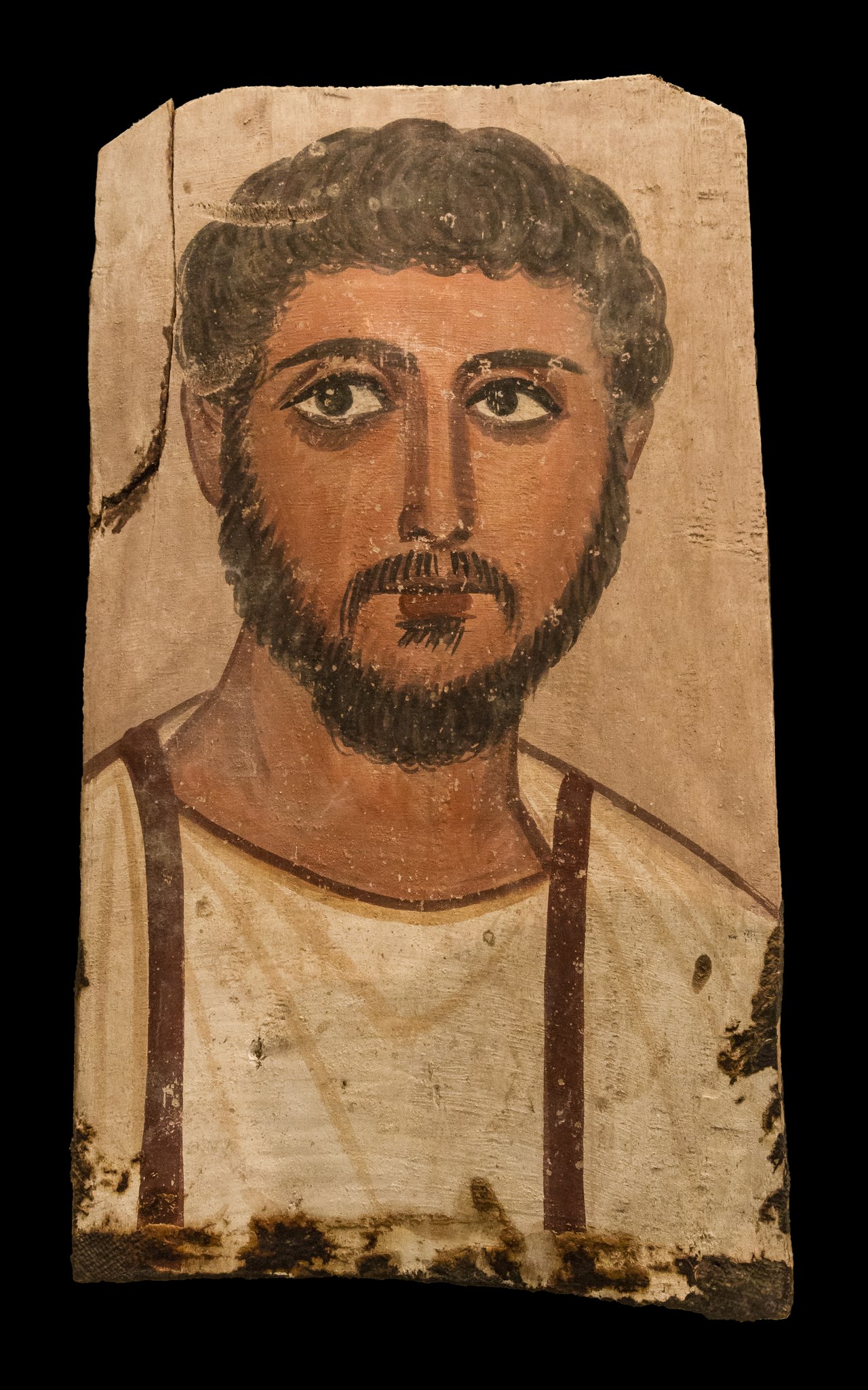
Roman Egypt. Roman Egypt began in 30 BC, when Octavian, soon to be the emperor Augustus, annexed the kingdom after the defeat and death of Cleopatra VII and Mark Antony. Because Egypt produced much of the grain that fed Rome, the emperors treated it as a special possession: it was governed not by a senator but by a prefect appointed directly by the emperor, and Roman senators were forbidden even to visit without permission. Alexandria remained one of the greatest cities of the Mediterranean world, a center of commerce and learning.
Life under Rome mixed old and new. Egyptian temples were still built and decorated in pharaonic style, as at Dendera, Edfu, and Philae, while the population paid heavy taxes and supplied grain fleets to Italy. In the Fayum depression, land reclamation created prosperous farming towns whose dead were buried with the famous Fayum mummy portraits, realistic painted faces on wooden panels that blend Egyptian burial customs with Greco-Roman art. Greek papyri preserved in the dry sands give an unmatched picture of everyday life, from tax receipts to private letters.
From the first centuries AD, Christianity spread through Egypt and transformed it. Alexandria became a leading center of Christian scholarship, home to Origen and later to the great patriarch Athanasius, whose defense of orthodox doctrine shaped the Council of Nicaea. In the deserts, hermits such as Anthony and communities organized by Pachomius invented Christian monasticism, which spread across the empire. The old temples slowly closed; the last known hieroglyphic inscription was carved at Philae in AD 394, and the temple of Isis there was finally shut in the sixth century.
Roman, and later Byzantine, rule in Egypt lasted six and a half centuries. Persian armies occupied the country from 619 to 629, and in 641 the Arab army of Amr ibn al-As took Byzantine Egypt, ending the ancient provincial order for good. Roman Egypt matters to historians because of its extraordinary documentation, its role in feeding the empire, and its place in the rise of Christianity, and because the Coptic church that grew from it still links modern Egypt to this long chapter of its past.
 Metropolitan Museum of Art: Roman Egypt
 UCL Digital Egypt: Roman and Coptic Egypt
 Cambridge University Press: Roman Egypt: A History
 Britannica: Ancient Egypt