 Go Back

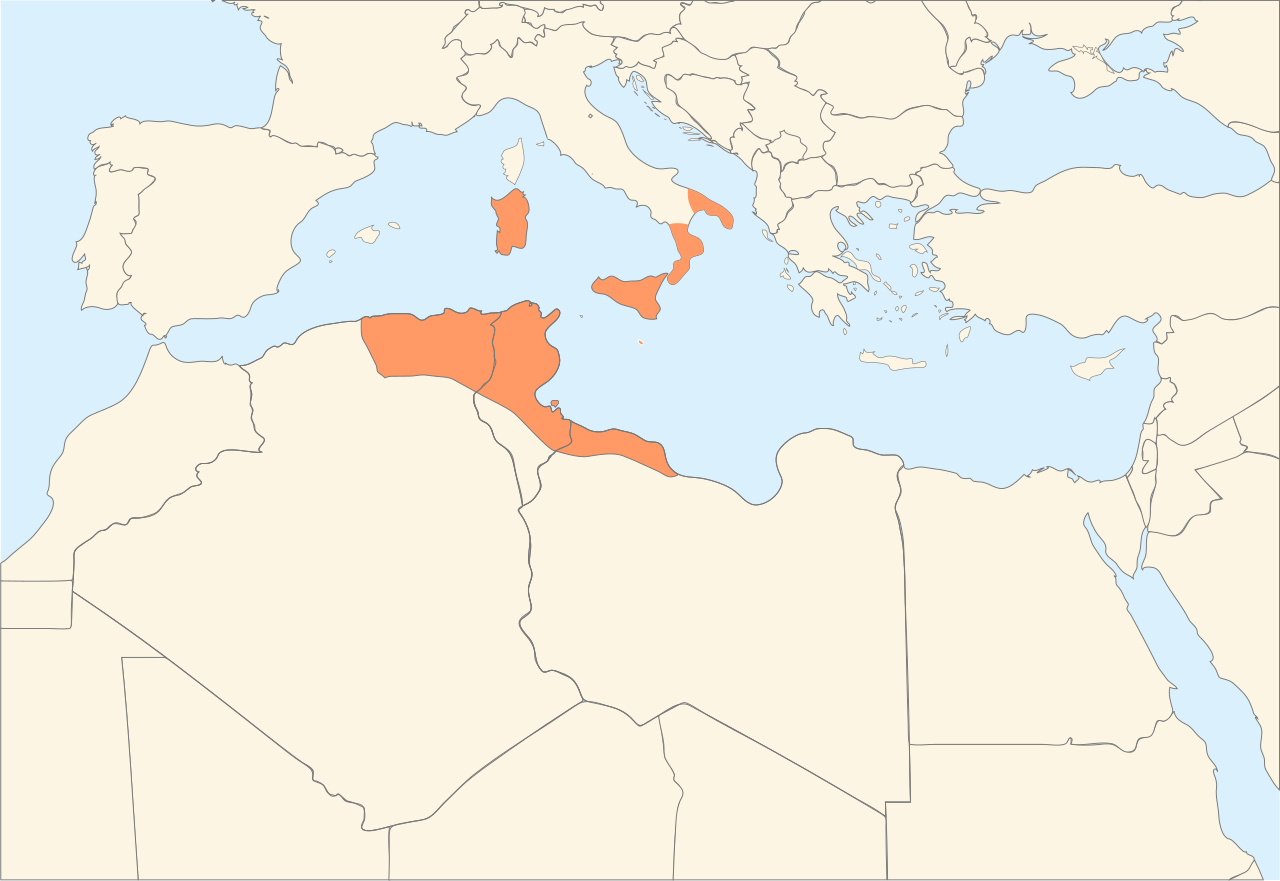
The Aghlabids were an Arab dynasty that ruled Ifriqiya, modern Tunisia and eastern Algeria, from 800 to 909. Nominally subject to the Abbasid caliphs of Baghdad, they were independent in fact, and their century of rule matters because it turned Kairouan into one of the great cities of the Islamic world and extended Muslim power across the central Mediterranean. Eleven emirs held the throne, beginning with the founder Ibrahim ibn al-Aghlab, and their splendor was famous, though it was paid for with oppressive taxes.
Their monuments still stand: the emirs rebuilt and enlarged the Great Mosque of Kairouan into the form visitors see today, and their vast reservoirs and water works, engineered to conserve and distribute the scarce rains, kept the country prosperous and mostly at peace. The emir Abu Ibrahim Ahmad in particular commissioned public works on a grand scale.
It was at sea that the Aghlabids loomed largest. When the Arab soldiery rebelled, the emir Ziyadat Allah I turned their energies outward and sent them to conquer Sicily, beginning a struggle in 827 that left the island in Muslim hands for two centuries. Their fleet, supreme in the central Mediterranean, raided the coasts of Italy and France and made Ifriqiya a naval power to be feared.
The dynasty's end came from within its own region: in 909 the Fatimid movement, preaching an Ismaili Shia rival to the Abbasid caliphate, overthrew the last Aghlabid emir and took his kingdom. Yet the century they ruled left a durable legacy in Kairouan's mosques, schools, and cisterns, and in Sicily's long Muslim chapter.
Their reach kept growing: Aghlabid fleets took Malta in 870, and by 902 the last Byzantine strongholds in Sicily had fallen, leaving the island to a line of Aghlabid appointed governors. At home the emir Ibrahim II abandoned Kairouan for a new palace city at Raqqada, a glittering court that drew poets, jurists, and physicians from across the Islamic world.
 Britannica: Aghlabid dynasty
 UNESCO World Heritage Centre: Kairouan
 Smarthistory: The Great Mosque of Kairouan
 The Metropolitan Museum of Art: Western North Africa (The Maghrib), 500–1000 A.D.