 Go Back

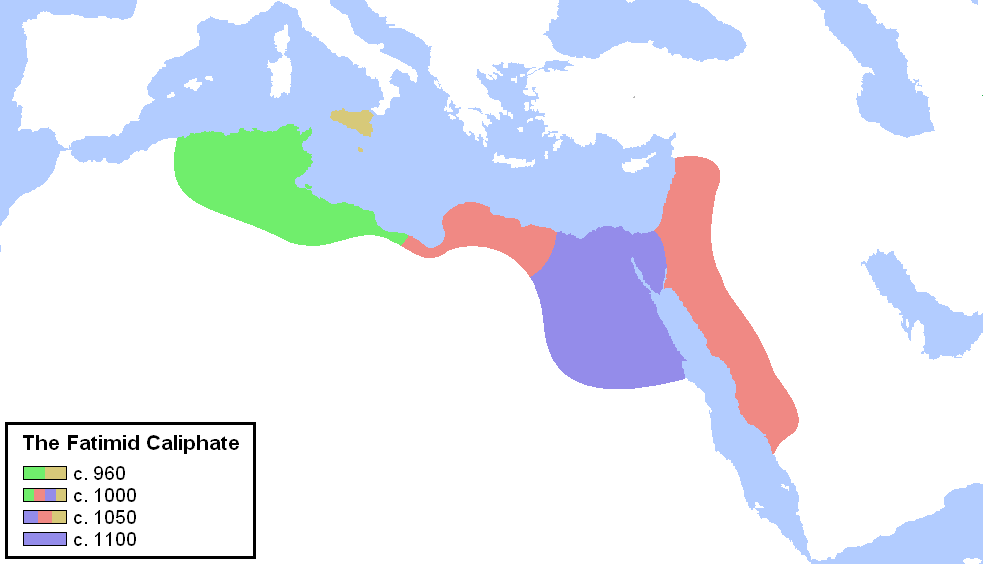
The Fatimid Caliphate was an Ismaili Shia empire that ruled North Africa and later Egypt from 909 to 1171. Rising among the Kutama Berbers of Ifriqiya under the missionary preaching of Ubayd Allah al-Mahdi, it claimed descent from the Prophet's daughter Fatima and openly challenged the Sunni Abbasids for leadership of the entire Islamic world. It matters because it built Cairo, founded Al-Azhar, and for two centuries ran a wealthy state astride the trade routes of the Mediterranean and the Red Sea.
From their first capital at Mahdia on the Tunisian coast, the Fatimids pushed steadily east. In 969 their general Jawhar conquered Egypt, and there the caliph al-Mu'izz built a new palace city beside the Nile: al-Qahira, the Victorious, known to the world as Cairo. Its great mosque of Al-Azhar grew into a center of learning that still thrives a thousand years later.
At its height in the early 11th century, the Fatimid caliph could claim sovereignty over the whole of coastal North Africa, Sicily, the Hejaz and Yemen in Arabia, and southern Syria and Palestine. Fatimid wealth rested on commerce: their merchants drew the Indian Ocean trade away from the Persian Gulf and into the Red Sea, filling the ports of Egypt with spices, silks, and porcelain.
Their power declined through internal strife and dependence on foreign mercenaries, and in the later 11th century real authority passed to the Armenian generals who commanded the Fatimid armies. Famine, faction, and Crusader pressure in Palestine hollowed out the state, until in 1171 the Kurdish general Saladin quietly abolished the caliphate and returned Egypt to Sunni Islam.
Their rule left a distinct artistic world: Fatimid craftsmen produced lusterware pottery, carved rock crystal, and intricate woodwork prized from Spain to India. In Egypt the dynasty at first governed its Coptic Christian and Jewish subjects with broad tolerance, though the erratic reign of the caliph al-Hakim in the early 11th century brought periods of harsh persecution that later rulers worked to undo.
 Britannica: Egypt - Fatimid, Cairo, Nile
 Humanities LibreTexts: 8.11: The Fatimid Caliphate
 The Metropolitan Museum of Art: The Art of the Fatimid Period (909–1171)
 Smithsonian Magazine: Landmark Exhibition Takes You Inside the Exuberant, Diverse World of the Fatimid Dynasty