 Go Back

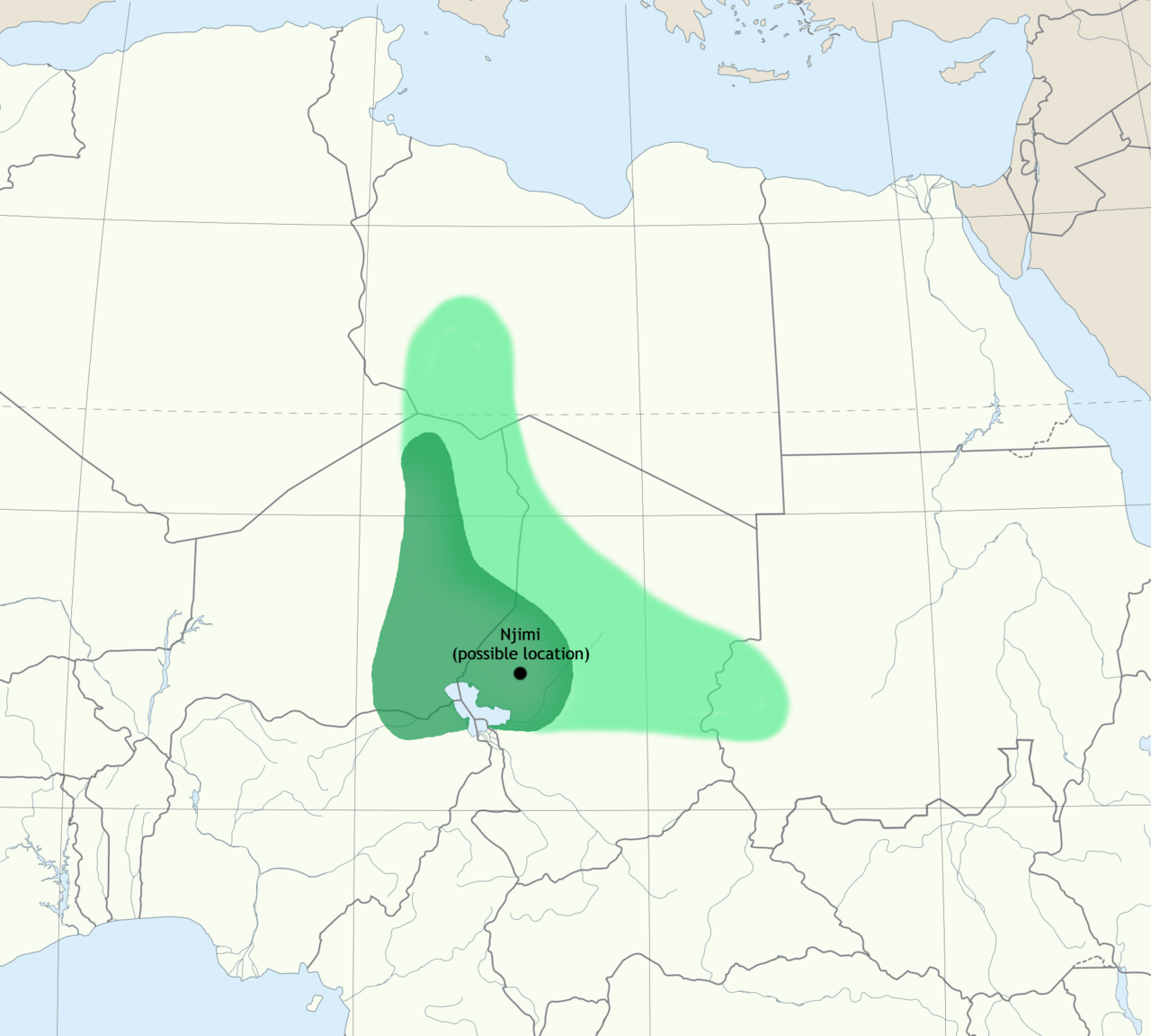
The Kanem-Bornu Empire was a long-lasting African state centered on Lake Chad, ruled by a single dynasty, the Sef, for close to a thousand years, from the 9th century to the 19th. It matters because no other African dynasty reigned so long: at its height the empire spanned lands that are now parts of Chad, Cameroon, Nigeria, Niger, and Libya, and it stood at the crossroads of trade between North Africa, the Nile valley, and the lands south of the Sahara.
The empire emerged about the mid 9th century with its first capital at Njimi, northeast of the lake, and adopted Islam toward the end of the 11th century when its king, the mai Umme, became a Muslim, making Kanem one of the earliest Islamic states in Africa. Camel caravans carried salt, horses, and luxuries south across the desert, and slaves and ivory north, filling the royal treasury and equipping the empire's famous cavalry.
The empire survived for centuries by adapting its capital and alliances: when the Bulala people drove the Sef from Kanem in the late 14th century, the dynasty simply moved west across the lake to Birni Ngazargamu in Bornu, and there it flourished again. Under the great mai Idris Alawma, who reigned around 1571 to 1603, the empire was extended and consolidated, its armies now armed with muskets and its court advised by Muslim scholars.
It declined in the 19th century under pressure from the Fulani jihad that founded the Sokoto Caliphate, which drove the mai from his capital about 1808, and from the coming of European colonizers. The scholar-warrior Muhammad al-Kanami restored the state for a time, but the ancient Sef dynasty died out in 1846. Its legacy shaped the peoples of modern Chad, Niger, and Nigeria, where the Bornu emirate still endures.
 Britannica: Kanem-Bornu
 World History Encyclopedia: Kingdom of Kanem
 Humanities LibreTexts: 11.12: Bornu Empire
 BBC: BBC World Service