 Go Back

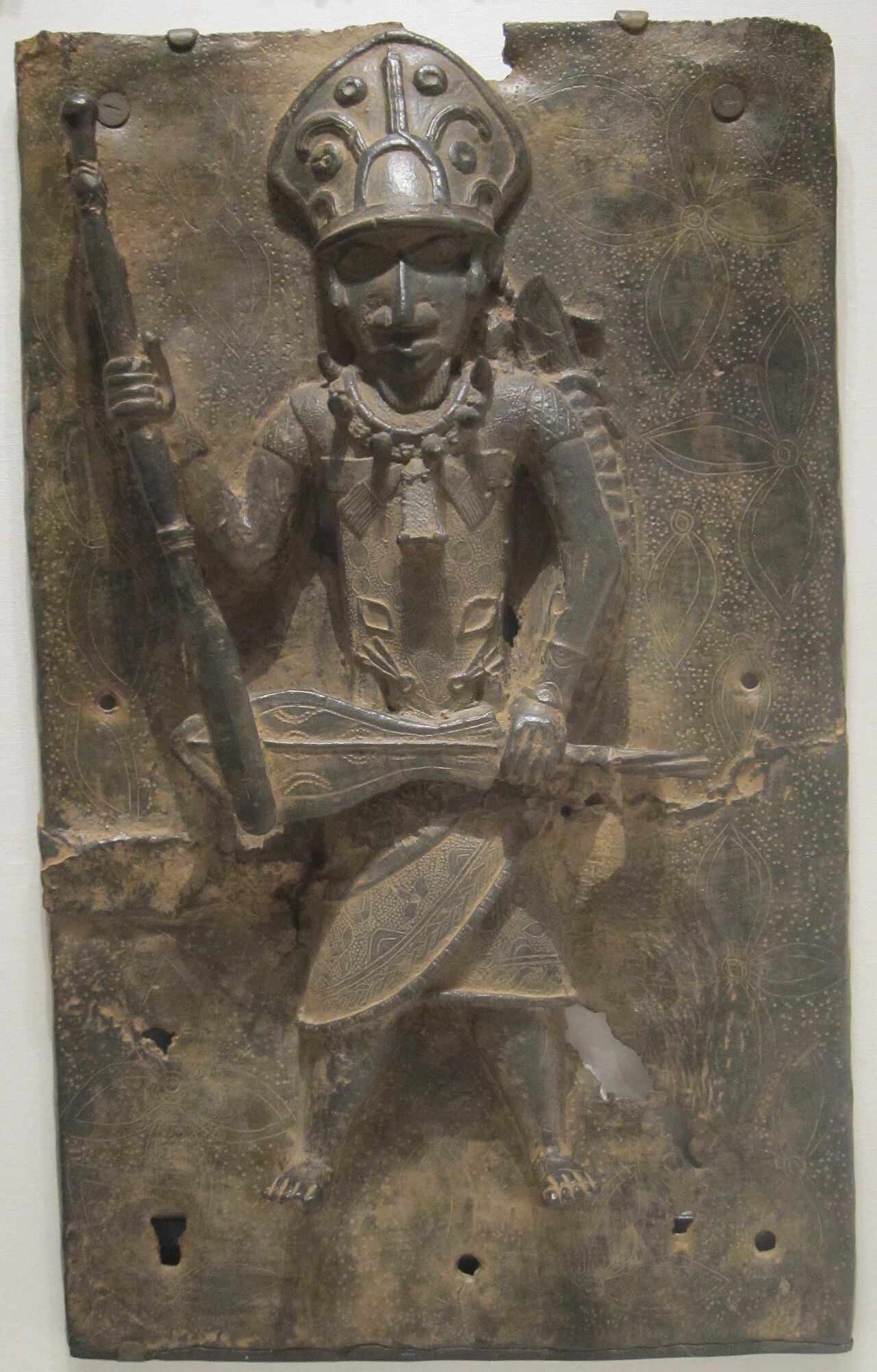
The Kingdom of Benin was a powerful forest kingdom of the Edo people in what is now southern Nigeria, flourishing from the 13th century until the British conquest of 1897. Ruled from its great walled capital by kings bearing the title oba, it matters because its artists produced the famous Benin Bronzes, brass plaques and heads ranked among the finest artworks ever made in Africa, and because its story shows a West African state dealing with Europe on its own terms for four centuries.
The oba stood at the center of everything: he was considered to rule by divine right, he personally controlled all trade with outsiders, and he owned outright the kingdom's most precious goods, leopard skins, coral, pepper, and ivory. His palace, adorned with hundreds of brass plaques depicting warriors, courtiers, and kings, was the stage for rituals that bound the kingdom together. Under Ewuare the Great, who ruled from 1440 to 1473, the kingdom reached its greatest extent and the oba became an absolute monarch, advised by hereditary chiefs and by governors he appointed over the towns, the crown passing to the eldest son, a system that endured for the rest of Benin's history.
From the late 15th century Benin traded with the Portuguese, who came seeking gold, pepper, and slaves and brought Indian cloth, cowrie shells, and brass in return. The oba bargained from strength: after 1516 he banned the sale of male slaves outright, needing the men for his own army, and the kingdom grew rich as the middleman of the forest trade.
Benin's power faded during the 18th century as civil wars racked the kingdom and the coastal trade bypassed it. In 1897 a British punitive expedition stormed and burned the capital, looting thousands of bronzes that today fill museums across Europe and America, where they remain a symbol both of Benin's genius and of the unfinished reckoning with colonial plunder.
 Britannica: Benin
 World History Encyclopedia: Kingdom of Benin
 Humanities LibreTexts: 1.6.2: The Kingdom of Benin
 BBC: What was the Kingdom of Benin? - BBC Bitesize