 Go Back

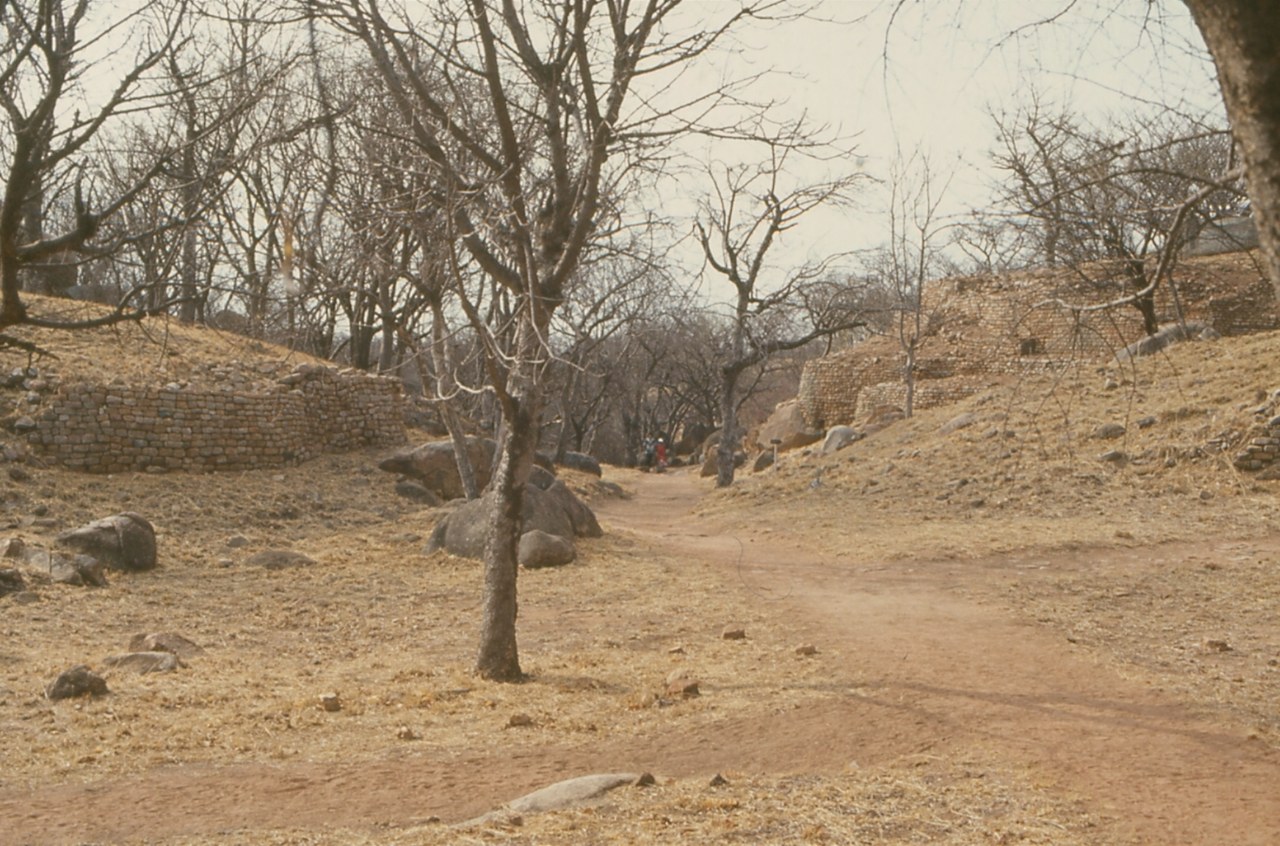
The Kingdom of Butua and the Torwa Dynasty. The kingdom of Butua (c. 1450-1683), ruled by the Torwa dynasty, succeeded Great Zimbabwe as the leading Shona state of the southern African interior. When Great Zimbabwe was abandoned in the fifteenth century, political power shifted westward to the region the Portuguese called Butua, on the southwestern plateau of modern Zimbabwe. There the Torwa rulers built their capital at Khami, near modern Bulawayo, whose stone terraces and decorated walls are now a World Heritage site.
Khami shows how the new kingdom adapted the old building traditions. Instead of the free-standing walls of Great Zimbabwe, the Torwa architects built revetted stone terraces rising in tiers up a hillside, faced with checkered and herringbone patterns, supporting the houses of the royal court. From Khami the Torwa mambo ruled the goldfields and cattle herds of the southwest, and trade goods reached his court from the Indian Ocean: Chinese porcelain, Portuguese glass beads, and other imports have been found in the ruins.
The kingdom held its own in a violent age. In the sixteenth and seventeenth centuries the Torwa rulers faced the rising power of the Mutapa state to the northeast and, beyond it, the Portuguese on the Zambezi and the coast. Butua's armies defeated at least one Portuguese-backed invasion, and the kingdom kept control of the gold trade routes running through its territory. Torwa power was finally broken in the 1680s, when the expanding Rozvi, led by the conqueror known as Changamire Dombo, defeated the Torwa and took over Butua.
The Rozvi built on Torwa foundations, ruling from Khami and nearby Danangombe until the nineteenth century. The kingdom of Butua is remembered as the vital link between Great Zimbabwe and the later Shona states: it carried the stone-building tradition, the gold trade, and the political heritage of the Zimbabwe plateau through three centuries, and the ruins of Khami remain its most eloquent monument.
 UNESCO World Heritage: Khami Ruins National Monument
 Oxford Research Encyclopedia of African History: The Archaeology of Khami and the Butua State
 Wikipedia: Kingdom of Butua
 Pindula: Butua State