 Go Back

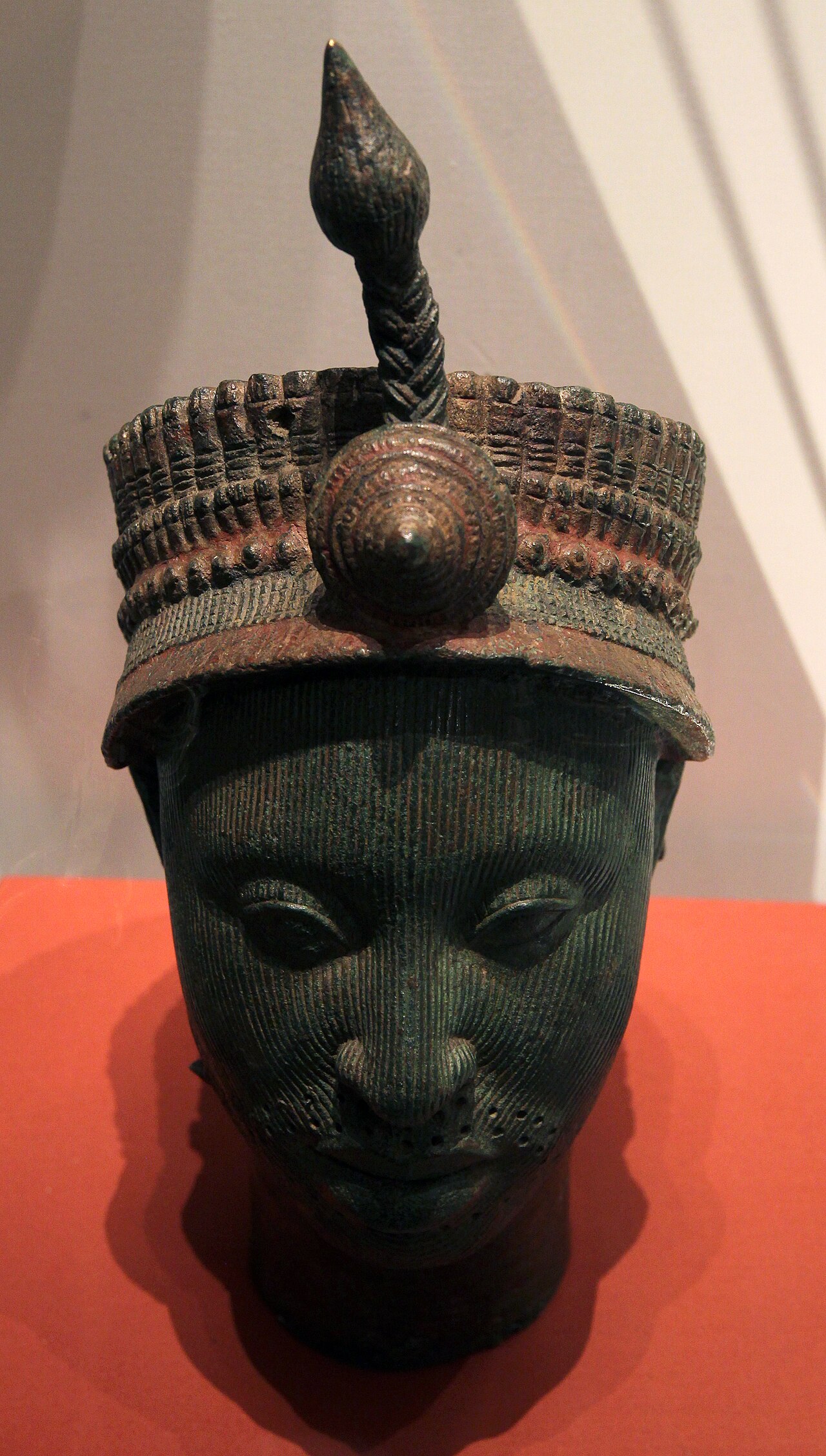
The Kingdom of Ife was a Yoruba city-state in the forests of southwestern Nigeria, flourishing from around the 11th to the 15th century, and it is revered to this day as the spiritual homeland of the Yoruba people, the place where, in their tradition, the world began. It matters because its artists created some of the most astonishing sculptures ever made in Africa, and because later kingdoms traced their kingship back to Ife.
Ife's artists worked in cast bronze, brass, and terracotta, producing heads of such calm, naturalistic beauty that the first modern scholars to see them could hardly believe they were African. Their craft had deep roots: Ife's artists may have drawn on the traditions of the earlier Nok culture and of Igbo-Ukwu, whose bronze work was already astonishing in the 9th century. The faces, marked with fine scarification lines and crowned with beaded diadems, were probably portraits of Ife's sacred kings, the ooni, who ruled as the spiritual center of the Yoruba world.
The city's influence reached far beyond its walls: in the traditions of neighboring Benin, it was the king of Ife who sent a master craftsman south in the late 13th century to teach the art of brass casting, and Benin's own royal line began with a prince of Ife. Scholars have not yet proven these connections by archaeology, but the shared symbols of kingship between the two cities speak for themselves.
Ife declined as a political power when Oyo and Benin rose in the 15th and 16th centuries, but it never lost its sacred standing. Its kingship, its art, and its creation traditions remained the touchstone of Yoruba identity, and the ooni of Ife is still one of the most revered traditional rulers in Nigeria.
 Britannica: Ile-Ife
 World History Encyclopedia: Ife
 Humanities LibreTexts: 1.6.10: Kingdom of Ife- Sculptures from West Africa
 The Metropolitan Museum of Art: Ife (from ca. 6th Century)