 Go Back

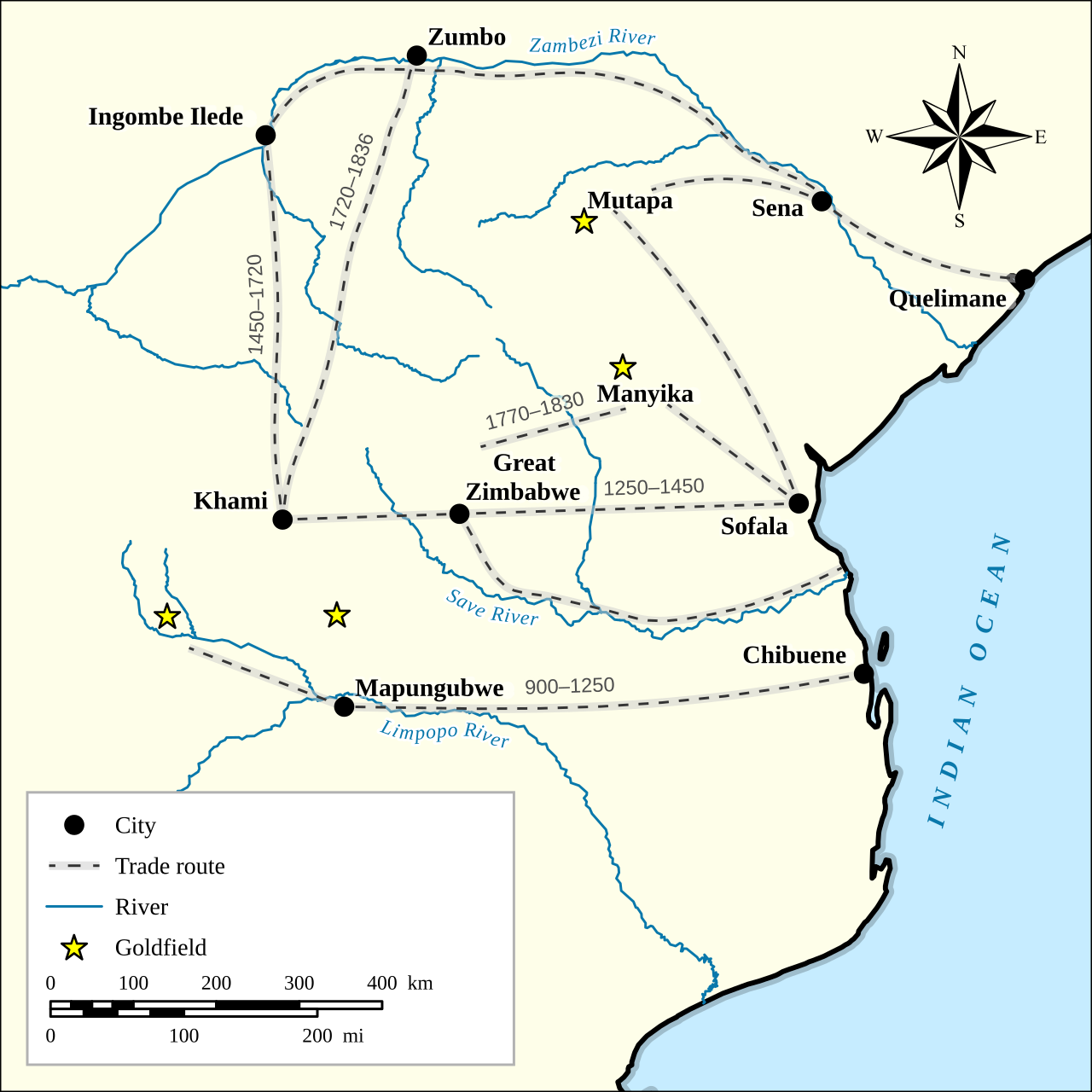
The Kingdom of Mutapa was a Shona state that rose in the 15th century as the heir of Great Zimbabwe, founded, tradition says, by a prince named Nyatsimba Mutota who led his people north to the valleys between the Zambezi and the plateau. Its kings bore the title Mwene Mutapa, lord of the conquered lands, a name the Portuguese heard and turned into Monomotapa, a word that glittered on European maps for two centuries.
From its capitals in the northern hills, Mutapa controlled the gold trade of the plateau and the Zambezi valley, sending gold and ivory down to the Swahili coast at Sofala in exchange for Indian cloth, beads, and porcelain. At its height in the early 16th century the Mwene Mutapa was among the most powerful rulers in southern Africa, his court crowded with Muslim merchants and his armies collecting tribute far and wide.
The kingdom's wealth attracted predators: Portuguese traders and adventurers pushed inland from Mozambique, meddling in successions, seizing trading fairs, and in the 17th century effectively reducing the Mutapa kings to clients. When the conquest came around 1633 it brought the Europeans disillusion: there was never as much gold as the legends promised, and terrible mortality from tropical disease soon drove them to abandon the far interior and concentrate on Mozambique. European dreams of a golden Monomotapa ended in disappointment, but the damage was done, as Portuguese pressure and internal division bled the state.
Mutapa's power was finally broken late in the 17th century by the rising Rozvi kingdom of Changamire, which drove the Portuguese back to the coast and took over the plateau. The Mutapa state fragmented into smaller polities, but the Mwene Mutapa line endured in the east into the 20th century, and its history remains central to the story of Zimbabwe and Mozambique.
 Britannica: Matapa
 World History Encyclopedia: Mutapa
 Humanities LibreTexts: 11.5: Great Zimbabwe
 The Metropolitan Museum of Art: Eastern and Southern Africa, 1400–1600 A.D.