 Go Back

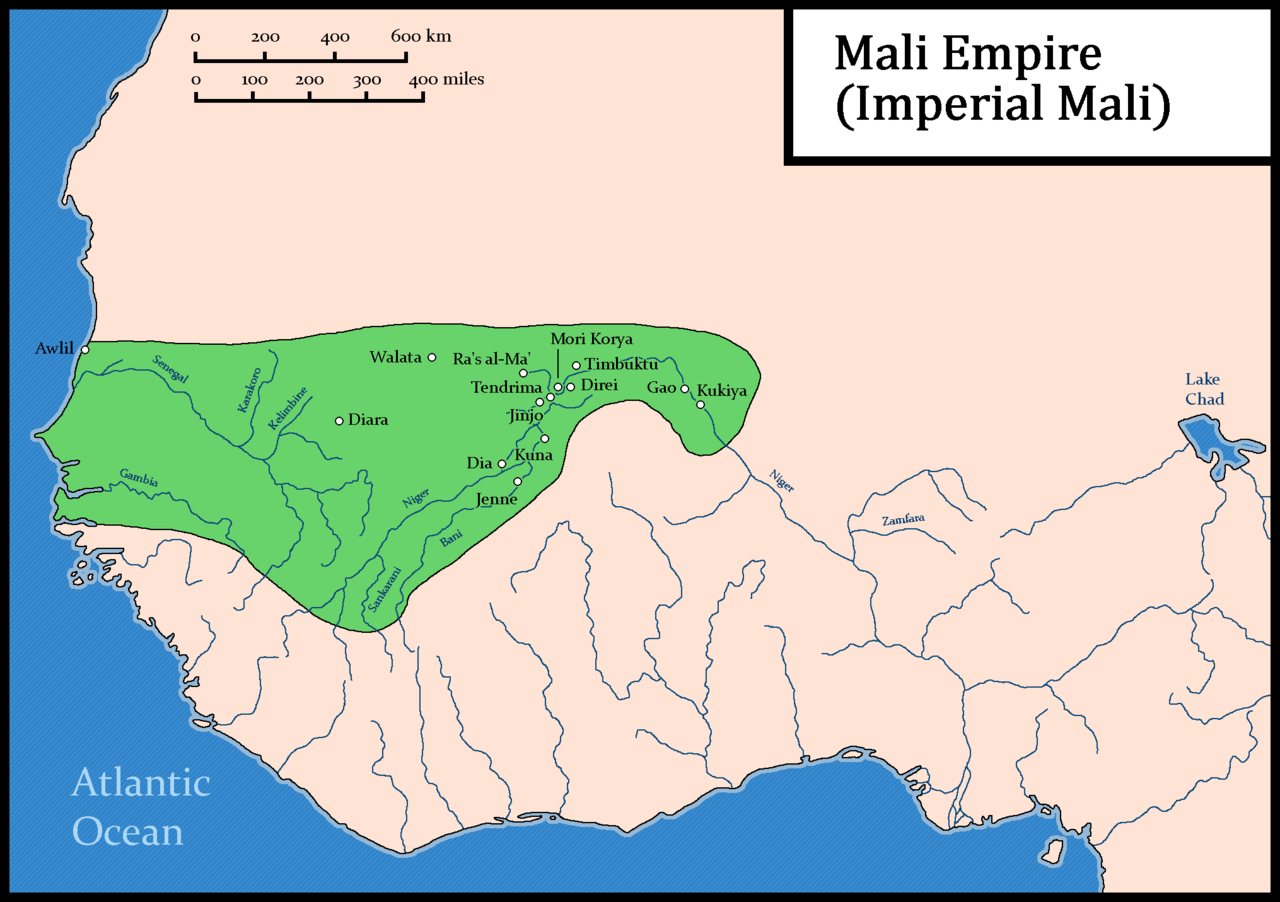
The Mali Empire was a powerful West African state that flourished from the 13th to the 16th century, the largest empire Africa had yet seen. Founded by Sundiata Keita, it controlled the gold, salt, copper, and ivory routes that crossed West Africa, acting as the great middleman between the Sahara caravan trails and the Niger River. The very name Mali, in the language of its founders, means the place where the king lives.
Sundiata was a Malinke prince whose story is still sung by the griots of West Africa. Forging an alliance of chiefs weary of the harsh Sosso king Sumanguru, he crushed the Sosso at the battle of Krina in 1235, captured the old capital of Ghana in 1240, and was proclaimed supreme monarch by an assembly of tribal leaders and Muslim merchants. He set his capital at Niani, protected by mountains and close to the forests and waterways that fed the trade.
The empire's most famous ruler, Mansa Musa, reigned from 1312 to 1337 and doubled its territory, governing through appointed provincial governors answerable to the capital. His legendary pilgrimage to Mecca in 1324 showered Cairo with so much gold that the metal's price there crashed, and a generation later a European mapmaker drew him on the Catalan Atlas wearing a gold crown and brandishing a nugget. He brought home architects, scholars, and books, building Timbuktu's Great Mosque and the schools that made the city a byword for learning.
Mali's power declined from the 1460s as subject states broke away, civil wars multiplied, and trade routes shifted elsewhere, while the Songhai Empire rose in its place. Yet Mali survived in a smaller form into the 17th century, and its memory never died: the epic of Sundiata remains the foundation story of the Manding peoples today.
 Britannica: Mali
 World History Encyclopedia: Mali Empire
 Humanities LibreTexts: 3.7: Empire of Mali
 BBC: BBC Radio 4 - In Our Time, The Empire of Mali