 Go Back

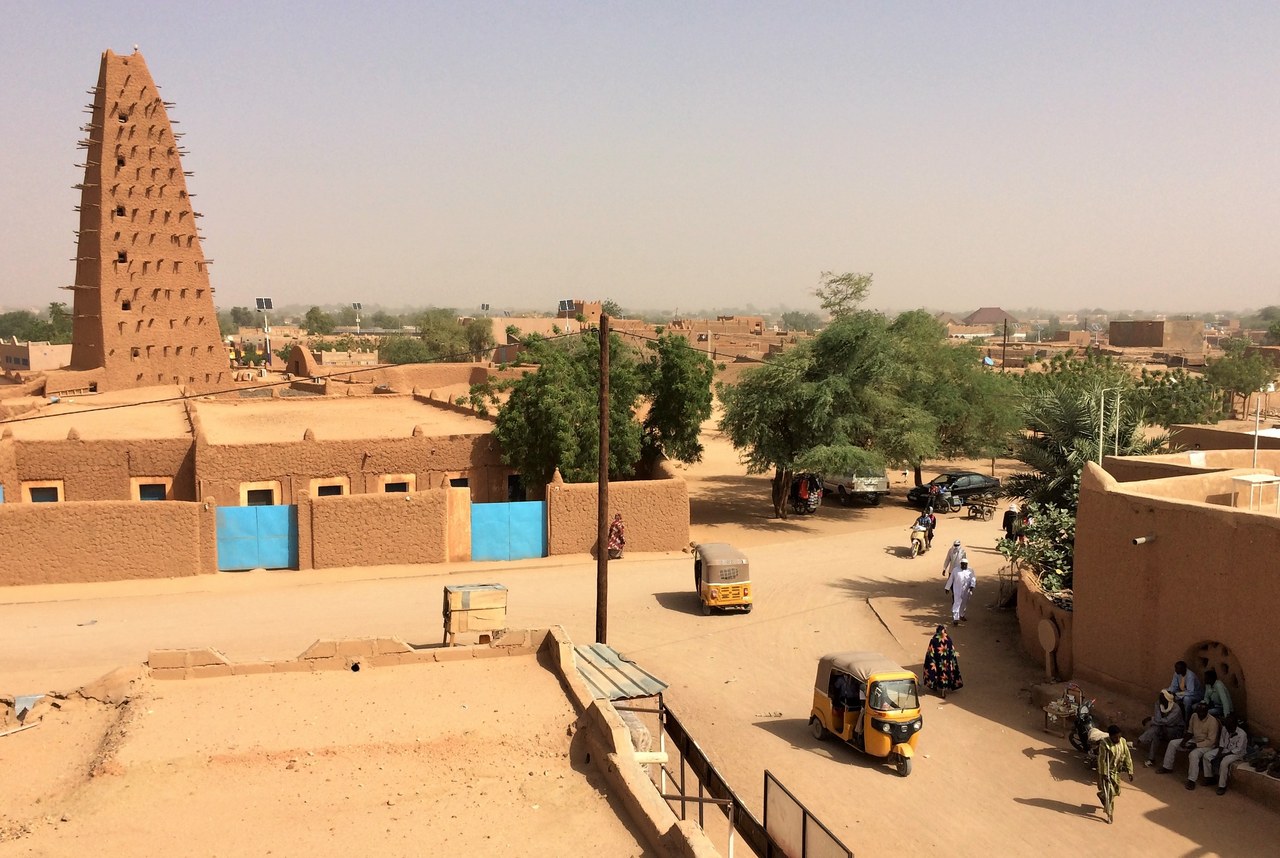
The Sultanate of Agadez. The sultanate of Agadez (c. 1449-1900) was a Tuareg state of the Air mountains in what is now northern Niger, which for four and a half centuries guarded one of the great crossroads of the Sahara. The town of Agadez had long been a caravan stop where routes from the Sudan met the road to Tripoli and Egypt. Around 1449, according to tradition, the Tuareg tribes of Air agreed to accept a sultan of their own, and a prince connected to the Songhay ruling family, Ilisawan, was installed as the first of a long line.
The sultanate's lifeblood was the desert trade. Agadez stood at the junction of the routes from Kano and Hausaland in the south to Ghat, Ghadames, and Tripoli in the north, and caravans of thousands of camels passed through with salt from the desert mines of Bilma and Taoudenni, gold, kola nuts, leather, and enslaved people. The sultans taxed the trade, protected the caravans, and balanced between the great powers of the region: the Songhai Empire, which claimed Agadez until its fall in 1591, the Ottoman regency of Tripoli, the Bornu Empire, and later the Sokoto Caliphate.
The city they ruled became a monument of Saharan architecture. Its great mosque, rebuilt in its present form in the nineteenth century, carries a mud-brick minaret some 27 meters high, the tallest of its kind in the world, and the old town around it, with its earthen houses and narrow lanes, is now a World Heritage site. German explorer Heinrich Barth, who reached Agadez in 1850, described a still-imposing town at the head of the caravan roads.
The sultanate's long independence ended with the European conquest of the Sahara. French forces occupied Agadez around 1900, faced fierce Tuareg resistance during the revolt of 1916-17, and incorporated Air into the colony of Niger. Yet the sultanate survives as a traditional institution: the Sultan of Agadez is still enthroned today, a living heir of the state that ruled the crossroads of the central Sahara for four centuries.
 UNESCO World Heritage: Historic Centre of Agadez
 Persee: Grandeur et decadence du sultanat touareg d'Agades
 Encyclopedie Berbere: Agadez