 Go Back

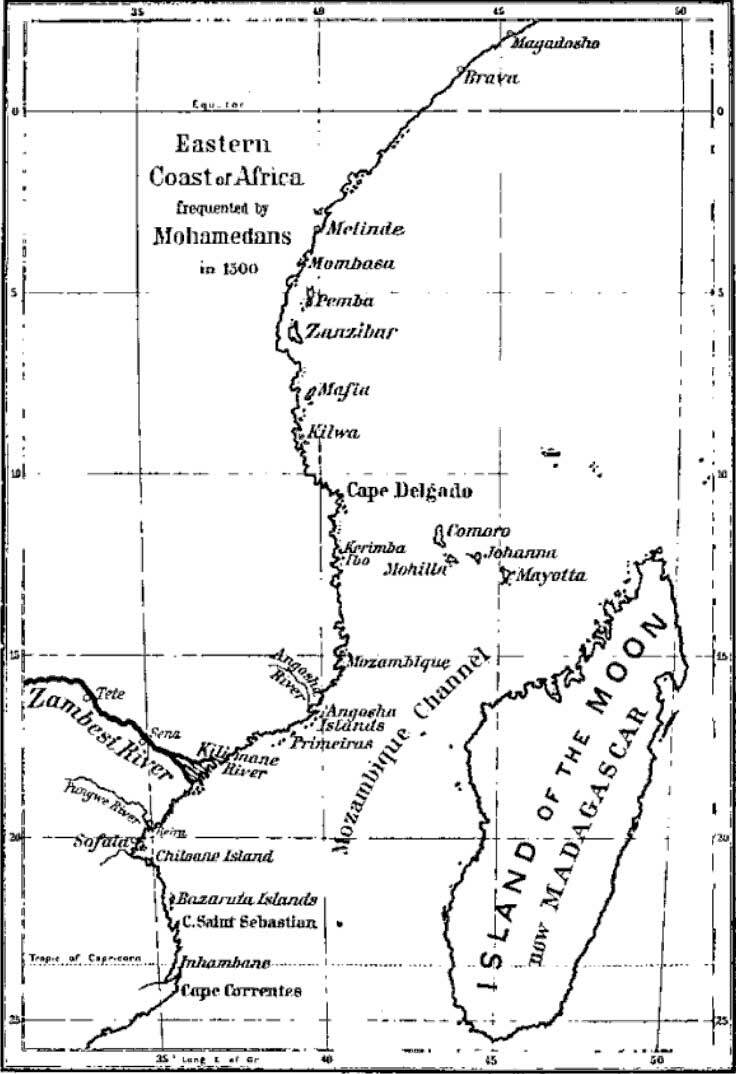
The Swahili Coast city-states were a chain of trading towns strung along the shores and islands of East Africa, from Mogadishu in the north to Kilwa in the south, including Mombasa, Zanzibar, and many more. They flourished from the 10th to the 15th century through Indian Ocean trade, and they matter because they created something entirely new: a culture and a language blending African roots with Arab, Persian, and Indian influences, whose name, Swahili, comes simply from the Arabic word for coast.
From the mid 8th century Muslim merchants from Arabia settled in the coastal towns, joined in the 12th century by settlers from Persia, and their intermarriage with the local Bantu peoples produced the Swahili world: Islamic in faith, African in tongue, and turned toward the sea. The Swahili language, a Bantu language enriched with Arabic words, became the lingua franca of East Africa and is spoken by millions today.
The cities grew rich as the gateway between Africa's interior and the ocean world: gold and ivory from as far south as Great Zimbabwe passed through Kilwa's emporium at Sofala, while goods from Arabia, India, and even China flowed back. Kilwa minted its own coins, and its sultans built in coral stone: the Great Mosque and the vast Husuni Kubwa palace, its walls studded with Chinese porcelain, so impressed the traveler Ibn Battuta in 1331 that he called Kilwa one of the most beautiful towns in the world.
The arrival of the Portuguese around 1500 shattered this world: their fortresses at Sofala and Mozambique Island, and their policy of seizing trade by cannon rather than competing for it, drove the caravan routes north and ended the coast's golden age. Some city-states carried on under the Omani Empire into the 18th century, but the heyday of the independent Swahili towns was over.
 World History Encyclopedia: Swahili Coast
 Humanities LibreTexts: 9.9: The Swahili City-States (East Africa)
 UNESCO World Heritage Centre: Ruins of Kilwa Kisiwani and Ruins of Songo Mnara
 National Geographic: Kilwa, the abandoned East African city, once controlled the medieval gold trade