 Go Back

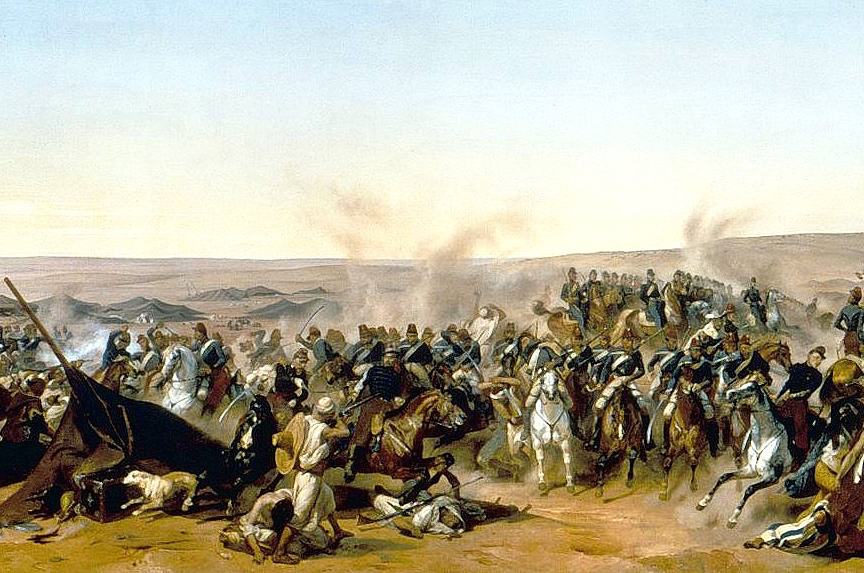
Abd al-Qadir and the French Conquest of Algeria. When France invaded Ottoman Algeria in 1830, it expected a parade and met a war. Its great antagonist was the Emir Abd al-Qadir, a scholar's son who built a state out of resistance and held the Algerian interior against the invaders for fifteen years. He matters as the founding hero of Algeria and as one of the most remarkable leaders of the age of empire.
Algiers fell to a French expedition in July 1830, ending three centuries of Ottoman rule, but the tribes and towns of the interior refused the invaders. In 1832, near Mascara, they gave their allegiance to the young Abd al-Qadir, famed for learning and horsemanship, as commander of the faithful. From a mobile capital, the smala, a city of tens of thousands on the march, he administered justice, collected taxes, and negotiated with France as an equal.
Twice he made peace with France, at Desmichels in 1834 and at the Tafna river in 1837, and twice the peace broke. General Bugeaud answered with the razzia, a war of burned villages, felled orchards, and slaughtered herds meant to starve resistance. French columns captured the smala in 1843 and drove Abd al-Qadir over the border into Morocco, and when Bugeaud crushed the Moroccan army that sheltered him at the Isly river in 1844, forcing the sultan to banish him, the emir fought on until his surrender in December 1847. The conquest's violence, and the hunger and disease that followed, cost Algeria a terrible share of its people.
Abd al-Qadir spent nearly five years a prisoner in France, then lived in honored exile in Damascus, where in 1860 he sheltered thousands of local Christians from massacre at the risk of his own life, an act that won him the admiration of Europe. He died in 1883. In Algeria the land he defended passed to a settler colony: by 1924 hundreds of thousands of European settlers held the best of the country he had fought for, and resistance to colonial rule continued in different forms.
 Wikipedia: Emir Abdelkader
 Britannica: Abdelkader
 Wikisource: Encyclopaedia Britannica (Ninth Edition): Abd-el-Kader