 Go Back

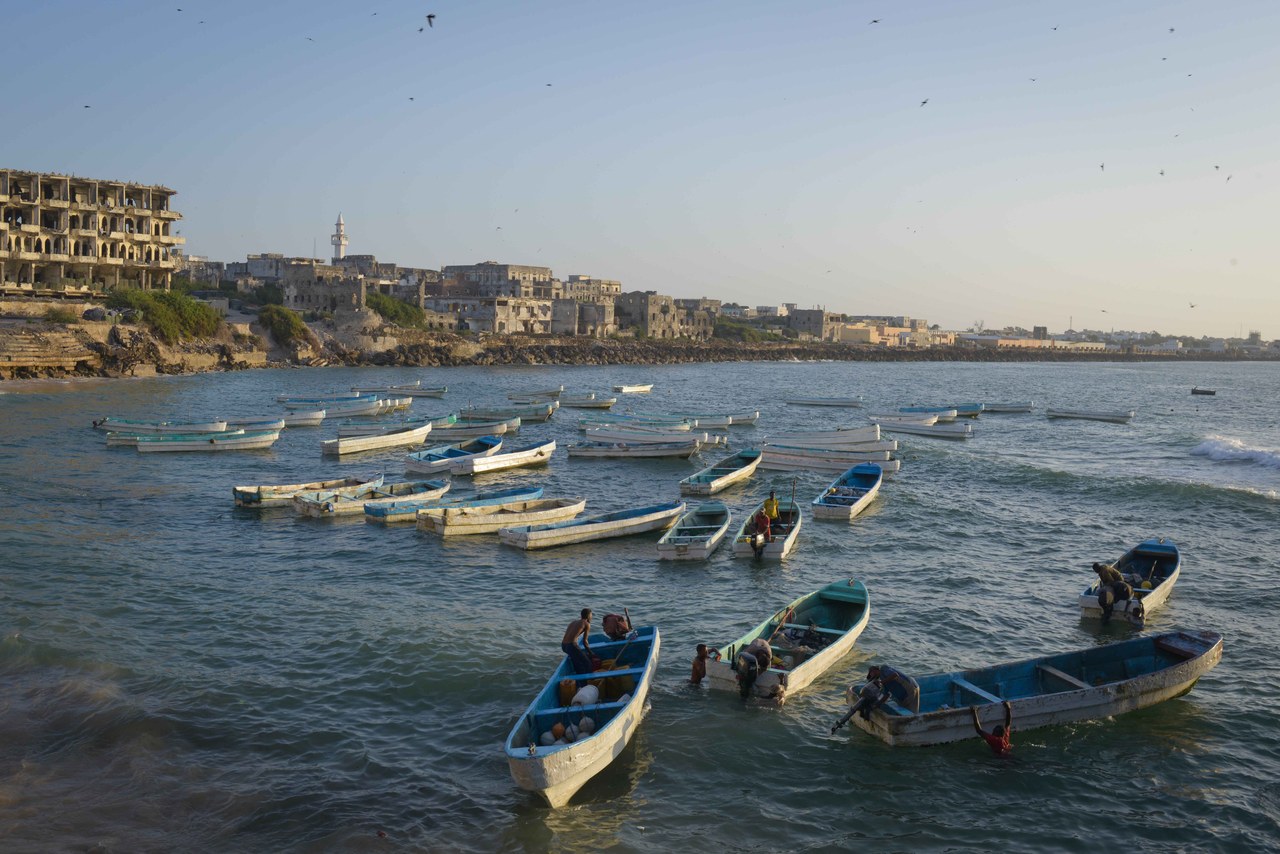
Italian Somaliland. Italian Somaliland, established in 1889, was Italy's colony on the Horn of Africa, created piece by piece along the Benadir coast. Italy had acquired the port of Aden and footholds on the coast in the 1880s, and in 1889, as the European powers partitioned the Somali lands, it established protectorates over the southern sultanates and founded Mogadishu as its capital. For years Italian rule barely reached beyond the coast, and the interior was controlled by the Sayyid Muhammad Abdullah Hassan, whose dervish movement fought the Italians, British, and Ethiopians for two decades until 1920.
The young colony grew slowly. Italian firms won concessions along the Shabelle and Juba rivers, where plantations of bananas and cotton were worked by Somali labor under contracts widely criticized as coercive, and Mogadishu, the capital, gained government offices, roads, and a small railway toward the interior. After Mussolini's rise in 1922, Rome tightened its grip, centralizing the territory as a full colony and speaking ever more openly of empire on the Horn.
The interior took longer. The sultanates of the north, Obbia and the Majeerteen, accepted Italian protection only by degrees, and effective occupation of the far north was still incomplete in the mid 1920s. Even so, by 1924 the map of the Horn had been redrawn: the Somali coast from the Juba to the tip of the Horn stood under the Italian flag, while the end of the dervish war had left the interior exhausted.
Colonial rule gave Mogadishu the makings of a capital and the south the beginnings of a plantation economy, but it also deepened old divides: Somali lands now answered to Rome, London, and Addis Ababa at once, boundaries that would shape the troubled politics of the Horn.
 Wikipedia: Italian Somaliland
 Google Books: Italian Colonialism in Somalia (Robert L. Hess)
 BBC News: Somalia Profile: Timeline