 Go Back

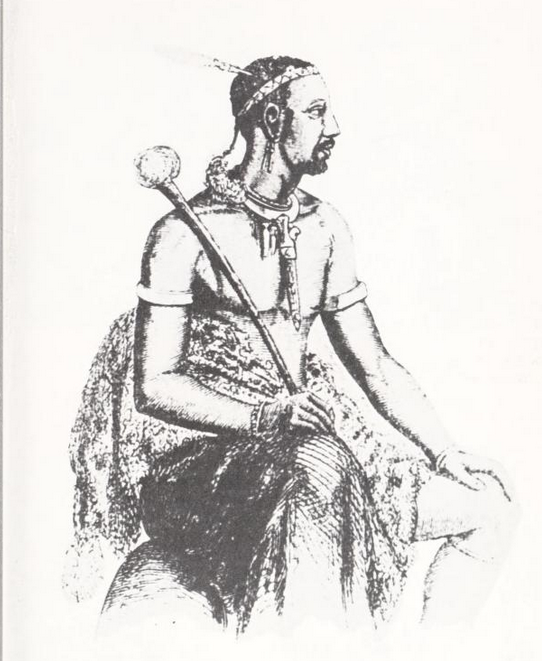
Moshoeshoe and the Basotho Kingdom. The Basotho kingdom, in the high mountains of modern Lesotho, was the creation of one of Africa's greatest state builders, Moshoeshoe I. Gathering shattered peoples in the years of upheaval known as the Mfecane, he forged a nation that held its land and its identity through wars with raiders, Boers, and the British Empire itself. His kingdom became an important example of African state-building and diplomacy during the nineteenth century.
Moshoeshoe was born about 1786, a minor chief's son named Lepoqo, and rose in the Lifaqane, the time of crushing wars and migrations set off by the rise of the Zulu kingdom. In 1824 he led his people to the flat-topped mountain of Thaba Bosiu, a natural fortress ringed by cliffs and springs, and there he welcomed every refugee who came, sharing cattle and land and welding scattered clans into a single people, the Basotho. He paid tribute to stronger kings to buy peace, and took the name Moshoeshoe, the shaver, for the cattle he 'shaved' from his rivals.
Moshoeshoe ruled by diplomacy as much as by war. He welcomed the French Protestant missionaries who arrived in 1833, learning from them the uses of letters and of European politics, and his horsemen, mounted on the famous Basotho ponies, defended the kingdom against raiders and rival armies alike. The gravest threat came from the Boers of the new Orange Free State, whose farms swallowed Basotho fields: after the wars of 1858 and 1865-66, with his people's backs to the mountain, Moshoeshoe chose the lesser loss, and in 1868 Basutoland became a British protectorate.
Moshoeshoe died in 1870, on the mountain he never lost. His successors defended his work: when the Cape Colony tried to disarm the Basotho, they fought and won the Gun War of 1880-81, and in 1884 Basutoland returned to direct British rule as a protectorate, keeping its chiefs, its land, and its language. By 1924 the little mountain kingdom, surrounded on all sides by South Africa, retained a distinct administration, although British protection imposed limits on its political freedom.
 South African History Online: King Moshoeshoe I
 Wikipedia: Moshoeshoe I
 Encyclopaedia Africana: Moshoeshoe