 Go Back

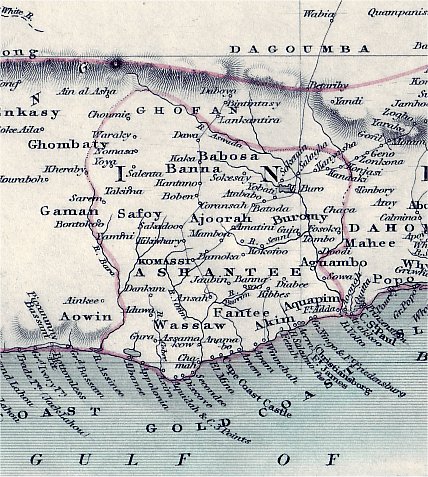
The Ashanti Empire was a formidable Akan state that dominated the central goldfields and coastal forests of modern day Ghana from 1701 to 1901. It rose when Osei Tutu, king of Kumasi, united the small Asante chiefdoms to throw off their overlords, the Denkyera, whom his armies crushed around 1698 to 1701. It matters because it built one of the most sophisticated states of precolonial Africa, with a merit based bureaucracy, a road and message network, and an army that defied the British Empire for most of a century.
The empire's soul was the Golden Stool: according to tradition, the priest Okomfo Anokye called it down from heaven onto Osei Tutu's knees, and it became the symbol of the Asante nation's unity, holier than any king, for kings were enthroned upon it but never sat in it. Every chief swore allegiance to it, and when the British later demanded to sit on it as governor, the Asante went to war.
Wealth and war fed each other: Ashanti gold financed the state, while the slave trade with British and Dutch forts on the coast brought the firearms that drove expansion, until the empire stretched from the Comoe River to the Togo Mountains. Under Opoku Ware and the great kings who followed, government reached every village through territorial divisions, paramount chiefs, and queen mothers who advised and nominated.
The end came slowly and then at once: after decades of friction over the coastal forts, a British expedition under Sir Garnet Wolseley marched on Kumasi in 1874 and held it for a day, a shock that broke the empire's confidence and sparked secessionist revolts. Resistance flared again in the War of the Golden Stool in 1900, but on January 1, 1902, Asante was declared a British crown colony, though the Asantehene's stool, and his people, endured.
 The Metropolitan Museum of Art: Art of the Asante Kingdom
 BBC: The Story of Africa
 PBS: Wonders of the African World - Episodes - Slave Kingdoms - Wonders
 Britannica: Asante empire