 Go Back

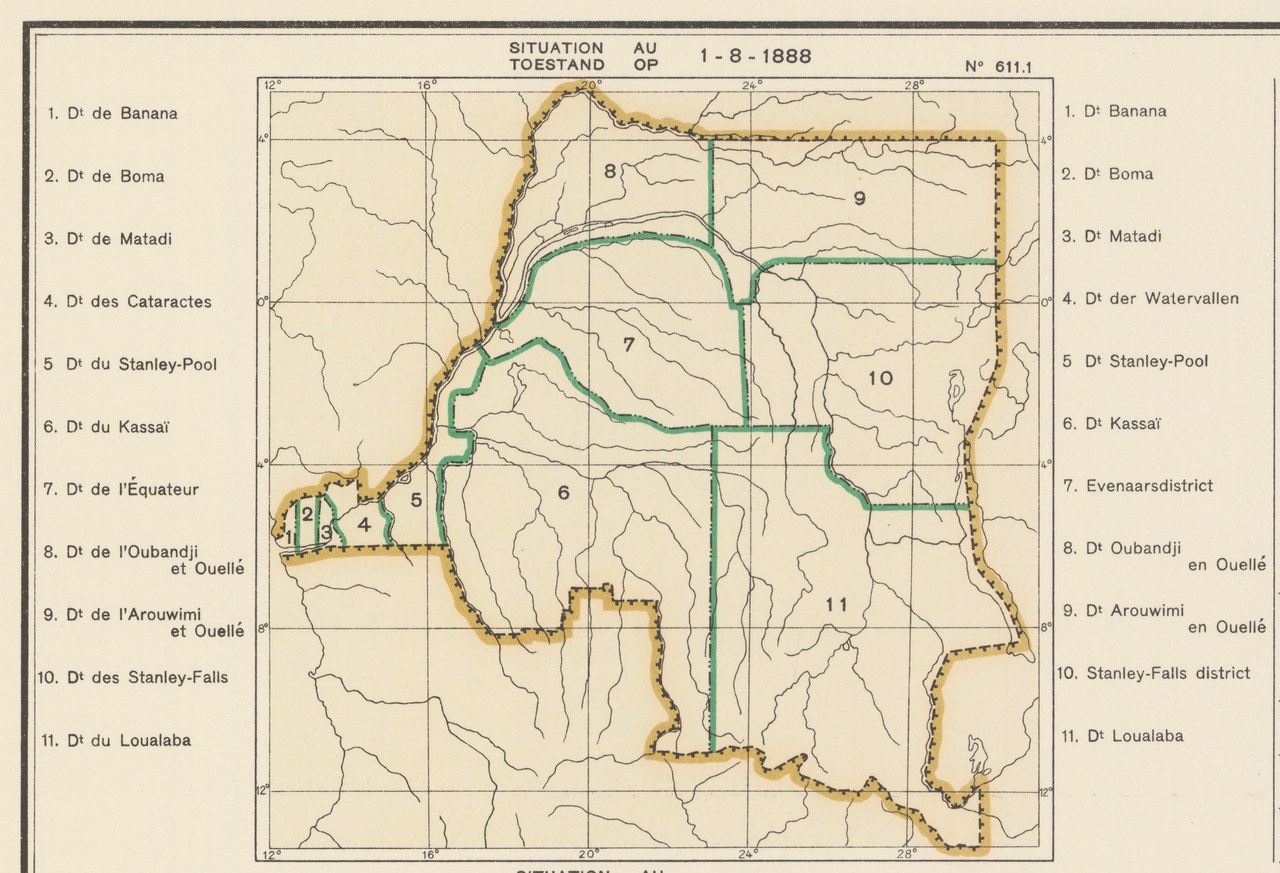
The Congo Free State and the Belgian Congo. The Congo Free State (1885-1908) was the personal colony of King Leopold II of Belgium, a territory seventy-six times the size of Belgium itself, and the site of one of the worst atrocities of the colonial age. Leopold acquired the Congo basin through diplomacy and treaties with local chiefs, and at the Berlin Conference of 1884-85 the powers recognized it as his private property. He ruled it not as a Belgian colony but as a personal estate, run for profit.
Under Leopold the Congo's people were subjected to a regime of forced labor, above all in the collection of wild rubber. Companies and state agents compelled villages to meet rubber quotas through hostage-taking, flogging with the chicotte whip, and punitive expeditions that burned settlements and killed resisters. Disease, famine, flight, and violence devastated the population; historians estimate that millions died in the Congo in these decades. Missionaries and campaigners such as E. D. Morel and Roger Casement exposed the horror, and international outrage forced Leopold in 1908 to hand the Congo to the Belgian state.
The Belgian Congo, established in 1908, replaced Leopold's personal rule but kept the colony under firm paternalist rule. Belgian companies mined the Katanga copperbelt, where the Union Miniere du Haut-Katanga began large scale copper production, and grew rich on Congolese minerals, while the administration, the church, and business ruled in alliance. Africans were denied political rights, and education beyond primary school remained almost nonexistent: by the mid 1920s the colony had mines, railways, and palm concessions, but no institution through which Congolese might shape their own future.
The two Congos left a double legacy. The Free State years became a byword for colonial atrocity, the scandal that shamed a king and changed international opinion; the state colony that followed brought order, roads, and mines, but kept power, profit, and decision firmly in foreign hands. That combination of exploitation and exclusion defined Belgian rule, and its weight still shapes the Congo today.
 U.S. Office of the Historian: The Congo Free State
 World History Encyclopedia: Belgian Congo
 Belgian Royal Palace: King Leopold II
 Cambridge History of Africa: King Leopold's Congo, 1886-1908