 Go Back

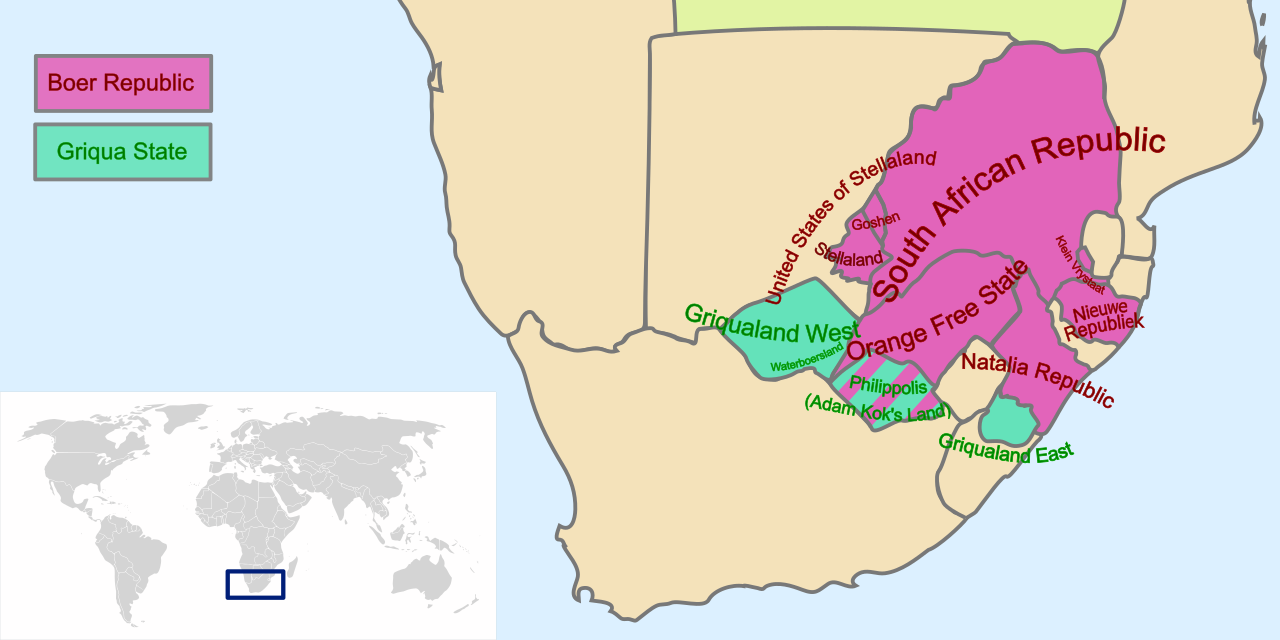
The Boer Republics were independent, self-governing states founded in the interior of Southern Africa by Dutch-descended settlers who quit British-ruled Cape Colony in the Great Trek of the 1830s. Some fourteen thousand trekkers moved north with their ox wagons, driven by resentment of British rule and the abolition of slavery, fighting the Ndebele and the Zulu for land. By the mid-1850s they had founded the two republics that mattered: the South African Republic - the Transvaal - recognized by Britain at the Sand River Convention in 1852, and the Orange Free State in 1854.
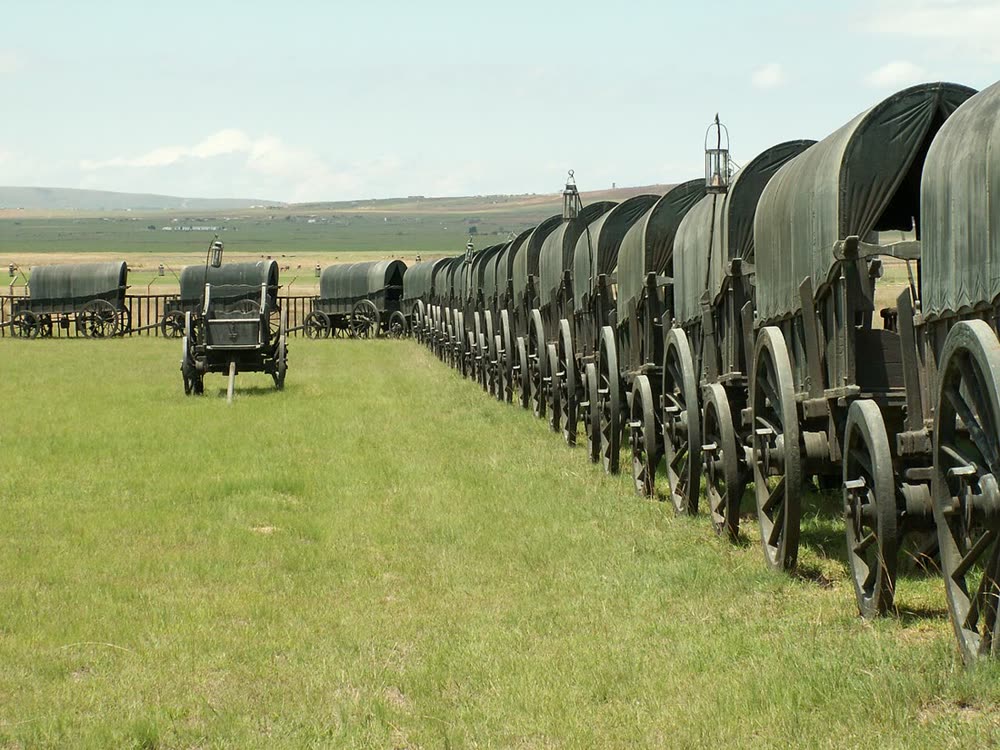
The trek was soaked in blood and legend. The Zulu king Dingane massacred the trek leader Piet Retief and his party after inviting them unarmed to his kraal, and in December 1838 Andries Pretorius and some five hundred riflemen, drawn up in a wagon laager at the Ncome River, broke a Zulu army of thousands. Blood River became the founding myth of Afrikaner nationhood. The republics that followed were conservative farming states, governed by white male voters under constitutions that mixed Boer custom with borrowed law - and that reserved political rights, explicitly, to whites.
The republics might have remained obscure pastoral backwaters but for geology. Diamonds at Kimberley in the late 1860s drew the first rush, and in 1886 prospectors found the world's richest gold reef on the Witwatersrand in the Transvaal. The Rand was soon producing forty percent of the world's gold; Johannesburg rose from nothing to a city; and tens of thousands of foreign fortune-seekers - uitlanders, mostly British - flooded in. President Paul Kruger's government taxed them heavily and refused them the vote, fearing, correctly, that enfranchising them would end Boer independence. British investors owned most of the mines, and British policy, personified by Cecil Rhodes, wanted the gold and a united, British South Africa.
Britain had already annexed the Transvaal once, in 1877, and the Boers had already thrown it off once, in the war of 1880-81 that ended at Majuba Hill. The failed Jameson Raid of 1895 - a botched attempt to spark an uitlander rising - poisoned what trust remained, drove the republics into alliance, and sent Kruger shopping for German rifles.
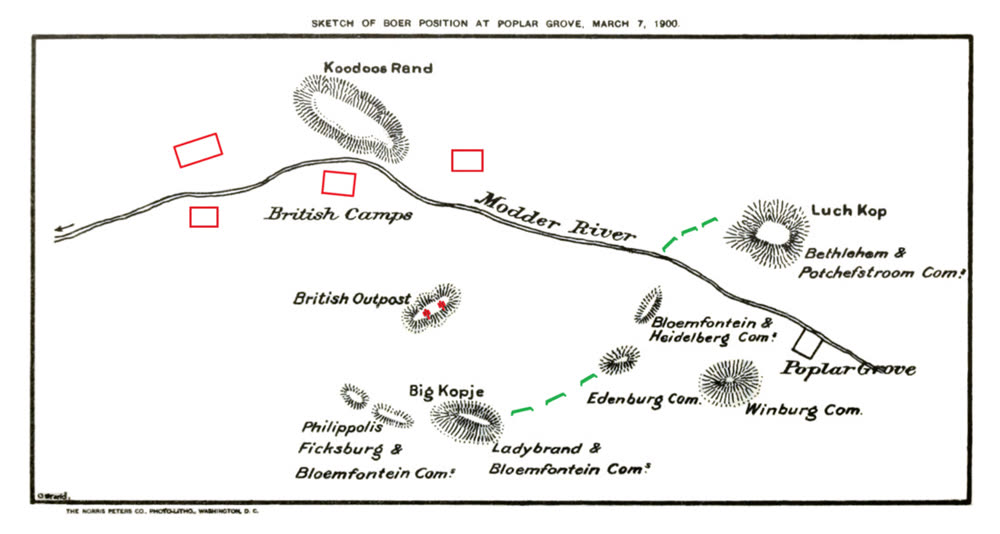
War came in October 1899, when the republics, rather than wait for the British build-up to finish, struck first. The early months were Boer victories - Ladysmith besieged, three British defeats in one 'Black Week' - but empire's weight told. British columns took Bloemfontein and Pretoria in 1900, Kruger fled to Europe, and the Boers fought on for two more years as guerrillas: commandos against an army that answered with blockhouses, burned farms, and concentration camps in which tens of thousands of Boer women and children, and many more Africans, died of disease. The Peace of Vereeniging in May 1902 ended the republics; they became British colonies.
In 1910 the former republics joined the Cape and Natal in the Union of South Africa, a self-governing dominion in which, soon enough, the defeated Boers - now Afrikaners - won through politics much of what they had lost in war. The consequences, from Afrikaner nationalism to the system of racial rule built in its name, shaped South Africa for the rest of the twentieth century.
 Britannica: South African War
 World History Encyclopedia: Causes of the Boer War
 BBC: History - The Boer Wars
Britannica: South African Republic (SAR)