 Go Back

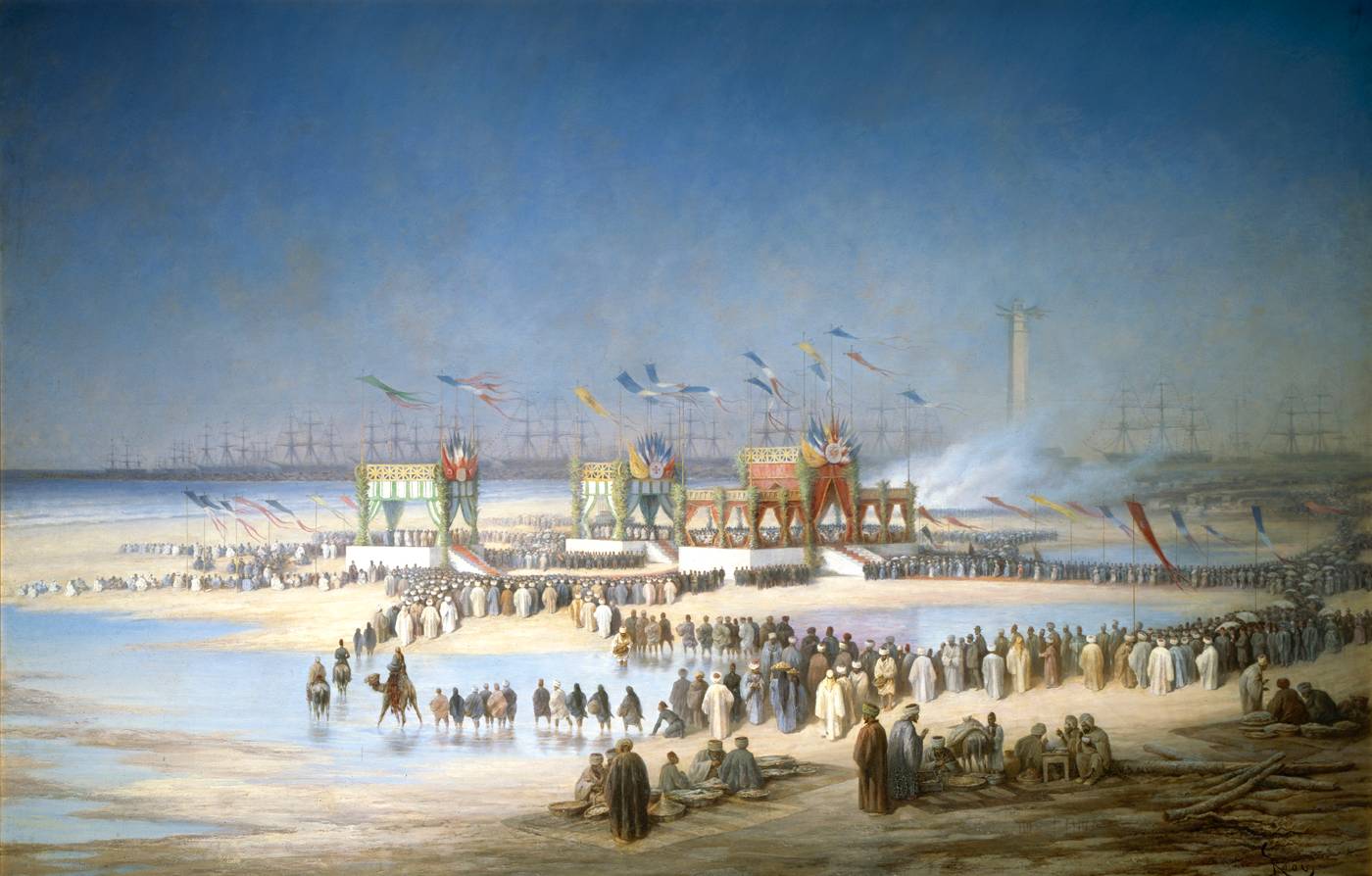
The Building of the Suez Canal. The Suez Canal, dug across the Egyptian isthmus between 1859 and 1869, joins the Mediterranean Sea to the Red Sea and cuts the sea voyage between Europe and Asia by thousands of miles. The original channel stretched about 164 kilometres. It changed global shipping routes and made the isthmus a focus of international strategy.
The dream of a canal at Suez was ancient: the pharaohs had dug a canal from the Nile to the Red Sea, and Napoleon Bonaparte's engineers had investigated a possible route in 1799. The project was promoted by the French diplomat Ferdinand de Lesseps, who won a concession from his friend, the Egyptian viceroy Said Pasha, in 1854, and founded the Suez Canal Company in 1858. Britain, fearing a threat to its route to India, fought the project diplomatically for years.
Construction took ten years and an enormous toll. At first the company dug with the corvee, the forced labor of tens of thousands of Egyptian peasants, until international pressure and the new viceroy, Ismail Pasha, ended the system in 1864 and giant dredging machines took over. The canal ran from the new city of Port Said through Lake Timsah and the Bitter Lakes to Suez. On 17 November 1869 it opened in the presence of the Empress Eugenie of France and a gathering of royalty from across Europe.
The canal changed the world at once: the journey from London to Bombay shrank by weeks, and steam shipping made the route the artery of empire and trade. In 1875 Britain bought the bankrupt khedive's shares in the company, and the canal became so central to British strategy that guarding it was a cause, and a prize, of the occupation of Egypt in 1882. The Convention of Constantinople of 1888 declared the canal open to the ships of all nations in peace and war, and by 1924 it was among the busiest waterways on earth.
 Britannica: Suez Canal
 World History Encyclopedia: Britain and the Suez Canal
 Suez Canal Authority: Canal History