 Go Back

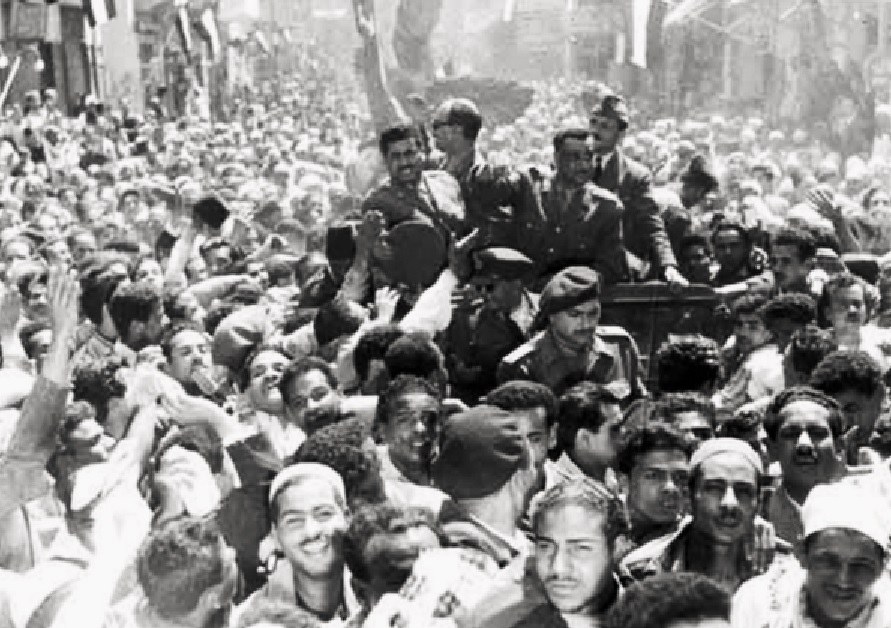
The Egyptian Revolution of 1952. The Egyptian Revolution of 1952 overthrew the monarchy that had ruled Egypt for a century and a half and set the country on the path of Arab nationalism. The old order had been discredited by corruption, by the continued presence of British troops in the Suez Canal Zone, and above all by the humiliating defeat of the Egyptian army in Palestine in 1948. Within the army a secret group of young officers, the Free Officers, organized by Gamal Abdel Nasser, blamed the king and his politicians for the disaster and plotted to seize power.
In the early hours of 23 July 1952 the Free Officers struck, taking over army headquarters and the key points of Cairo without a fight. General Muhammad Naguib, a respected senior officer, was placed at their head. King Farouk abdicated three days later and sailed into exile on his yacht, and in June 1953 the monarchy was abolished and Egypt declared a republic. The new regime at once launched a sweeping land reform, breaking up the great estates that had dominated Egyptian rural life.
Nasser soon outmaneuvered Naguib and in 1954 took power himself, becoming the most influential Arab leader of the century. His government forced the British out of the Canal Zone, nationalized the Suez Canal in 1956 and survived the tripartite invasion that followed, built the Aswan High Dam, and championed Arab unity and non-alignment, carrying Egypt's influence across the Arab world and beyond.
The revolution transformed Egypt and the Middle East. It ended the rule of the old landowning elite, expanded education and industry, and inspired military coups and nationalist movements across the Arab world, though it also entrenched the army in power. The republic born in July 1952 still governs Egypt, and Nasser's image remains a touchstone of Egyptian and Arab politics.
 Wikipedia: Egyptian Revolution of 1952
 Lumen Learning World History: The Egyptian Revolution of 1952
 Oxford Academic: Nasser's Blessed Movement
 Wiley International Encyclopedia of Revolution: Egypt, Revolution of 1952