 Go Back

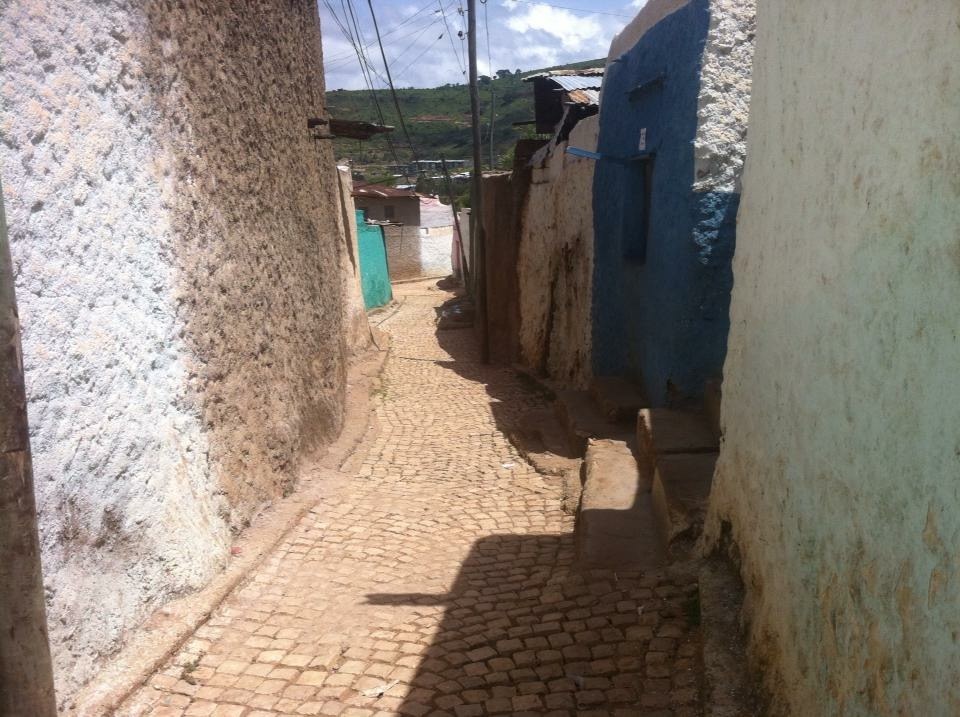
The Emirate of Harar. The Emirate of Harar (1647-1887) was a Muslim city-state of eastern Ethiopia, centered on the ancient walled city of Harar, long regarded as a holy city of Islam in the Horn of Africa. Harar had been a center of Islamic learning and trade since the Middle Ages and the capital of the sixteenth-century conqueror Ahmad ibn Ibrahim, whose wars shook the Ethiopian highlands. In 1647 the emir Ali ibn Da'ud founded a new dynasty that ruled the city and its hinterland for two and a half centuries.
The emirate was a commercial power. Harar stood at the meeting point of trade routes from the Ethiopian highlands, the Somali interior, and the Red Sea ports of Zeila and Berbera, and its merchants dealt in coffee, hides, ivory, and slaves. The walled city, with its hundreds of mosques and shrines, its markets, and its distinctive townhouses, was the economic and religious capital of the region, and Harari, the city's own Semitic language, bound its people into a close urban community. Outside the walls the emirs contended and bargained with the Oromo peoples who surrounded them.
The nineteenth century brought new pressures. Egyptian forces occupied Harar in 1875 as the khedive's empire pushed into the Horn, governing it for a decade and destroying the independence of the emirate. When the Egyptians withdrew, the young Ethiopian emperor Menelik II moved in: his army defeated the last emir, Abdullahi, at the Battle of Chelenqo in 1887, and Harar was incorporated into the expanding Ethiopian Empire, with the emperor's cousin Ras Makonnen, father of the future emperor Haile Selassie, as its governor.
Harar's emirate is gone, but the city endures. Its old walls, the Jugal, enclose a labyrinth of lanes that UNESCO has named a World Heritage site, and Harar remains a living center of Islamic scholarship and Ethiopian identity. The emirate is remembered as the last flowering of a tradition of Muslim city-states that for a thousand years linked the Ethiopian highlands to the wider Islamic world.
 Wikipedia: Emirate of Harar
 Harari National League: History of Harar and the Hararis
 Ohio University Press (JSTOR): Emirate, Egyptian, Ethiopian: Harar
 Smithsonian Institution: Harar