 Go Back

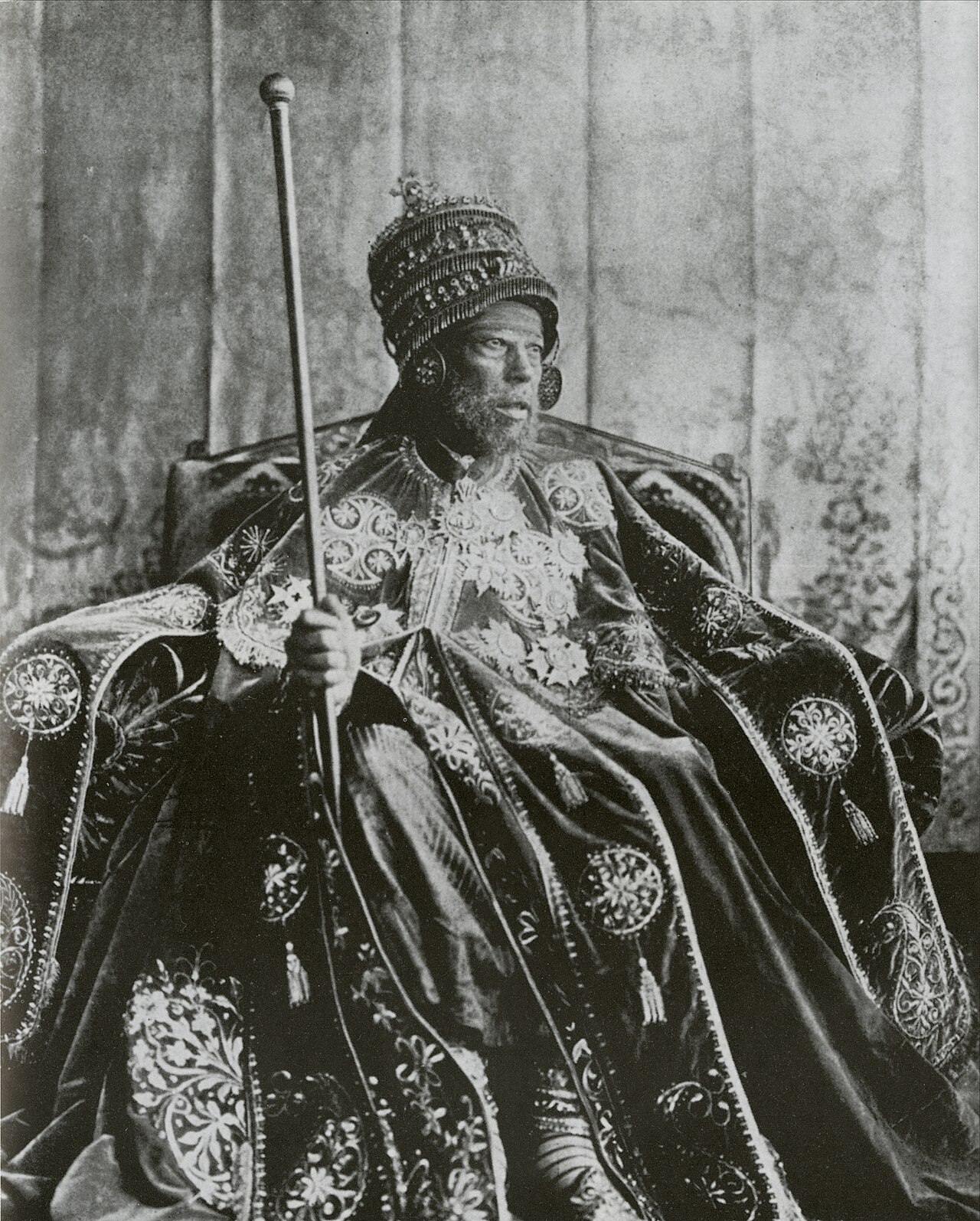
The Ethiopian Empire under Emperor Menelik II was a rapidly modernizing Christian state that preserved its ancient sovereignty at the height of European imperialism in the late 19th century. King of Shewa before he was emperor, Menelik took the throne in 1889 and consolidated control over the regional warlords, then vastly expanded Ethiopia's southern and eastern borders to roughly their modern shape. He matters because under him Ethiopia did what almost no other African state managed: it beat a European power in open battle and stayed free.
The crisis came from Italy, which had seized Eritrea and coveted the rest. The 1889 Treaty of Wuchale became famous for its trick: the Italian text made Ethiopia an Italian protectorate, while the Amharic text said no such thing, and when Menelik discovered the difference he denounced the treaty and prepared for war. His empress, Taitu, matched him in resolve; it was she who named his new capital Addis Ababa, the New Flower.
On March 1, 1896, at the mountain village of Adwa, Menelik's army of a hundred thousand, supplied with modern rifles and united as Ethiopia had rarely been, destroyed the invading Italian colonial army in a single day. Adwa became a beacon: the victory of an African state over a European empire, celebrated ever after across the colonized world and deep in the Pan African imagination.
Menelik used the peace to modernize: a railway from Djibouti toward the capital, telephone lines, a modern school and hospital, a national bank and currency. He reigned until 1913, leaving an empire doubled in size and unbowed, the one African kingdom whose flag never came down in the age of conquest.
 Britannica: Treaty of Wichale
 World History Encyclopedia: Italo-Ethiopian Wars
 UNESCO: Treasures from the National Archives and Library Organization of Ethiopia (Memory of the World Register nomination)
Britannica: Menilek II