 Go Back

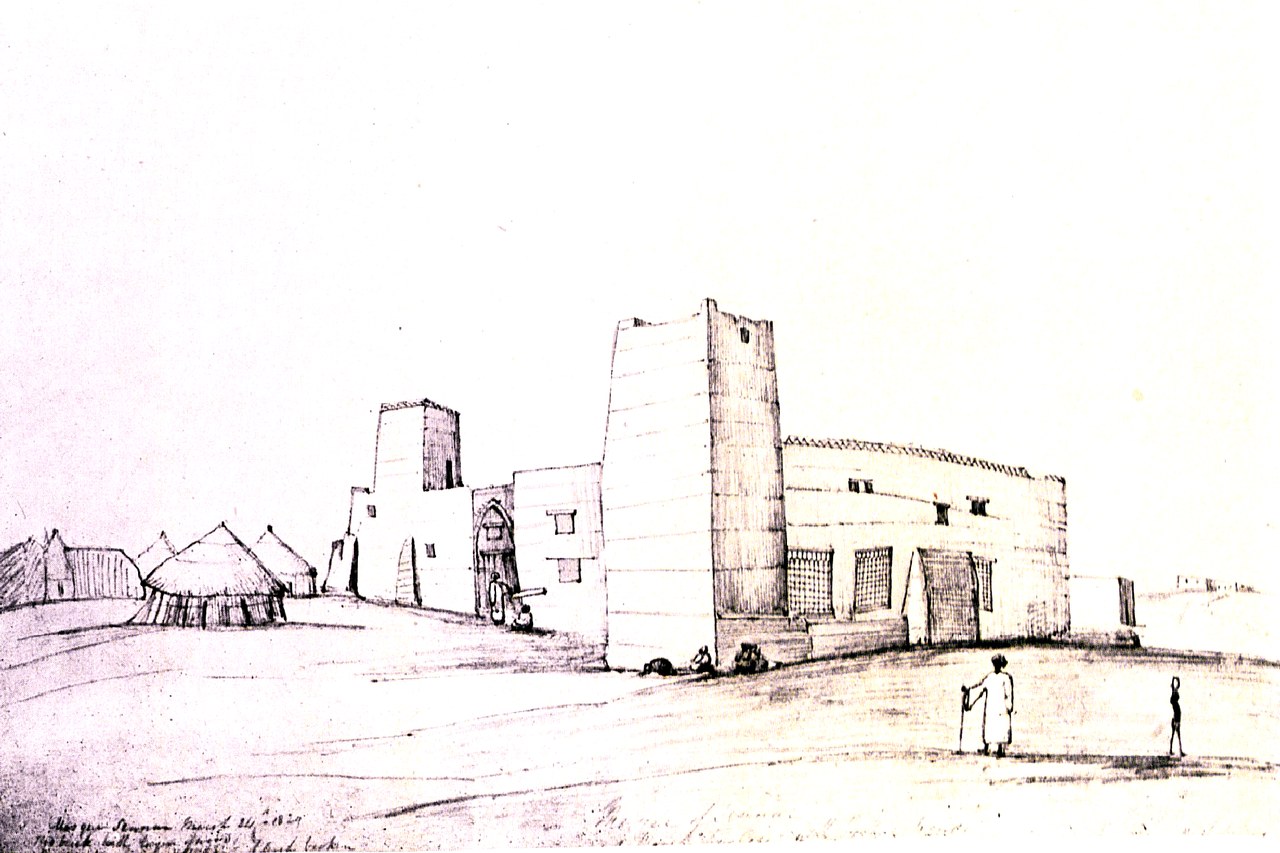
The Funj Sultanate. The Funj sultanate (1504-1821), often called the Kingdom of Sennar after its capital, ruled the Gezira and the Blue Nile valley for three centuries and brought Islam and a distinctive courtly civilization to the heart of the Sudan. The dynasty was founded by Amara Dunqas, whose people, the Funj, had risen to power in the south, and in 1504 he established his capital at Sennar on the Blue Nile, overthrowing the old Christian kingdom of Alodia in alliance with the Arab Abdallabi tribes.
Under the Funj sultans, Sennar grew into a great African and Islamic capital. The sultan ruled through a court of titled nobles and governed a realm that at its height stretched from the Ethiopian borderlands to the Third Cataract, controlling tributary kingdoms such as the Taqali in the Nuba Mountains. Caravans carried gold, ivory, and slaves north to Egypt, while Islamic scholars made Sennar a center of learning whose judges and holy men shaped Sudanese religious life. The great mosques and palaces of the capital impressed every traveler who saw them.
The sultanate's strength faded in the eighteenth century. The kings became prisoners of their own court: a series of palace coups brought the Hamaj regents, relatives of the queens, to real power, and the later sultans reigned as figureheads while civil wars tore the country. In 1821 the Egyptian army of Khedive Muhammad Ali, under his son Ismail Kamil Pasha, marched up the Nile, and the last Funj sultan surrendered his kingdom without a serious fight.
The Funj sultanate left a lasting imprint on Sudanese identity. It spread Islam and the Arabic language through the riverain Sudan, created a political tradition that later Sudanese states claimed to inherit, and bound the lands between the two Niles into a single kingdom for three centuries. Sennar itself dwindled to a modest town, but the memory of its golden age, when its kings ruled from the mountains of Ethiopia to the cataracts of the Nile, endures in Sudanese chronicles and tradition.
 Wikipedia: Funj Sultanate
 Embassy of Sudan: The Funj Sultanate
Library of Congress Country Studies: Sudan: The Funj
 Journal of African History: Funj Origins