 Go Back

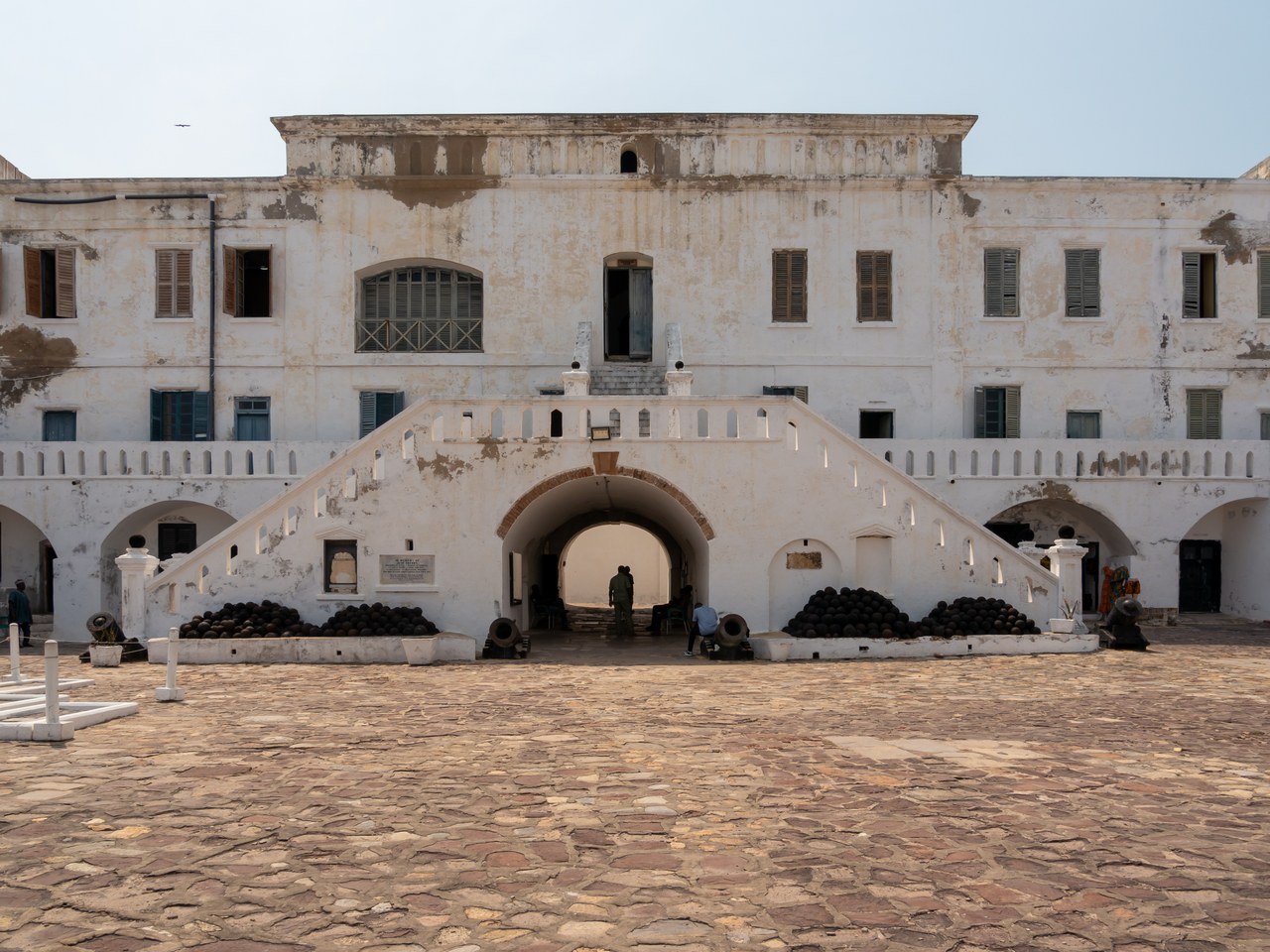
The Gold Coast was Britain's most important West African colony, and the territory that became the modern nation of Ghana. European contact with this coast began in 1471 when Portuguese sailors landed and found so much gold being traded that they named it the Gold Coast. The Portuguese built Elmina Castle in 1482, the first European fort in sub-Saharan Africa, and over the following centuries the Dutch, Danes, Swedes, and British all built fortified trading posts along the shore. By the eighteenth century the British had become the dominant European power, and their forts at Cape Coast and elsewhere served the trade in gold, ivory, and tragically, enslaved people.
British rule over the Gold Coast developed gradually. In 1821 the British government took over the coastal settlements from a merchant company, and after the Anglo-Ashanti wars of the nineteenth century, the coastal region was formally declared the Gold Coast Colony in 1874. The powerful Asante kingdom in the interior resisted British expansion for decades, fighting a series of wars that culminated in the War of the Golden Stool in 1900, led by the queen mother Yaa Asantewaa. By 1902 the Asante kingdom and the Northern Territories had been incorporated, giving the colony roughly its modern boundaries.
Under colonial rule the Gold Coast's economy was transformed by cocoa. Introduced in the late nineteenth century, cocoa farming spread rapidly among African farmers, and by the 1920s the Gold Coast was the world's largest cocoa producer. The colony developed railways, harbors, and schools, and an educated African elite emerged in coastal towns like Accra and Cape Coast. This elite founded early political organizations: the Aborigines' Rights Protection Society, formed in 1897 to defend African land, and the National Congress of British West Africa, founded in 1920, which sent a delegation to London to demand elected representation.
Governor Gordon Guggisberg, who arrived in 1919, launched an ambitious ten year development program that built the deep water harbor at Takoradi, extended the railways, and founded the Prince of Wales College at Achimota, soon the leading school in West Africa. By 1924 the Gold Coast was prosperous, orderly, and proud, but its educated Africans, excluded from real power, were already organizing the politics that would define its future.
 Wikipedia: Gold Coast (British colony)
Country Studies (Library of Congress): Ghana: Colonial Administration
 BBC News: Ghana country profile
 Oxford Research Encyclopedias: Gold Coast and Ghana