 Go Back

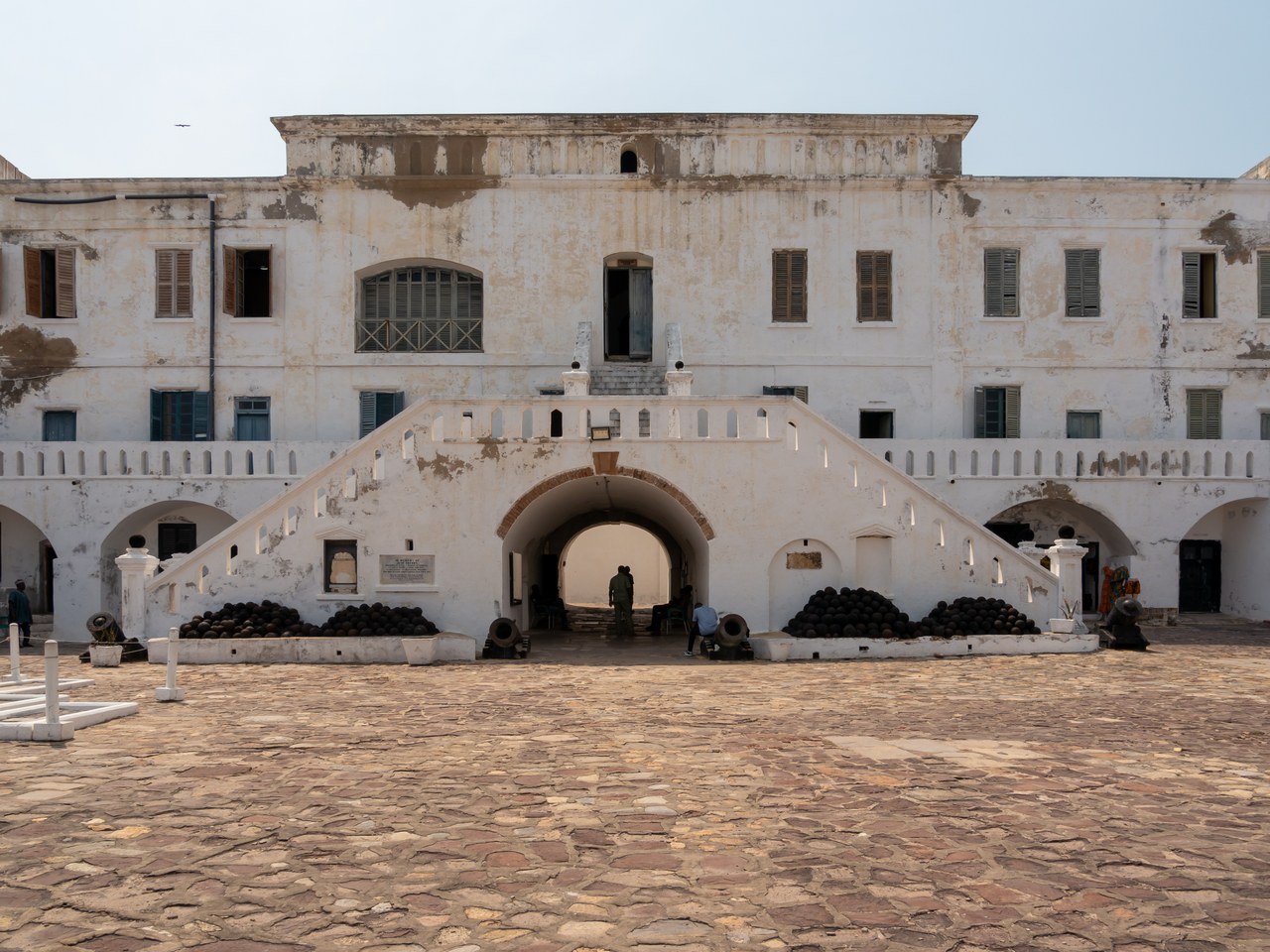
The Gold Coast was Britain's most important West African colony and the first sub-Saharan African colony to win independence, becoming the nation of Ghana in 1957. European contact with this coast began in 1471 when Portuguese sailors landed and found so much gold being traded that they named it the Gold Coast. The Portuguese built Elmina Castle in 1482, the first European fort in sub-Saharan Africa, and over the following centuries the Dutch, Danes, Swedes, and British all built fortified trading posts along the shore. By the eighteenth century the British had become the dominant European power, and their forts at Cape Coast and elsewhere served the trade in gold, ivory, and tragically, enslaved people.
British rule over the Gold Coast developed gradually. In 1821 the British government took over the coastal settlements from a merchant company, and after the Anglo-Ashanti wars of the nineteenth century, the coastal region was formally declared the Gold Coast Colony in 1874. The powerful Asante kingdom in the interior resisted British expansion for decades, fighting a series of wars that culminated in the War of the Golden Stool in 1900, led by the queen mother Yaa Asantewaa. By 1902 the Asante kingdom and the Northern Territories had been incorporated, giving the colony roughly its modern boundaries.
Under colonial rule the Gold Coast's economy was transformed by cocoa. Introduced in the late nineteenth century, cocoa farming spread rapidly among African farmers, and by the 1920s the Gold Coast was the world's largest cocoa producer. The colony developed railways, harbors, and schools, and an educated African elite emerged in coastal towns like Accra and Cape Coast. This elite founded early nationalist organizations, including the Aborigines' Rights Protection Society in 1897 and the United Gold Coast Convention in 1947. After the Second World War, demands for self-government grew stronger, fueled by returning veterans and economic hardship.
The push for independence was led by Kwame Nkrumah, who returned to the Gold Coast in 1947 and founded the Convention People's Party in 1949 with the slogan of self-government now. Through strikes, boycotts, and electoral victories, Nkrumah's movement forced Britain to concede a series of constitutional reforms. Nkrumah became prime minister in 1952, and on March 6, 1957, the Gold Coast became independent Ghana, with Nkrumah declaring that the independence of Ghana was meaningless unless linked to the total liberation of Africa. Ghana's independence inspired decolonization movements across the continent.
 Wikipedia: Gold Coast (British colony)
Country Studies (Library of Congress): Ghana: Colonial Administration
 BBC News: Ghana country profile
 Oxford Research Encyclopedias: Gold Coast and Ghana