 Go Back

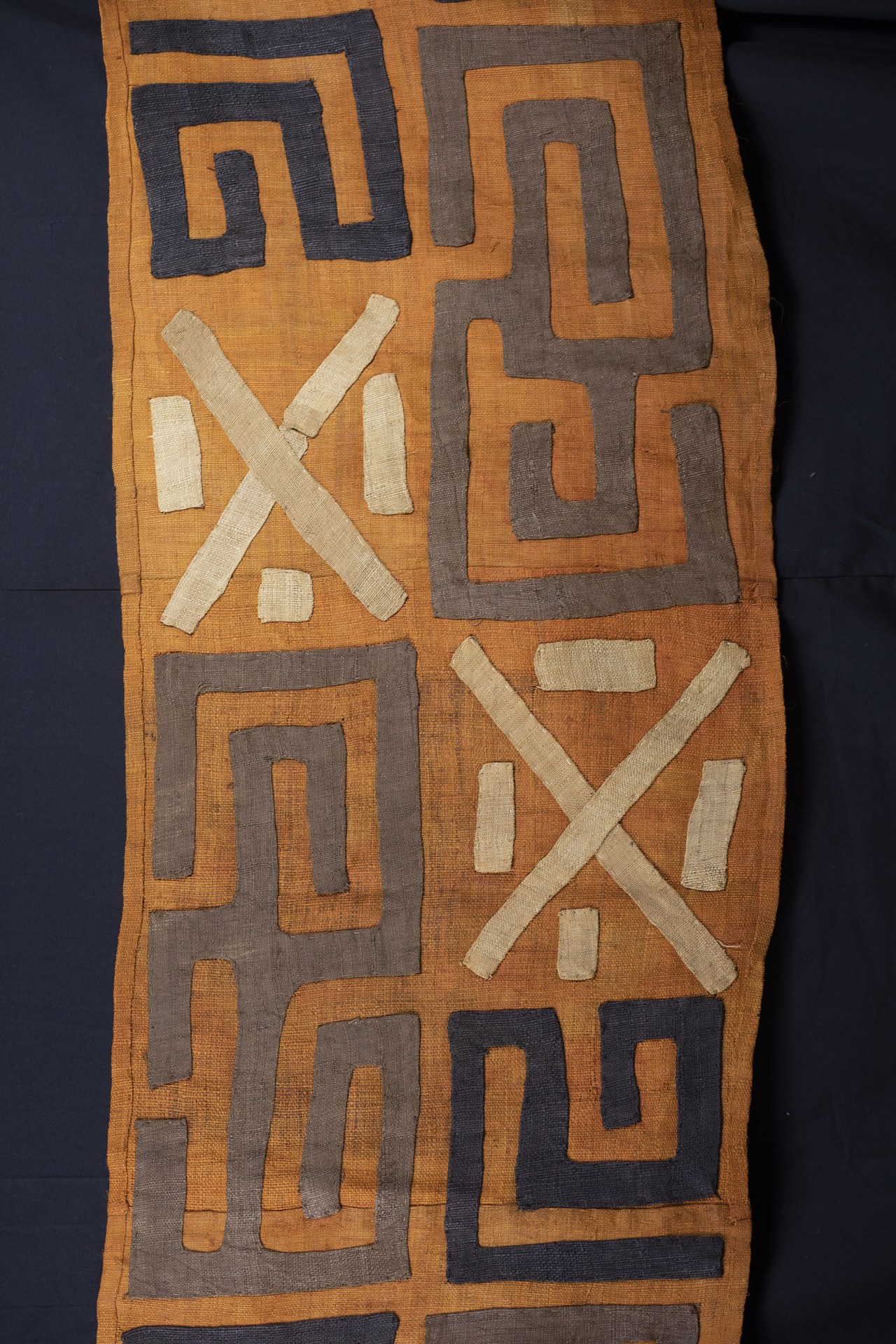
The Kingdom of Kuba. The kingdom of Kuba (c. 1600-1900), lying between the Kasai, Sankuru, and Lulua rivers in what is now the Democratic Republic of the Congo, was one of the most sophisticated states of the African savanna. Kuba tradition remembers the kingdom's foundation by a culture hero and conqueror named Shyaam aMbul aNgoong, a hunter's son of foreign origin, who is said to have united the chiefdoms of the region in the early seventeenth century, abolished the death penalty among his people, and introduced new crops, technologies, and arts.
Kuba became famous for its political organization and its art. The king, the nyim, ruled from a capital whose great court compounds were the stage for elaborate ceremony, advised by titled councils that balanced royal, aristocratic, and commoner interests. The kingdom was a federation of some twenty chiefdoms whose tribute supported the court, and its army defended the realm without the slave-raiding militarism of some neighbors. Kuba artists produced some of Africa's most admired work: raffia cloth embroidered in intricate geometric patterns, carved cups and boxes, royal portrait figures, and the celebrated ndop statues that represented individual kings.
The kingdom's wealth rested on farming, fishing, and trade. Kuba markets exchanged raffia cloth, ivory, camwood, and other goods across the Congo basin, and the court grew rich controlling these routes. In the nineteenth century the Kuba resisted the slave traders who were ravaging the regions to their north and east, and the kingdom kept its independence and institutions largely intact even as chaos spread around it.
Kuba's isolation ended with colonial conquest. Agents of the Congo Free State reached the kingdom in the 1880s, and after years of resistance and the turmoil of the rubber regime, Kuba was brought under Belgian colonial rule in the early twentieth century. The royal line and the court at Mushenge survived under the colonial system, and Kuba art, especially its textiles and royal statues, remains among the most treasured in the world's museums.
 Metropolitan Museum of Art: Kingdoms of the Savanna: The Kuba Kingdom
 Britannica: Kuba
 Wikipedia: Kuba Kingdom
Springer Encyclopedia: Kuba