 Go Back

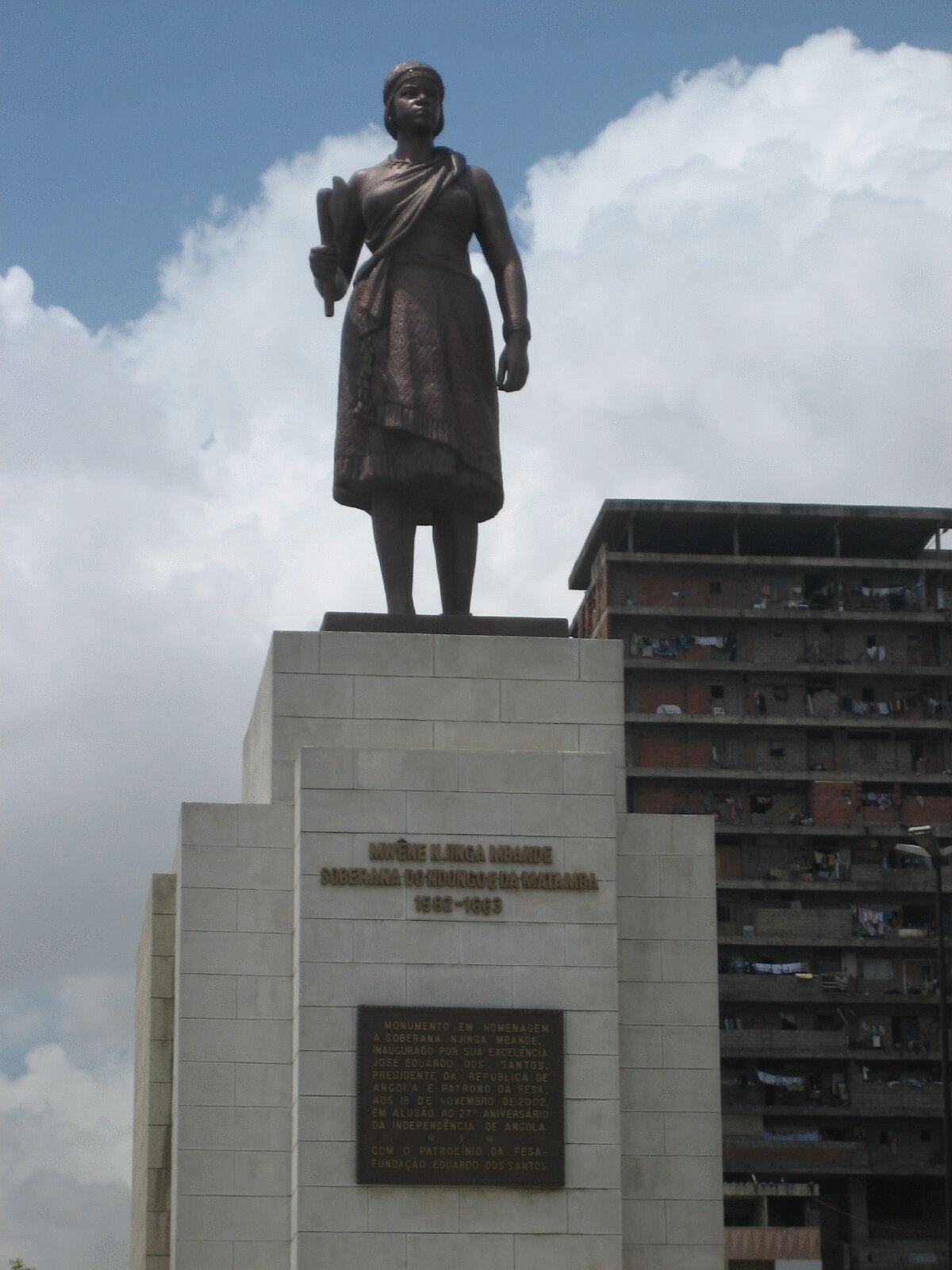
The Kingdom of Ndongo and Matamba was a powerful West Central African state in modern day Angola, formed through the unification of two Mbundu kingdoms in the 17th century. The realm reached its height under the legendary Queen Nzinga, who took the throne and waged decades of strategic warfare and diplomacy against the Portuguese. This state matters because Nzinga's resistance made her one of the great figures of African history, a ruler who held a European empire at bay for nearly forty years.
Nzinga first faced the Portuguese in 1622, negotiating a peace treaty on behalf of her brother the king: when the Portuguese offered her no chair, the story goes, she had a servant kneel as her seat, and negotiated as an equal. After her brother's death she seized power herself, converted to Catholicism as Ana de Souza when it served her, and broke with the Portuguese when it did not.
Her statecraft was as flexible as her armies: she allied with the fierce Imbangala warriors, conquered the kingdom of Matamba to make it her base, and joined the Dutch in their war against Portugal in Angola, nearly driving the Europeans into the sea in the 1640s. Even when the Dutch withdrew, she fought on, raiding the slave trade that fed on her region and sheltering runaways in her lands.
In old age Nzinga made peace on her own terms, securing recognition of her rule before her death in 1663, and her united realm of Ndongo and Matamba held off full Portuguese conquest for generations after her. Today she is Angola's greatest national heroine, a symbol of resistance taught across Africa and the diaspora.
 Britannica: Matamba
 World History Encyclopedia: Portuguese Angola
 UNESCO Digital Library: Njinga Mbandi: Queen of Ndongo and Matamba
 BBC: BBC World Service