 Go Back

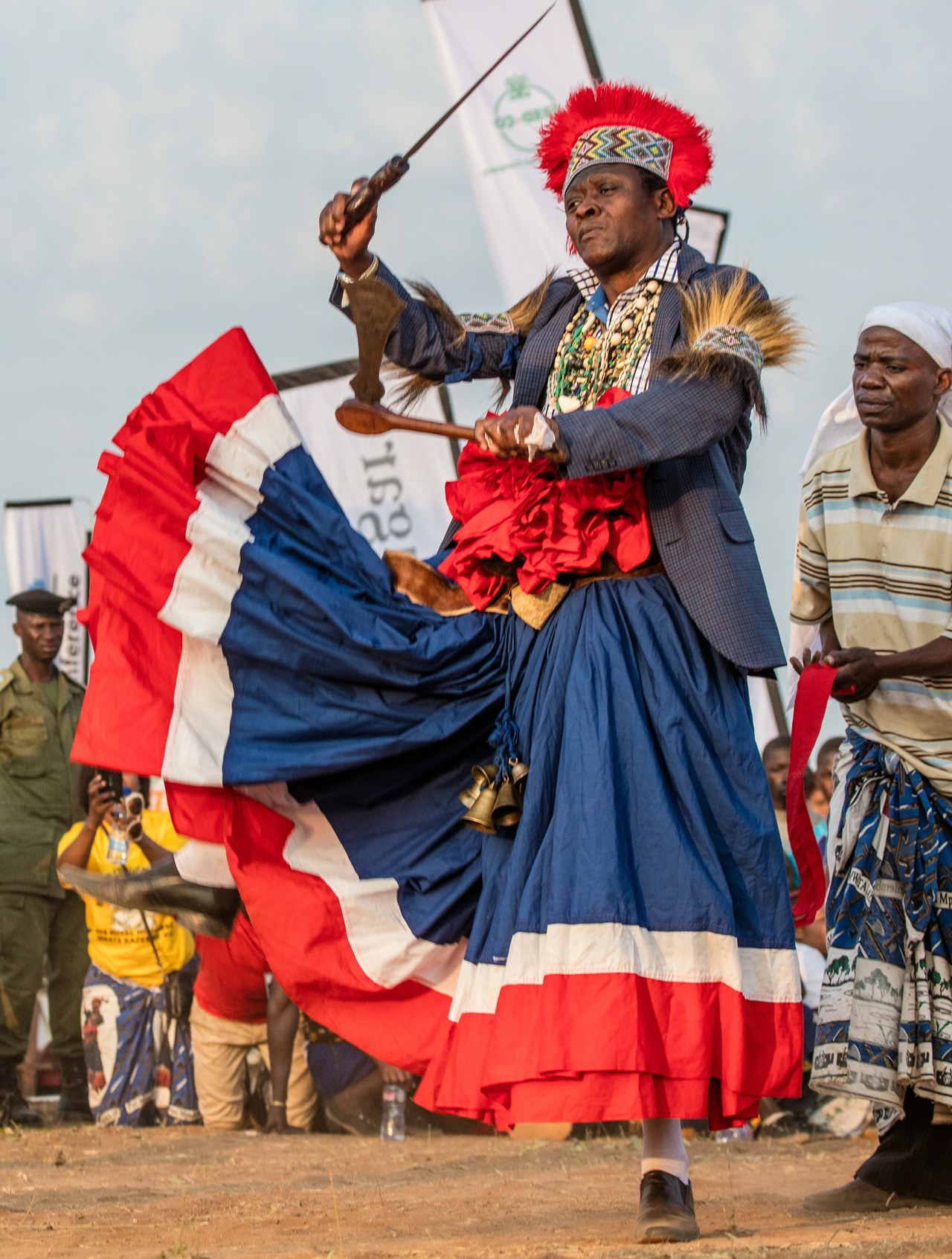
The Lunda Empire. The Lunda empire (c. 1660-1887) arose among the Lunda people of the upper Kasai and Lulua rivers, in what is now the southern Democratic Republic of the Congo, and grew into one of the largest states of the southern African savanna. Lunda tradition ties its kingship to the Luba hero Mbidi Kiluwe, whose son is said to have married the Lunda queen Lueji, uniting the two royal lines. From this union came the title of Mwata Yamvo, borne by the Lunda emperors, whose court at Musumba became the ritual and political heart of a vast realm.
The Mwata Yamvo's authority radiated outward through a remarkable system of government. Royal relatives and titled officials governed the provinces, while outlying chiefs ruled as vassals, sending tribute in ivory, slaves, copper, salt, and cloth to the capital and receiving royal emblems in return. Lunda prestige was magnetic: adventurers and princes carried the Lunda model of kingship far abroad, founding related dynasties among the Kazembe on the Luapula, in what is now Zambia, and deep into modern Angola.
The empire's power in the eighteenth and nineteenth centuries rested heavily on trade. Lunda brokers dominated the routes carrying ivory and enslaved people both westward to the Portuguese in Angola and eastward toward the Swahili traders of the East African coast, and the Mwata Yamvo grew rich on the traffic. But the trade also destabilized the state: armed rivals, ambitious provincial chiefs, and new trading powers eroded the center, and by the later nineteenth century the empire was breaking apart.
The end came with colonial conquest. In the 1880s the lands of the Mwata Yamvo were partitioned between Leopold's Congo Free State and British and Portuguese claims, and in 1887 the last great Mwata Yamvo died as his empire disintegrated. Yet the Lunda political legacy survived in the chieftaincies it had planted across the savanna, and the Mwata Kazembe of the Luapula valley, heir to a branch of the Lunda royal line, remains a living traditional ruler today.
 Metropolitan Museum of Art: The Luba and Lunda Empires
 Britannica: Luba-Lunda States
 Wikipedia: Lunda Empire
 Treccani: Mwata Yamvo