 Go Back

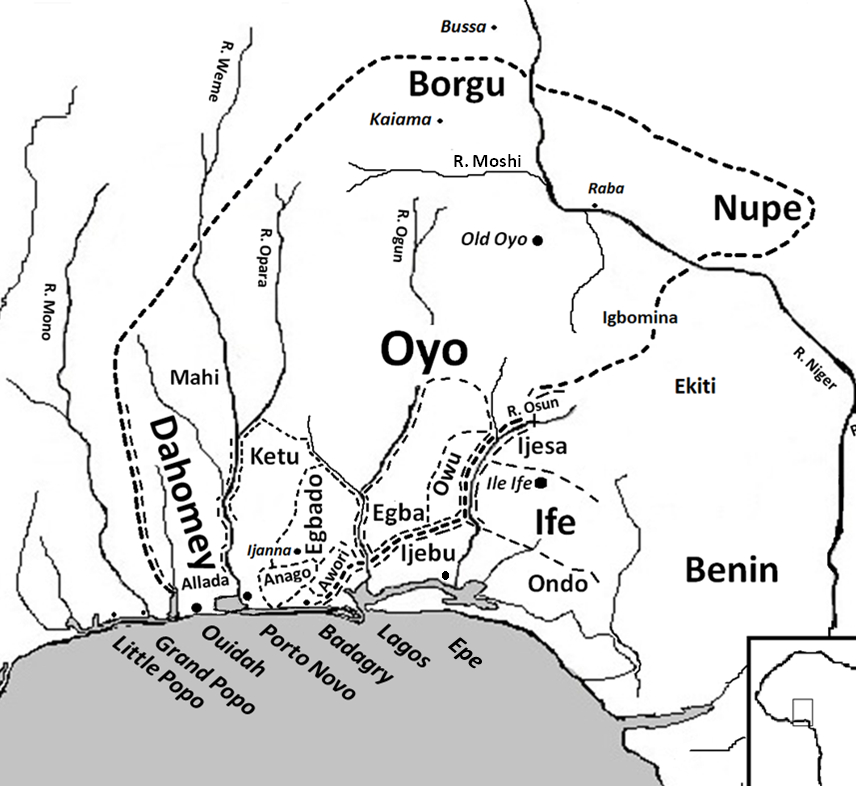
The Oyo Empire was a Yoruba state in what is now southwestern Nigeria that flourished from the 17th to the 19th century, though its royal traditions reached much further back, to the god king Oranmiyan, son of the founder of Ife. It matters because its horsemen built the largest empire the Yoruba people ever knew, and because its fate is bound up with the Atlantic slave trade it helped to feed.
The empire's capital, Old Oyo, stood on the savanna near the Niger, where the Oyo cavalry, feared across the region, could sweep the open grasslands that forest kingdoms denied to horses. From there the Oyo subdued thirteen rival kingdoms, made vassals of neighbors like Owu and Ede, and defeated the rising kingdom of Dahomey in the wars of 1726 to 1730, collecting tribute in cloth, kola nuts, pepper, ivory, gold, and slaves.
The Oyo became the central organizers of the slave trade on what Europeans called the Slave Coast, moving captives from the deep interior down to the waiting ships, and in return receiving horses, guns, and luxuries that further armed the empire. Government balanced the king, the alaafin, against a council of nobles, the Oyo Mesi, in a constitution of checks that could compel even a king to abdicate his throne.
Oyo declined as civil wars between the alaafin and his nobles tore the state, the Fulani jihad pressed down from the north, and new powers like Ibadan rose from the wreckage. The empire collapsed in the early 19th century and Old Oyo was abandoned, but its culture endured, in Yoruba identity at home and, through the ships, in the diaspora of the Americas.
 Britannica: Oyo empire
 World History Encyclopedia: Oyo Empire
 Humanities LibreTexts: 11.16: The Yoruba States
 Slavery and Remembrance: Oyo Empire