 Go Back

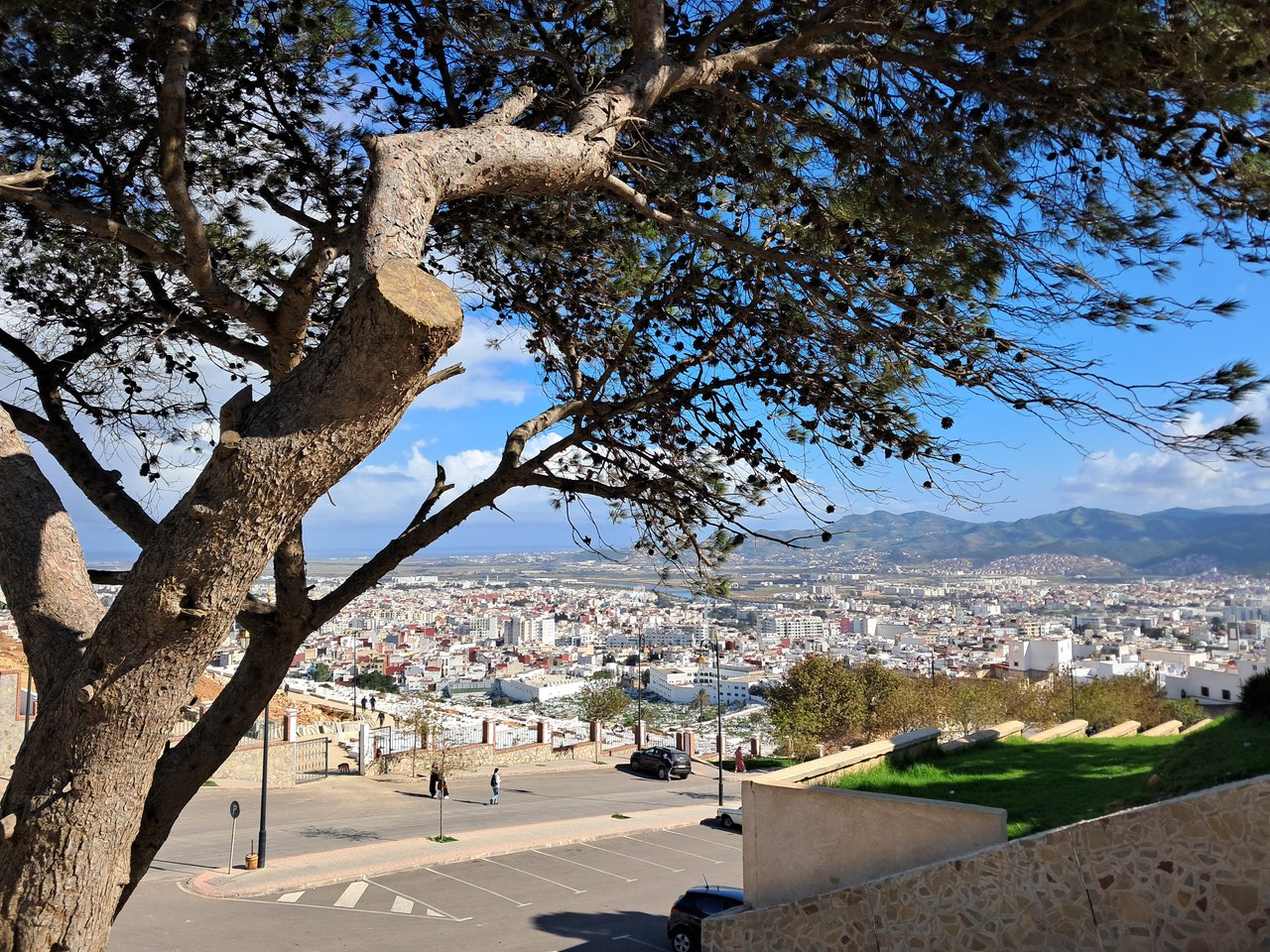
Spain's African empire was a modest remnant of a once-global dominion, consisting of territories in Morocco, Western Sahara, and Equatorial Guinea. Spain's presence in North Africa stretched back to the fifteenth and sixteenth centuries, when it seized the coastal enclaves of Ceuta and Melilla, but the modern colonial empire dated from the late nineteenth century. In 1884-1885 Spain claimed the stretch of coast that became Spanish Sahara, and in 1912, by agreement with France, it received a protectorate over the northern zone of Morocco, a mountainous region inhabited mainly by Berber peoples.
Governing the Moroccan protectorate proved costly and violent. Spain never fully controlled the Rif mountains, and in 1921 a Spanish army was annihilated at the Battle of Annual by Rifian forces under Abd el-Krim, losing around ten thousand men in one of the worst colonial defeats of the century. Abd el-Krim proclaimed the Republic of the Rif, and it took a combined Franco-Spanish campaign of over three hundred thousand troops, in which the young Francisco Franco made his reputation, to crush the resistance by 1926. The experience forged the Spanish Army of Africa, whose officers would launch the military rising of 1936 that began the Spanish Civil War, when Franco airlifted his troops from Morocco to the mainland.
Spanish Guinea, in central Africa, consisted of the island of Fernando Po and the mainland territory of Río Muni. Spain had acquired Fernando Po in 1778 but only developed it in the twentieth century, turning the island into a profitable cocoa colony worked by migrant laborers recruited under conditions widely condemned as near-slavery. Río Muni, home mainly to the Fang people, remained thinly administered until after the Second World War. In 1959 Spain reorganized its Guinean territories as provinces of Spain itself, a response to growing international pressure for decolonization.
Decolonization came rapidly in the late twentieth century. Spain withdrew from the Moroccan protectorate in 1956 when Morocco gained independence, though it kept Ceuta, Melilla, and the small enclave of Ifni until 1969. Equatorial Guinea became independent in 1968, and its first president, Francisco Macías Nguema, established one of Africa's most brutal dictatorships. In 1975, as Franco lay dying, Spain abandoned Western Sahara, which was promptly partitioned between Morocco and Mauritania, triggering a conflict over the territory that remains unresolved today.
 Wikipedia: Spanish protectorate in Morocco
 Culture & History Digital Journal (CSIC): Spanish Colonial Heritage in Africa
Wikipedia: Spanish Guinea