 Go Back

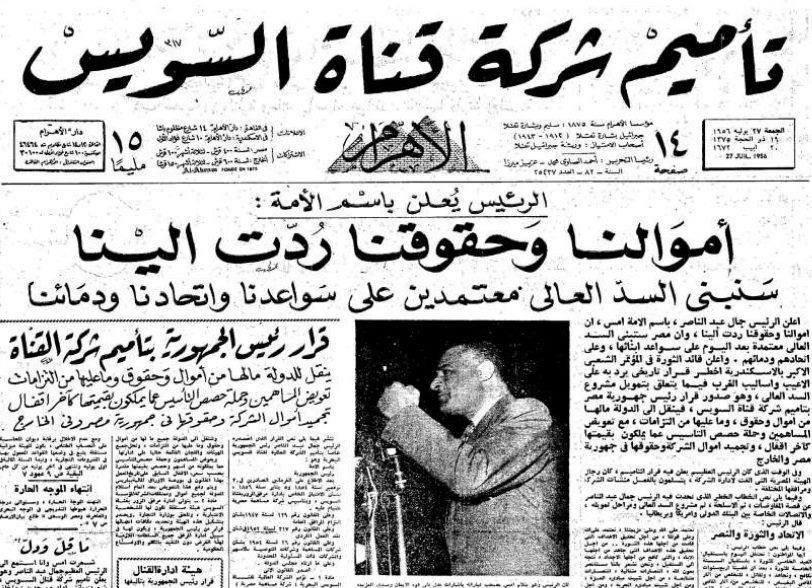
The Suez Crisis. The Suez Crisis of 1956 was the showdown that broke the old colonial order in the Middle East. On 26 July 1956, President Gamal Abdel Nasser of Egypt nationalized the Suez Canal Company, the Anglo-French enterprise that ran the waterway linking the Mediterranean to the Red Sea. The move, prompted by the American and British refusal to finance the Aswan High Dam, electrified the Arab world and enraged London and Paris, which saw Nasser as a threat to their empires and their oil routes.
Britain and France resolved to retake the canal by force, in secret collusion with Israel. On 29 October 1956 Israeli forces invaded the Sinai; Britain and France, posing as peacemakers, then issued an ultimatum they knew Egypt would reject, bombed Egyptian airfields, and landed troops at Port Said. Militarily the operation succeeded, but politically it was a catastrophe: the world was outraged, the United Nations condemned the invasion, and the United States and the Soviet Union, in rare agreement, demanded withdrawal.
Under crushing American financial and diplomatic pressure, the British and French pulled out within weeks, and Israel withdrew from Sinai the following spring. A United Nations emergency force was stationed on the Egyptian border, the first peacekeeping mission of its kind. Nasser, defeated in the field, emerged as the political victor and the hero of Arab nationalism.
The crisis marked the end of Britain and France as independent great powers in the Middle East; the humiliation helped topple Prime Minister Anthony Eden. It confirmed American dominance in the region's affairs, emboldened Arab nationalism and non-alignment, and left the canal firmly in Egyptian hands. The next round of the Arab-Israeli conflict, in 1967, would close the canal again, but 1956 had already changed the rules of the game.
 U.S. Office of the Historian: The Suez Crisis of 1956
 Imperial War Museums: Suez Crisis
 Suez Canal Authority: Nationalization Decree
 UK National Archives: Spotlight On: Suez Crisis