 Go Back

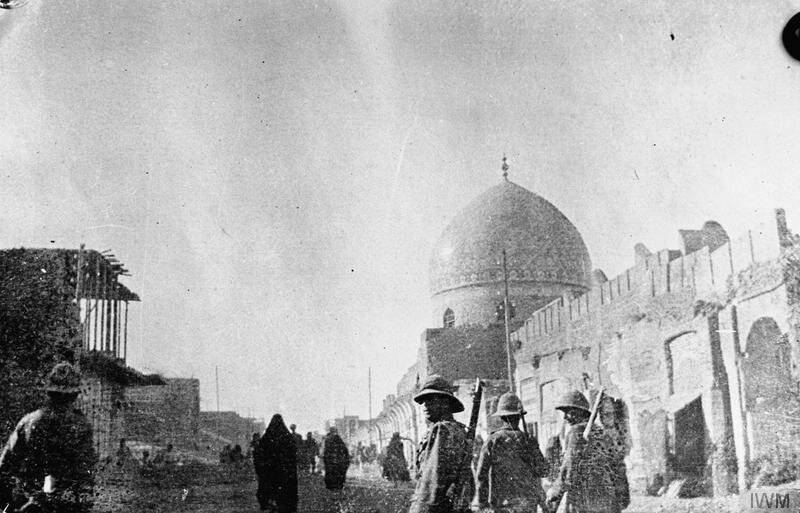
British Mandate Iraq and Palestine. Britain's mandates in Iraq and Palestine were invented at the end of the First World War from three Ottoman provinces and a set of contradictory wartime promises. Britain had conquered Mesopotamia in a hard campaign against the Ottomans (1914-1918) and taken Jerusalem in 1917; at San Remo in 1920 the League of Nations confirmed British mandates over Iraq, Palestine and Transjordan - just as Britain's wartime pledges, to the Arabs in the Hussein-McMahon correspondence, to the Zionists in the Balfour Declaration of 1917, and to France at Sykes-Picot, were coming due.
In Iraq, the great revolt of 1920 against British rule - tribes and towns, Sunni and Shi'a together - was crushed at heavy cost, and Britain chose indirect rule. At the Cairo Conference of 1921, Churchill and his advisers offered the Iraqi throne to Faisal, the Hashemite expelled from Syria, who was crowned in Baghdad that August; his brother Abdullah was installed in the new emirate of Transjordan east of the river, and a treaty in 1922 regularized Britain's position - bases, advisers and oil interests - behind the facade of an independent Arab kingdom.
In Palestine, the mandate administered the impossible: building a Jewish national home, as the Balfour Declaration promised, within an Arab majority determined to prevent it. Arab crowds rioted in Jerusalem in 1920 and Jaffa in 1921; the Zionist movement bought land, founded settlements, and laid out the Hebrew city of Tel Aviv; and Churchill's White Paper of 1922 tried to reassure both sides at once, insisting Britain had never promised that Arab Palestine would disappear. In 1922 the League of Nations formally confirmed both mandates.
By 1924 the new order was taking shape: Britain ruled Iraq through the Hashemites and Palestine through a colonial administration, a new wave of Jewish immigration - the Fourth Aliyah - was changing Palestine's towns, and the contradictions written into the mandates at their birth, Arab nationalism in Iraq and the Arab-Jewish contest in Palestine, were already visible in every institution Britain had built.
 Britannica: Palestine
Britannica: Iraq
 Humanities LibreTexts: The Post-War Middle East